Amit Shah: Ending Naxalism Won't Heal Five Decades of Pain
Synopsis
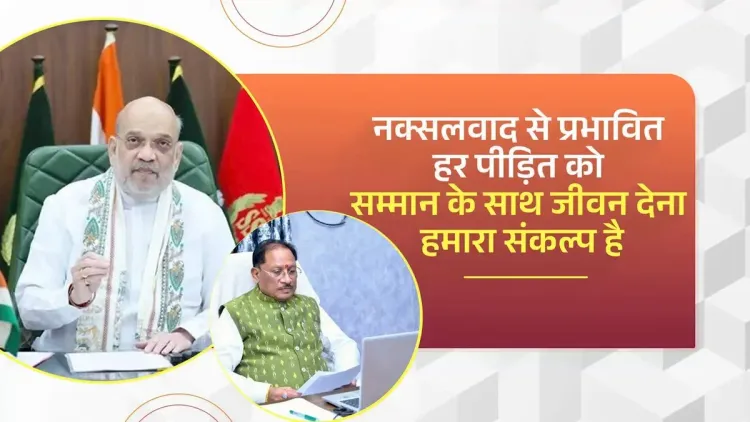
The Chhattisgarh CMO shared Union Home Minister Amit Shah's call to go beyond security gains and ensure dignity, rehabilitation, and inclusive development for communities scarred by five decades of Naxal violence in Bastar.
Key Takeaways
Union Home Minister Amit Shah stated that ending Naxalism does not erase fifty years of suffering in affected communities.
Shah called for active rehabilitation — helping communities 'stand on their feet' and live with dignity ( sammaan ).
Bastar , southern Chhattisgarh , has been the primary theatre of Left Wing Extremism for over five decades.
India's dual-track anti-Naxal doctrine combines security operations with welfare delivery, formalised through schemes such as the Integrated Action Plan (around 2010).
The #NaxalFreeBastar framing signals government confidence in operational gains, while Shah's statement pivots to the harder work of reconstruction.
The effectiveness of this approach will be measured by the rollout of rehabilitation packages, land rights, and infrastructure in LWE-affected districts.
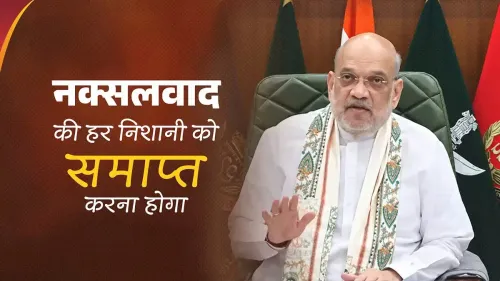
Security gains on the battlefield are only the beginning — the harder work is binding the wounds left behind. Quoting Union Home and Cooperation Minister Amit Shah, the Chief Minister's Office of Chhattisgarh shared a pointed reminder on 15 October 2026: defeating Naxalism does not erase fifty years of suffering, and the state now owes the affected people dignity, rehabilitation, and a real future.
Shah's words, shared with the hashtags #NaxalFreeBastar and #InclusiveDevelopment, carry the weight of a policy shift in tone. 'The pain that has inflicted wounds wherever it has struck — we will have to apply balm there,' he said. 'We will have to make an effort to help them stand on their feet and ensure they can live with dignity.' The minister added that 'several welcome results' have already emerged from this approach.
Five decades of violence in Bastar's forests
Bastar, the sprawling forested division of southern Chhattisgarh, has been the primary theatre of Left Wing Extremism in India for more than half a century. Tribal communities caught between security forces and Maoist cadres paid the steepest price — displacement, loss of livelihoods, collapsed public services, and a generation shaped by fear. The human cost in this corridor is not a statistic; it is a landscape of emptied villages and unburied grief.
Central and state governments have long pursued a dual track: security operations alongside welfare delivery. The Integrated Action Plan, launched around 2010, funnelled funds into LWE-affected districts for roads, schools, and health centres — an acknowledgement that guns alone could not hold ground. Chhattisgarh has been the most consistent laboratory for this twin-track doctrine.
From 'NaxalFreeBastar' to rebuilding what was broken
The #NaxalFreeBastar framing signals a government projecting operational confidence — a claim that the insurgency in Bastar has been substantially degraded. Shah's statement, however, pivots immediately from that claim to accountability: freedom from Naxalism is a precondition, not a conclusion. What follows must be active, deliberate reconstruction of communities that decades of violence hollowed out.
That reconstruction involves more than infrastructure. It means rehabilitation for surrendered cadres, justice and recognition for victims of violence, restoration of livelihoods for displaced tribals, and visible state presence in villages that once saw only conflict. Shah's invocation of sammaan — dignity — is precisely this: an argument that development spending without restored dignity is incomplete governance.
The 'welcome results' Shah cites — and what comes next
The minister referenced 'several welcome results' without specifying them in the post, and the precise details of any current rehabilitation packages announced in this context could not be independently verified. What the broader pattern does show is that Chhattisgarh under Chief Minister Vishnu Deo Sai — #VishnuBhaiya in the post — has leaned into the development-as-consolidation argument, using reduced violence metrics as a platform to push welfare delivery deeper into previously inaccessible areas.
The real test of this moment is whether the rhetoric of dignity translates into funded, monitored schemes — rehabilitation packages, land rights, educational access, and economic inclusion for the tribal belt. Parliamentary and state-level reviews of LWE-area funding will be the measure. Bastar's communities have heard promises before. What they are watching for now is whether the marhm — the balm Shah promises — actually arrives.
Point of View
The BJP-led government attempts to pre-empt the criticism that development in Bastar is still cosmetic. The invocation of five decades of pain is also a subtle electoral framing ahead of any future state cycle, positioning the current dispensation as the government that both ended the insurgency and healed the wound. The test will be concrete: whether rehabilitation funding reaches villages that have been beyond state reach for a generation.
NationPress
15 Oct 2026
Frequently Asked Questions
What did Amit Shah say about Naxalism and Bastar?
Amit Shah stated that ending Naxalism alone cannot erase the suffering of five decades, and that the government must actively rehabilitate affected communities, ensuring they can live with dignity. His remarks were shared by the Chhattisgarh Chief Minister's Office on 15 October 2026.
What is the current situation of Naxalism in Bastar?
Bastar in southern Chhattisgarh has historically been the most active theatre of Left Wing Extremism in India. The government's use of the hashtag #NaxalFreeBastar signals official confidence that the insurgency has been substantially degraded, though rehabilitation of affected communities remains an ongoing challenge.
What is the Integrated Action Plan for LWE districts?
The Integrated Action Plan, launched around 2010, was a central government initiative to fund roads, schools, and health infrastructure in Left Wing Extremism-affected districts, reflecting the dual-track approach of combining security operations with development delivery.
Who is Vishnu Deo Sai and what is his role in Chhattisgarh?
Vishnu Deo Sai is the Chief Minister of Chhattisgarh, referred to as #VishnuBhaiya in the post. His government has emphasised development and inclusive growth in Bastar as part of the post-Naxal consolidation strategy.
What does rehabilitation for Naxal-affected communities in Bastar involve?
Rehabilitation in Bastar typically involves support for surrendered cadres, recognition and justice for victims of violence, restoration of livelihoods for displaced tribal communities, land rights, and visible state welfare delivery in previously inaccessible areas.