Amit Shah Hails Cabinet Nod for Ballari-Guntakal Rail Lines
Synopsis
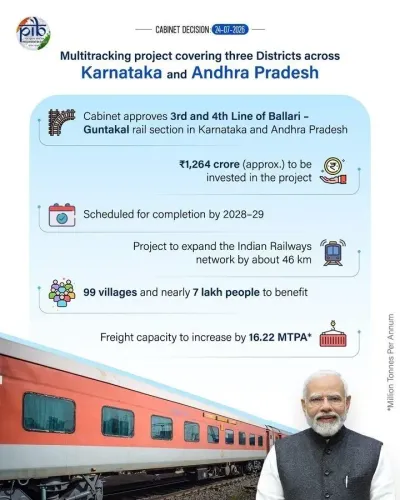
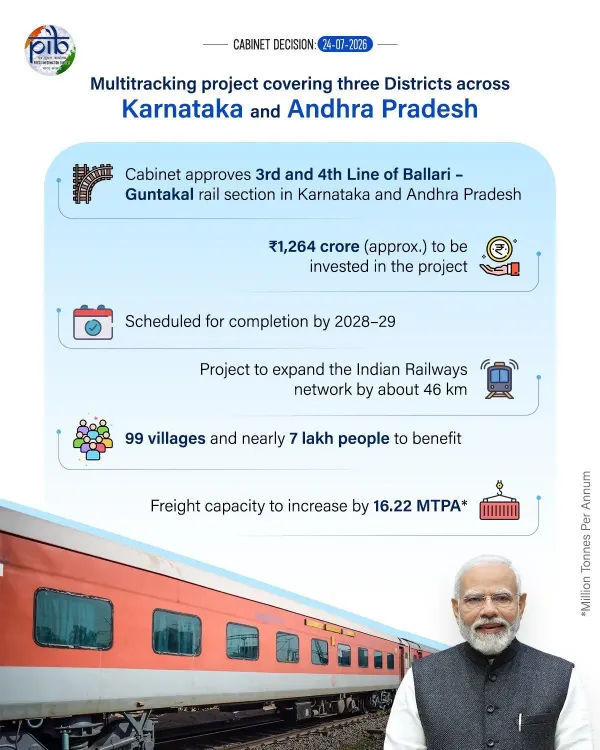
The Union Cabinet has approved the construction of the 3rd and 4th railway lines between Ballari, Karnataka, and Guntakal, Andhra Pradesh, at a cost of ₹1,264 crore. Union Home Minister Amit Shah welcomed the decision, saying it will boost freight movement, tourism, and economic growth across both states.
Key Takeaways
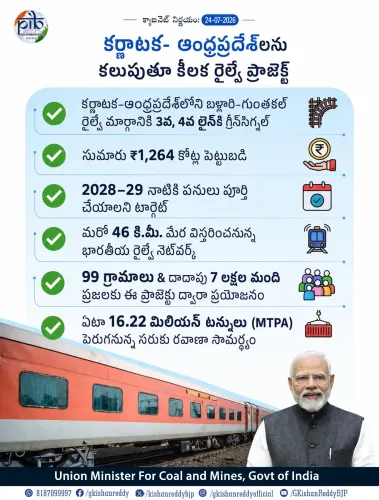
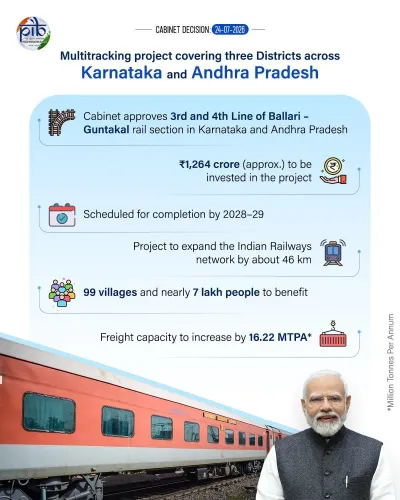
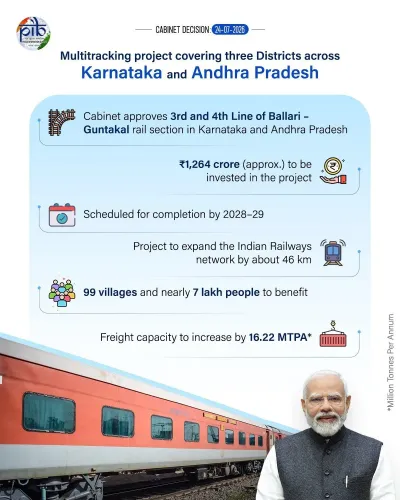
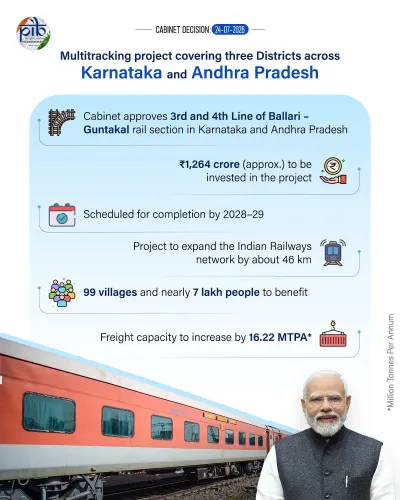
The Union Cabinet approved the 3rd and 4th railway lines between Ballari (Karnataka) and Guntakal (Andhra Pradesh) on 24 July 2026 .
The project is valued at ₹1,264 crore .
Ballari is a major iron-ore mining district; Guntakal is a key railway junction in Andhra Pradesh.
The additional lines are expected to ease freight movement of minerals and goods and improve passenger connectivity.
The project aligns with the National Infrastructure Pipeline and the Centre's multi-tracking drive on high-density freight corridors.
Next steps include tendering, land acquisition, and phased construction in coordination with both state governments.
Union Home Minister Amit Shah on Friday, 24 July 2026 congratulated the people of Karnataka and Andhra Pradesh after the Union Cabinet approved the construction of the 3rd and 4th railway lines between Ballari and Guntakal, a project valued at ₹1,264 crore.
Context
Shah posted on X welcoming the Cabinet decision, stating the project 'will strengthen connectivity in both states, paving the way for rapid growth by spurring tourism and seamless transportation of goods and minerals.' The approval marks a significant capacity addition on a corridor that links Ballari, a major iron-ore hub in northern Karnataka, with Guntakal, a key railway junction in Andhra Pradesh.
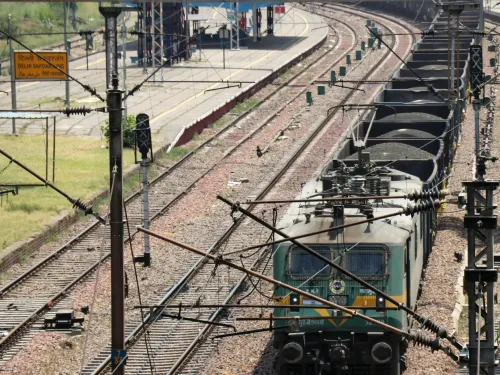
The existing single and double lines on this stretch have long been a bottleneck for freight movement, particularly for mineral trains originating from the iron-ore-rich Bellary region. Adding a third and fourth line is expected to dramatically increase throughput for both goods and passenger services.
Policy Backdrop
The project fits squarely within the central government's sustained push to expand rail capacity along mineral-rich southern corridors, a thrust that gained momentum under the National Infrastructure Pipeline announced in 2019. Indian Railways has been executing multi-tracking programmes across high-density freight routes, and the Ballari–Guntakal corridor has been identified as a priority given the volume of iron ore, steel, and allied commodities it carries.
Multi-tracking projects of this nature typically proceed through phases: Cabinet approval is followed by tendering, land acquisition, and phased construction. The ₹1,264 crore outlay signals a substantive commitment to upgrading what is currently an undersaturated but strategically vital link between the two states.
Stakeholders and Impact
The most immediate beneficiaries are the mining and steel industries centred around Ballari, which depend on reliable rail freight to move iron ore to ports and processing plants. Faster, higher-capacity rail movement can reduce logistics costs and improve turnaround times for rakes, directly affecting the competitiveness of the sector.
Tourism operators in both Karnataka and Andhra Pradesh stand to gain as well. Improved connectivity between the two states opens up easier access to heritage and pilgrimage destinations in the region. Residents of smaller towns along the corridor are also likely to benefit from better passenger services once the additional lines are commissioned.
What's Next
Attention will now shift to the pace of tendering and land acquisition, two stages that have historically determined whether rail projects are delivered on schedule. State governments in Karnataka and Andhra Pradesh will need to coordinate with Indian Railways on land-related clearances. Any linked freight or tourism policy announcements in upcoming state budgets could amplify the economic impact of the additional lines.
With the Cabinet nod now in place, the project enters the implementation pipeline at a time when both states are actively courting industrial investment, making the speed of execution a closely watched indicator of the Centre's infrastructure delivery capacity in southern India.
Point of View
The announcement offers political optics in two southern states where the party is working to deepen its footprint. The ₹1,264 crore allocation is meaningful but modest relative to the corridor's long-term freight potential, suggesting this may be the first of several phased upgrades. The real test will be execution speed — land acquisition and tendering timelines will determine whether this project becomes a genuine infrastructure win or another approval that lingers in the pipeline.
NationPress
24 Jul 2026
Frequently Asked Questions
What is the Ballari to Guntakal railway project approved by the Union Cabinet?
The Union Cabinet approved the construction of the 3rd and 4th railway lines between Ballari in Karnataka and Guntakal in Andhra Pradesh at a cost of ₹1,264 crore, aimed at improving freight and passenger connectivity between the two states.
How much will the Ballari-Guntakal railway line project cost?
The project has been approved at a cost of ₹1,264 crore by the Union Cabinet.
Why is the Ballari-Guntakal railway corridor important?
The corridor is critical for transporting iron ore and other minerals from Ballari, a major mining district in Karnataka, to ports and processing centres via Guntakal, a key railway junction in Andhra Pradesh.
Which states benefit from the new Ballari-Guntakal railway lines?
Both Karnataka and Andhra Pradesh benefit, with improved freight movement for the mining sector and better passenger and tourism connectivity across the region.
What did Amit Shah say about the Ballari-Guntakal railway project?
Union Home Minister Amit Shah congratulated the people of Karnataka and Andhra Pradesh, saying the ₹1,264 crore project will strengthen connectivity, spur tourism, and enable seamless transportation of goods and minerals.