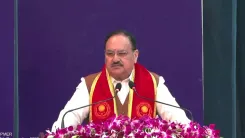
Amit Shah Hails India-US Drug Op 'Monsoon Thunder'
Synopsis
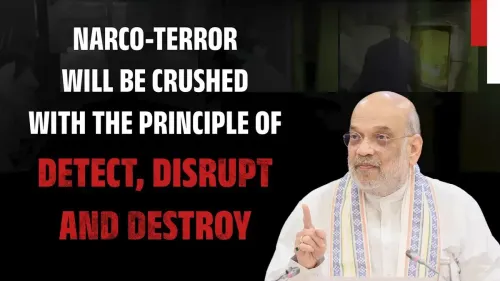
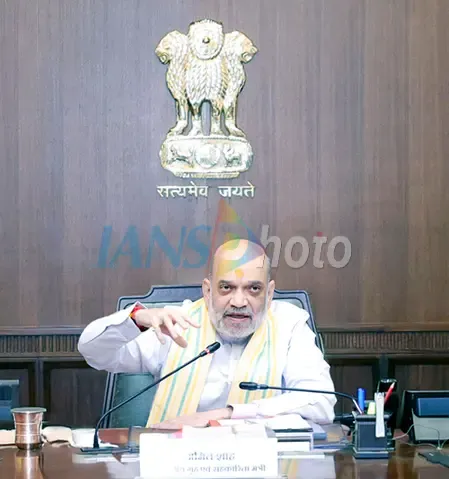
Union Home Minister Amit Shah congratulated the NCB and US DEA on Operation Monsoon Thunder, a joint cross-border drug-trafficking crackdown yielding arrests and seizures in both India and the United States, reaffirming India's zero-tolerance narcotics policy under PM Modi.
Key Takeaways
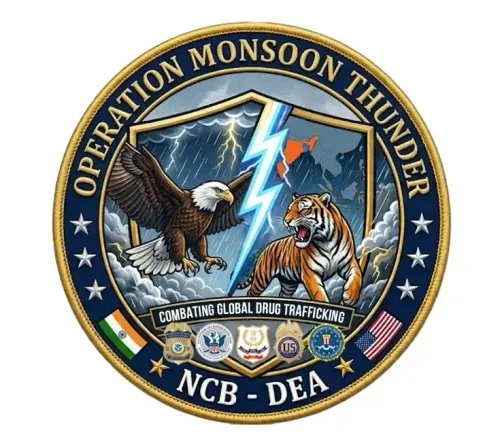
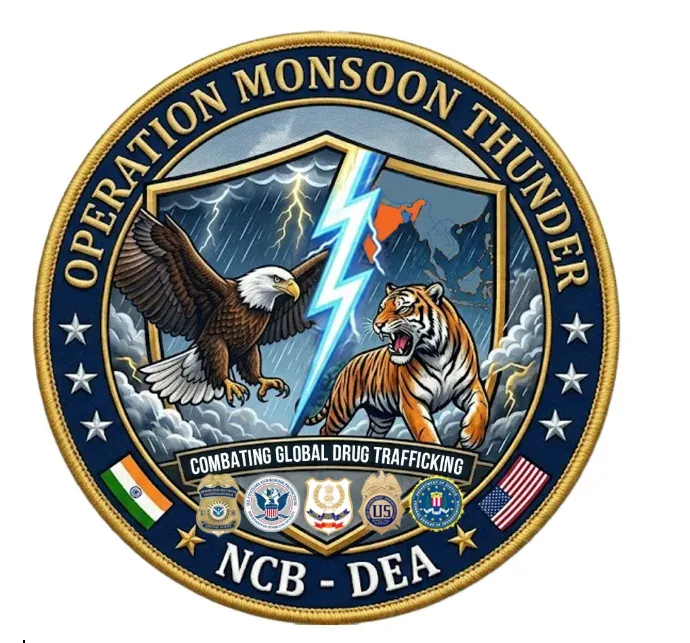
Operation Monsoon Thunder was jointly launched by India's NCB and the US DEA to target cross-border drug trafficking.
Arrests and drug seizures were carried out in both India and the United States under the operation.
Union Home Minister Amit Shah praised the operation as a testament to the strength of the India-US law enforcement partnership .
Shah declared the government's commitment to ensuring no narcotics enter or leave India — a bidirectional zero-tolerance stance.
The NCB operates under the Ministry of Home Affairs and has maintained long-standing agency ties with the DEA through bilateral security dialogues.
India's drug-law framework is anchored in the NDPS Act of 1985 , which underpins all international enforcement cooperation.
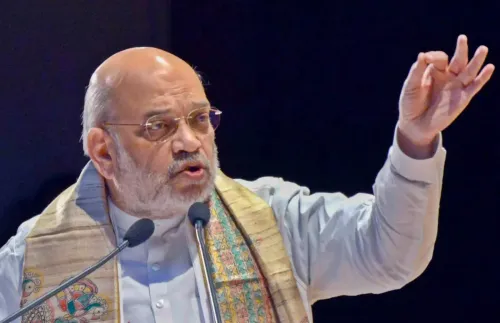
A joint operation between India and the United States has netted arrests and drug seizures on both sides of the Pacific — and Union Home Minister Amit Shah is calling it a landmark moment for bilateral law enforcement. On Saturday, 21 November 2026, Shah took to X to congratulate the Narcotics Control Bureau (NCB) and the US Drug Enforcement Administration (DEA) on the success of Operation Monsoon Thunder, a jointly launched campaign targeting cross-border drug trafficking networks.
What Operation Monsoon Thunder targeted
Shah described the operation as designed to 'scuttle cross-border drug trafficking,' with enforcement actions carried out simultaneously in India and the United States. The arrests and seizures, he said, stand as 'a testament to the power of the India-US partnership in curbing the menace of drugs.' The operation's very name — Monsoon Thunder — signals an Indian-led framing of a campaign that straddles two of the world's largest drug-consumption markets.
The NCB, India's nodal narcotics enforcement agency operating under the Ministry of Home Affairs, has long maintained agency-to-agency ties with the DEA, the US federal body responsible for enforcing controlled-substances law globally. Joint operations between the two agencies reflect an institutionalised architecture of cooperation on transnational organised crime that has deepened over successive administrations.
India's zero-tolerance narcotics doctrine
Shah's statement carried a pointed policy declaration: under Prime Minister Narendra Modi's leadership, the government is 'firmly committed to ensuring that neither a gram of narcotics enters India nor leaves for other countries.' That framing — bidirectional, absolute — goes beyond the conventional import-control pitch and positions India as a responsible actor in the global narcotics supply chain, not merely a destination country.
India's foundational drug-law architecture rests on the Narcotic Drugs and Psychotropic Substances (NDPS) Act of 1985, which provides the legal basis for enforcement, prosecution, and international cooperation. Successive governments have used this framework to pursue supply-reduction strategies, but the current administration has placed particular emphasis on high-profile seizures and cross-border enforcement partnerships as visible proof points of that commitment.
India-US counter-narcotics cooperation: the bigger picture
The two countries maintain a Counter Narcotics Working Group as part of their broader bilateral security dialogue — a channel through which enforcement leads, intelligence, and joint operational frameworks are regularly exchanged. Operation Monsoon Thunder, if it follows the pattern of previous joint actions, would represent a step up from information-sharing to coordinated, simultaneous enforcement across jurisdictions.
For India, the geopolitical stakes are significant. The country sits at the crossroads of two major drug-producing regions — the Golden Crescent to its northwest and the Golden Triangle to its east — making transnational enforcement partnerships not a diplomatic nicety but a strategic necessity. Washington, for its part, has increasingly treated South Asian drug flows as a fentanyl-precursor and synthetic-drug concern, adding urgency to the partnership.
The question now is whether Operation Monsoon Thunder marks a one-off enforcement spike or the opening move in a sustained, institutionalised joint campaign — one that could set the template for how India and the US prosecute narcotics cooperation in the years ahead.
Point of View
Positioning India as a global narcotics-control partner rather than merely a recipient of international pressure. The operation also arrives at a moment when India-US strategic ties are being stress-tested across multiple domains, making a high-profile joint enforcement win diplomatically useful for both capitals. Whether the institutional momentum translates into a standing joint task force or remains a named campaign will be the real measure of its significance.
NationPress
21 Nov 2026
Frequently Asked Questions
What is Operation Monsoon Thunder?
Operation Monsoon Thunder is a joint anti-drug trafficking operation launched by India's Narcotics Control Bureau (NCB) and the US Drug Enforcement Administration (DEA), resulting in arrests and drug seizures in both countries.
What did Amit Shah say about Operation Monsoon Thunder?
Union Home Minister Amit Shah congratulated the NCB and DEA on the operation's success, calling it a testament to India-US partnership and reaffirming the government's commitment to keeping India free of narcotics in both directions.
What is the Narcotics Control Bureau (NCB)?
The NCB is India's nodal drug law enforcement agency, functioning under the Ministry of Home Affairs, responsible for coordinating narcotics control, intelligence, and international cooperation.
How do India and the US cooperate on drug trafficking?
India and the US maintain institutionalised cooperation through agency-to-agency links between the NCB and DEA, as well as a bilateral Counter Narcotics Working Group that facilitates intelligence sharing and joint enforcement operations.
What law governs drug enforcement in India?
Drug enforcement in India is governed by the Narcotic Drugs and Psychotropic Substances (NDPS) Act of 1985, which provides the legal framework for regulating narcotics and enabling international enforcement cooperation.