Amit Shah Hails Modi's 80th I-Day Roadmap for Viksit Bharat
Synopsis
Union Home Minister Amit Shah praised PM Modi's 80th Independence Day address, which introduced the 'Saptadhara' self-reliance framework, announced AI skilling for over one crore youth, an Olympic talent hunt for 2036, 100 GW nuclear capacity, and eight new semiconductor units — all targeting the Viksit Bharat 2047 milestone.
Key Takeaways
PM Modi's 80th Independence Day address introduced the 'Saptadhara' framework of seven pillars for national self-reliance.
Over one crore youth are to receive AI skilling within a single year, alongside a free online coaching network.
A national talent hunt campaign was announced to build India's athlete pipeline for the 2036 Olympics .
India set a target of 100 GW of nuclear power capacity by 2047 as part of its clean energy roadmap.
8 new semiconductor fabrication units were announced, extending the India Semiconductor Mission launched in 2021.
Home Minister Amit Shah framed the address as a 'milestone' in India's journey toward becoming a leading nation by 2047 .
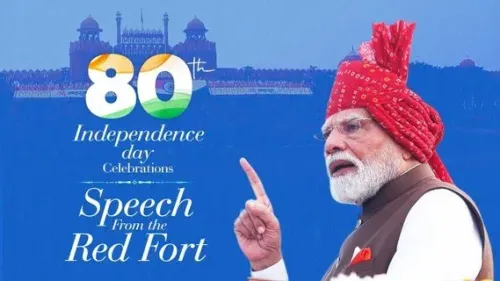
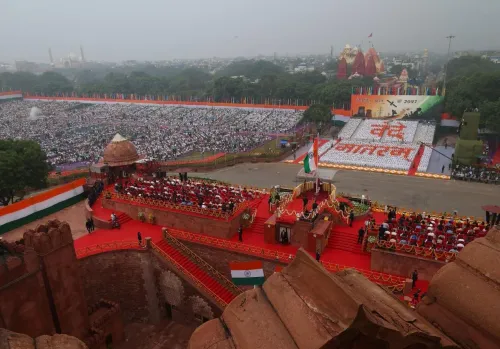
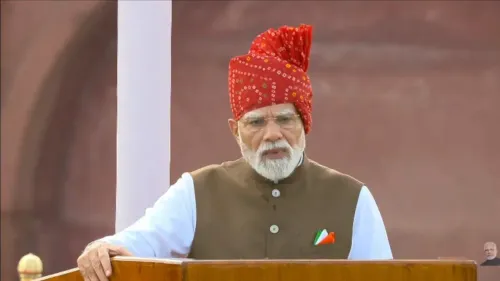
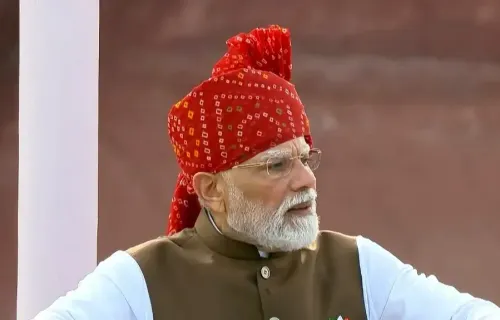
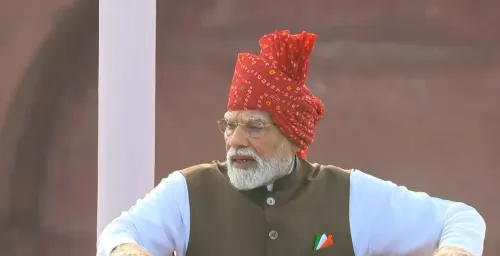
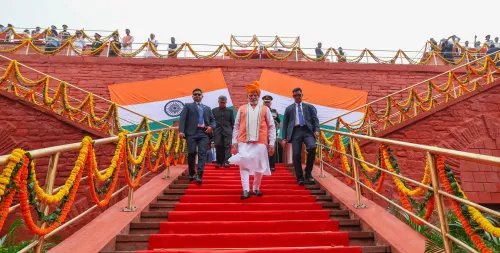
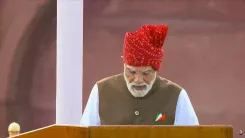
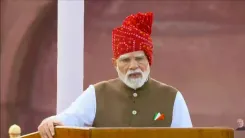
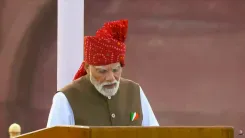
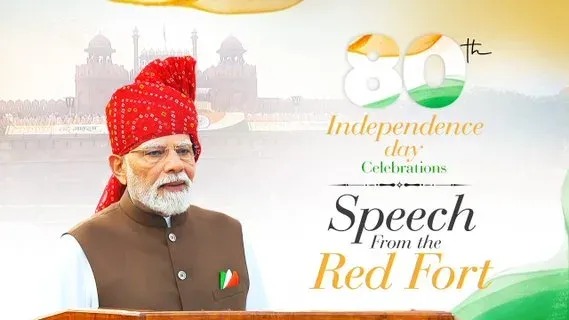
From the ramparts of the Red Fort on India's 80th Independence Day, Prime Minister Narendra Modi laid out what Union Home Minister Amit Shah is calling a comprehensive blueprint for a developed India — anchored in the spirit of a drug-free nation, a secure nation, and the creed of 'Nation First.' Shah, in a post on Saturday, August 15, 2026, framed the address as a milestone in India's march toward becoming a leading nation in every sphere.
The 'Saptadhara' Framework: Seven Streams to Self-Reliance
At the heart of the Prime Minister's address was the concept of 'Saptadhara' — seven streams of national strength. Shah's post highlighted that Modi invoked this framework to channel the country's energy across technology, energy, infrastructure, and human capital, building on 12 years of what the government describes as unprecedented progress in semiconductors, critical minerals, energy, and rail transport.
The Saptadhara framework extends the logic of the Atmanirbhar Bharat initiative, first announced in 2020, which sought to reduce India's strategic import dependence across manufacturing, technology, and energy. Independence Day addresses since 2014 have consistently threaded infrastructure modernisation, technology indigenisation, and human capital development into a single self-reliance narrative — and this year's speech follows that arc with sharper, sector-specific targets.
One Crore Youth, AI Skills, and the 2036 Olympic Talent Hunt
Shah's post specifically flagged three announcements aimed at India's youth: skilling more than one crore young people in AI within a single year, building a network of free online coaching, and launching a talent hunt campaign targeting the 2036 Olympics. These commitments sit within the broader architecture of the National Education Policy 2020, which integrated digital skilling and emerging-technology education into the national framework.
The Olympic talent hunt is particularly significant. India has consistently flagged the 2036 Games — for which it is a candidate host — as a soft-power inflection point, and a structured identification pipeline would be the first concrete step toward converting that ambition into podium results.
100 GW Nuclear and 8 New Semiconductor Units by 2047
On the infrastructure and energy front, the Prime Minister set two headline targets: 100 gigawatts of nuclear power capacity and 8 new semiconductor fabrication units — both pegged to the 2047 Viksit Bharat horizon. The semiconductor push builds on the India Semiconductor Mission, approved in 2021 under the Production Linked Incentive scheme, which sought to attract global chipmakers and seed domestic fabrication capability.
Nuclear power has featured in successive long-term energy plans as a clean baseload anchor. A 100 GW target by mid-century would represent a dramatic scaling from current installed capacity and would require sustained legislative, regulatory, and financing support — details that parliamentary sessions and economic surveys will need to fill in.
Shah closed his tribute with the conviction that this address — rooted in swadeshi, prosperity, and self-reliance — will prove a landmark in India's journey to the front rank of nations. The targets are ambitious; the road from announcement to allocation is where the real test begins.
Point of View
Not aspirational rhetoric. The Saptadhara framing is notable because it bundles disparate policy verticals — tech, energy, sports, skilling — under a single branded narrative, which is a hallmark of BJP's communication architecture since 2014. The 2047 horizon gives the party a long runway to show incremental progress without near-term accountability, while the 2036 Olympics target creates a medium-term checkpoint. The real question is whether budget allocations in the next Union Budget translate these announcements into funded programmes.
NationPress
15 Aug 2026
Frequently Asked Questions
What is the Saptadhara framework announced by PM Modi?
The Saptadhara framework refers to seven streams of national strength outlined by PM Modi in his 80th Independence Day address, aimed at making India self-reliant and a leading nation across sectors including technology, energy, infrastructure, and human capital development.
What did PM Modi announce for India's youth on Independence Day 2026?
PM Modi announced AI skilling for more than one crore youth within a year, a free online coaching network, and a national talent hunt campaign to identify athletes for the 2036 Olympics.
What is India's nuclear power target for 2047?
PM Modi announced a target of 100 gigawatts of nuclear power capacity by 2047 as part of India's long-term clean energy strategy under the Viksit Bharat vision.
How many new semiconductor units did Modi announce on Independence Day?
PM Modi announced 8 new semiconductor fabrication units as part of India's push for chip self-sufficiency, building on the India Semiconductor Mission launched in 2021.
Why did Amit Shah post about Modi's Independence Day speech?
As a senior BJP leader and Union Home Minister, Amit Shah posted to amplify and endorse PM Modi's Independence Day address, highlighting its key announcements on self-reliance, youth skilling, energy, and technology.