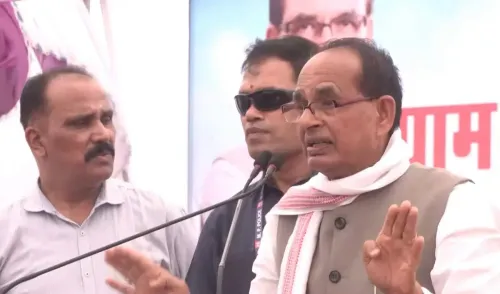
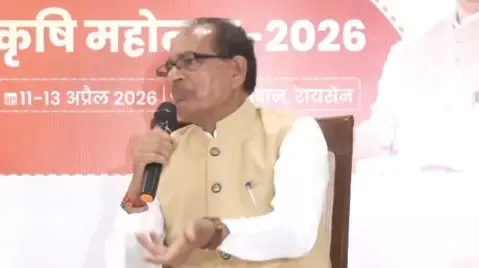
Shivraj highlights Modi govt's fertilizer shield for farmers
Synopsis
On Independence Day 2026, Agriculture Minister Shivraj Singh Chouhan highlighted that the Modi government is absorbing global fertilizer price shocks, supplying urea at ₹300 against a world price of ₹3,000 and DAP at ₹1,350 against ₹5,000, shielding Indian farmers from commodity market volatility.
Key Takeaways
Union Agriculture Minister Shivraj Singh Chouhan posted on Independence Day, August 15, 2026 , quoting PM Modi on fertilizer subsidies.
Global urea prices cited at ₹3,000 per bag ; Indian farmers pay ₹300 per bag — a tenth of the world price.
Global DAP prices cited at ₹5,000 per bag ; domestic price held at ₹1,350 per bag .
Urea has been under statutory price control for decades; DAP is subsidised under the Nutrient Based Subsidy (NBS) scheme introduced in April 2010 .
The government absorbs the difference between global and domestic prices through the central fertilizer subsidy budget.
Next Union Budget allocations for fertilizer subsidies will be a key indicator of the policy's fiscal sustainability.
While global commodity shocks have battered farm economies from Brazil to Bangladesh, Union Agriculture Minister Shivraj Singh Chouhan used Independence Day, August 15, 2026, to spotlight one number that cuts through the noise: Indian farmers are still paying ₹300 for a bag of urea — even as the same bag trades at ₹3,000 on world markets.
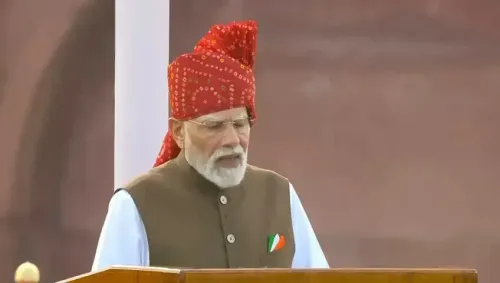
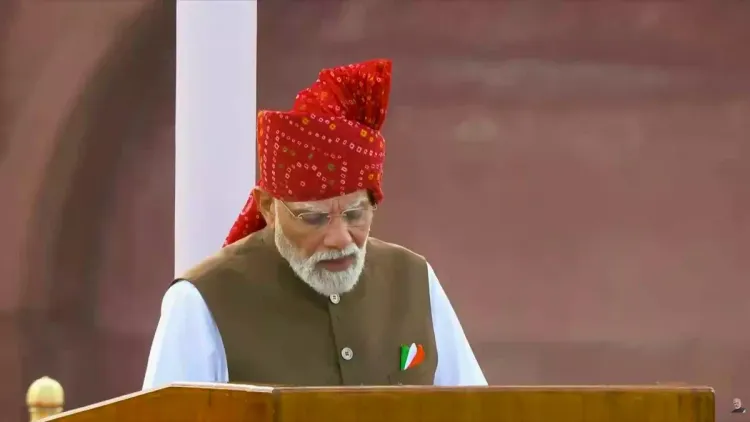
Quoting Prime Minister Narendra Modi, Chouhan posted in Hindi: 'दुनिया के संकटों का प्रभाव हर किसी पर हुआ, हम भी अछूते नहीं रहे' ('The world's crises have affected everyone — we were not untouched either'). But the government, he said, has chosen to absorb that burden rather than pass it on.
The ₹3,000-to-₹300 gap — and what fills it
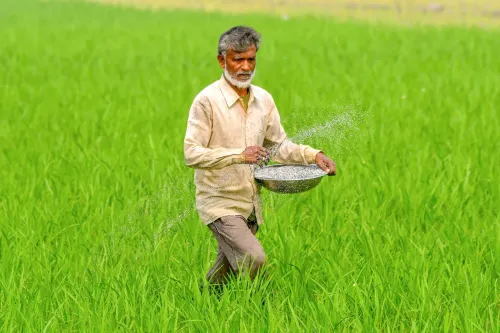
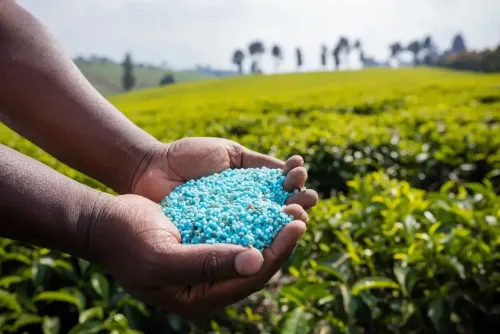
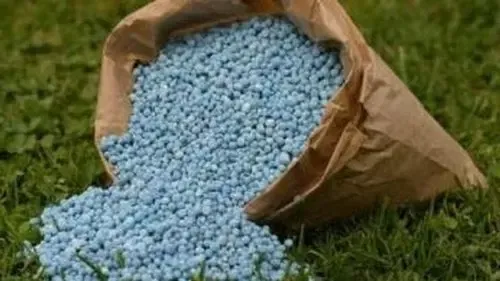
The arithmetic is stark. A farmer in Madhya Pradesh or Uttar Pradesh walks into a cooperative society and pays ₹300 per bag of urea. The gap between that price and the global rate — cited in the post as ₹3,000 per bag — is bridged entirely by the central government's fertilizer subsidy. The same logic applies to DAP (Di-Ammonium Phosphate): global prices cited at ₹5,000 per bag, domestic price held at ₹1,350.
Urea has been under government price control with a fixed Maximum Retail Price for decades, operating outside the market-linked Nutrient Based Subsidy (NBS) scheme introduced in April 2010 for phosphatic and potassic fertilizers — a category that includes DAP. The result is a two-track system: urea capped by statute, DAP subsidised through NBS, both insulated from the kind of price spikes that have triggered farmer protests across the developing world in recent years.
Independence Day framing — a policy point, not just a pledge
Chouhan's choice of August 15 as the moment to amplify this message is deliberate. Independence Day addresses have long been used to restate the government's social contract with rural India, and fertilizer affordability sits at the heart of that contract. With food grain production directly tied to fertilizer access, any pass-through of global price shocks risks cascading into higher food inflation — a political and economic tripwire that no government has been willing to touch.
The post credits the policy explicitly to Prime Minister Modi, positioning the subsidy commitment as a signature of his government's farmer-welfare architecture rather than a routine administrative measure.
The next test of that commitment arrives with the Union Budget — where fertilizer subsidy allocations will reveal whether the fiscal headroom exists to sustain these price caps if global commodity markets stay elevated.
Point of View
The BJP frames fiscal expenditure as a protective shield rather than a welfare handout — a framing that resonates with both the farmer vote bank and the urban middle class worried about food prices. The explicit attribution to PM Modi reinforces the party's centralised credit-claiming architecture ahead of state election cycles. However, the long-term sustainability of holding urea at ₹300 while global energy costs — which drive urea production — remain elevated will be the real test; the next Budget's fertilizer subsidy line will speak louder than any Independence Day post.
NationPress
15 Aug 2026
Frequently Asked Questions
What is the current price of urea for farmers in India in 2026?
According to Union Agriculture Minister Shivraj Singh Chouhan's post on August 15, 2026, Indian farmers are being supplied urea at ₹300 per bag , even as global prices have reached ₹3,000 per bag.
What is the price of DAP fertilizer for Indian farmers?
The government is supplying DAP (Di-Ammonium Phosphate) at ₹1,350 per bag to Indian farmers, against a cited global market price of ₹5,000 per bag.
What is India's Nutrient Based Subsidy (NBS) scheme?
The Nutrient Based Subsidy (NBS) scheme , introduced in April 2010 , provides government subsidies on phosphatic and potassic fertilizers — including DAP — to keep domestic prices below global market rates.
Why is urea cheaper in India than globally?
Urea in India is kept under a government-fixed Maximum Retail Price (MRP) that has been maintained for decades. The central government absorbs the difference between the global price and the subsidised domestic price through the fertilizer subsidy budget.
What did Shivraj Singh Chouhan say on Independence Day 2026?
Chouhan quoted Prime Minister Modi to highlight that despite global commodity shocks, the government has not passed fertilizer price increases on to farmers, supplying urea at ₹300 and DAP at ₹1,350 per bag.