Shivraj flags FTA opportunity on Independence Day
Synopsis
On Independence Day 2026, Agriculture Minister Shivraj Singh Chouhan quoted PM Modi's call to seize trade opportunities from FTAs signed with around 40 countries since 2014, linking trade policy directly to India's farming and rural sectors.
Key Takeaways
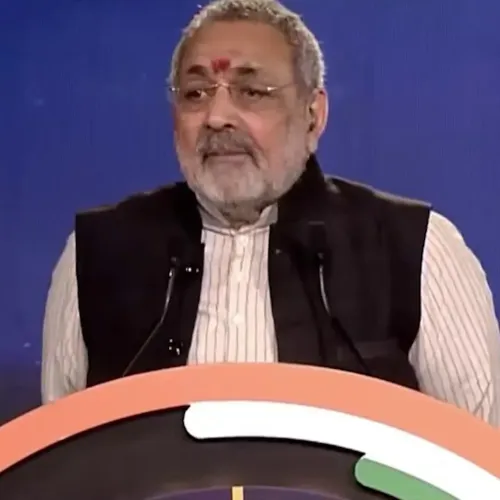
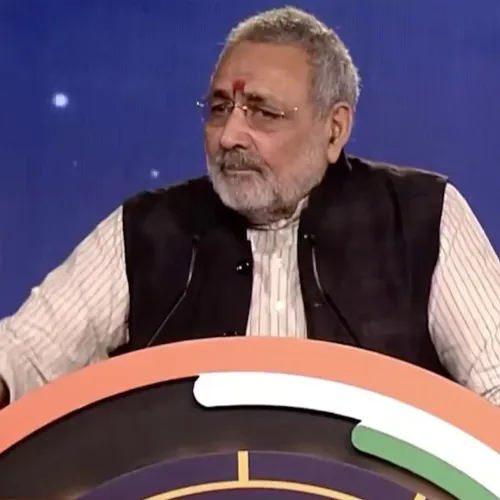
Union Agriculture Minister Shivraj Singh Chouhan shared the post on India's Independence Day, August 15, 2026 .
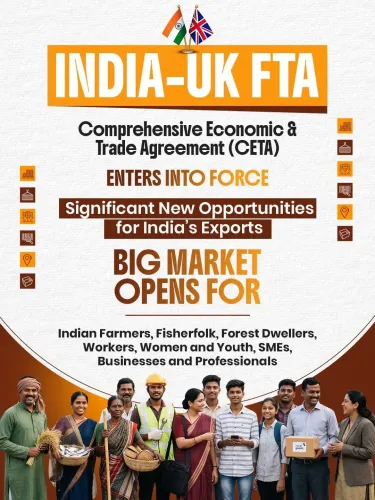
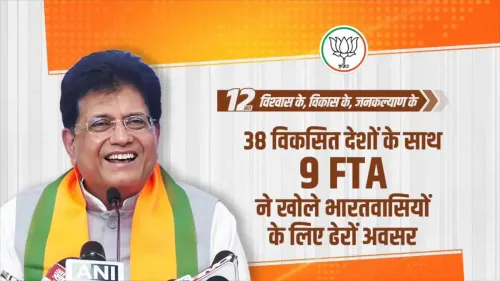
PM Narendra Modi stated India must not miss the opportunity from FTAs with around 40 countries signed after 2014 .
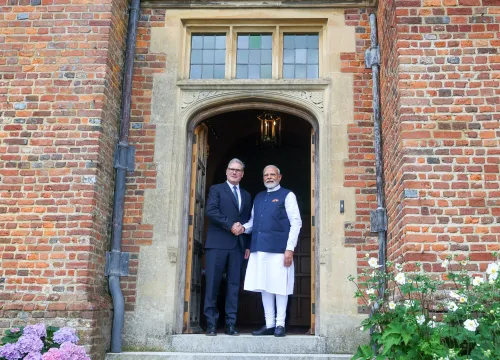
The India-UAE Comprehensive Economic Partnership Agreement (2022) is among the landmark pacts concluded in this period.
The agriculture minister's amplification directly links the FTA agenda to farmers and agricultural exporters .
The government's focus has shifted from signing agreements to ensuring their active utilisation by exporters.
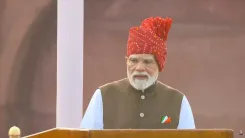
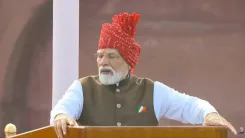
On India's 78th Independence Day, Union Agriculture Minister Shivraj Singh Chouhan amplified a pointed economic warning from Prime Minister Narendra Modi — that India must not squander the trade doors opened by nearly four decades of bilateral Free Trade Agreements signed since 2014.
Chouhan quoted the Prime Minister directly: '2014 के बाद दुनिया के करीब 40 देशों के साथ हुए FTAs से मिलने वाले बड़े मौके से हमें चूकना नहीं है' — 'We must not miss the big opportunity that comes from the FTAs signed with around 40 countries across the world after 2014.'
A decade of FTAs and what they mean for Indian farmers
Since 2014, India has pursued an aggressive bilateral trade agenda, anchored by agreements such as the India-UAE Comprehensive Economic Partnership Agreement signed in 2022 — one of the most consequential pacts in recent memory, opening a high-value Gulf market to Indian goods including agricultural produce. The broader push has sought to lower tariffs and embed Indian producers — especially in rural and farming sectors — into global value chains. That Chouhan, the minister responsible for agriculture and rural development, chose to amplify this message is deliberate. Indian farmers and agricultural exporters sit at the heart of the FTA opportunity: preferential market access can mean better prices for commodities, faster export clearances, and reduced competition from third-country suppliers in key destination markets.Independence Day as a platform for economic resolve
Framing trade policy on August 15 is a studied choice. Independence Day addresses have historically set the government's economic agenda for the year ahead, and Modi's invocation of FTAs on this occasion signals that trade utilisation — not just treaty signing — is now the priority. The message is less about celebrating past agreements and more about demanding that exporters, states, and ministries actually use them. The immediate test will come in utilisation reports and tariff concession data under recently concluded agreements. Signing an FTA is the easy part. Converting preferential tariff lines into real export growth — particularly for agricultural commodities — requires logistics investment, quality certification, and active market development. That is the gap Modi's quoted remark is aimed squarely at closing. Forty countries, dozens of product lines, and one clear instruction from the top: the window is open. India now has to walk through it.Point of View
He aligns his ministry's agenda with the Prime Minister's trade vision, lending the message institutional weight beyond a routine social media share. The move also reflects a broader pattern of using high-visibility national occasions to reinforce economic messaging with rural and farming constituencies. The real political test, however, will be whether FTA utilisation rates in agricultural commodities visibly improve — because that is the metric opposition voices will eventually scrutinise.
NationPress
15 Aug 2026
Frequently Asked Questions
How many countries has India signed FTAs with after 2014?
PM Modi, as quoted by Minister Chouhan, stated that India has signed FTAs with around 40 countries since 2014 , though the exact verified count of concluded and operationalised agreements may vary.
What is the India-UAE CEPA and why does it matter?
The India-UAE Comprehensive Economic Partnership Agreement , signed in 2022 , is one of India's most significant post-2014 bilateral trade pacts, granting preferential market access for Indian goods — including agricultural products — in the UAE market.
Why did Agriculture Minister Shivraj Singh Chouhan post about FTAs on Independence Day?
Chouhan quoted PM Modi's remark to underline that FTAs are a direct opportunity for farmers and agricultural exporters , framing trade policy as central to rural welfare on a high-visibility national occasion.
What does FTA utilisation mean and why is it a challenge for India?
FTA utilisation refers to exporters actually claiming preferential tariffs under signed agreements. India has historically struggled with low utilisation due to gaps in logistics, quality certification, and awareness — which is the gap Modi's quoted remark targets.
How does India's Foreign Trade Policy support FTA goals?
India's Foreign Trade Policy 2015-2020 prioritised FTAs as a mechanism to raise India's share in global exports, setting the strategic foundation for the bilateral agreements that followed through 2014 and beyond.