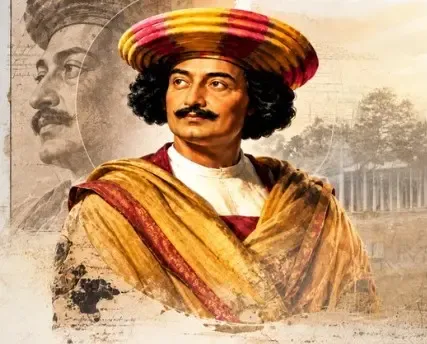
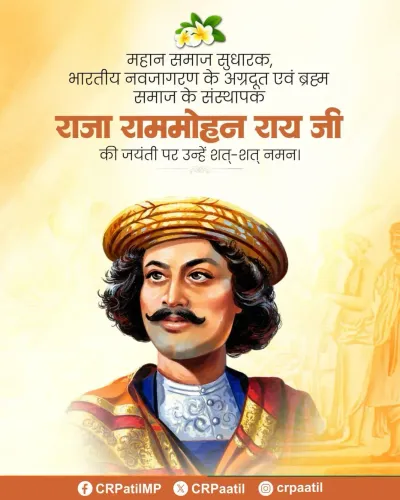
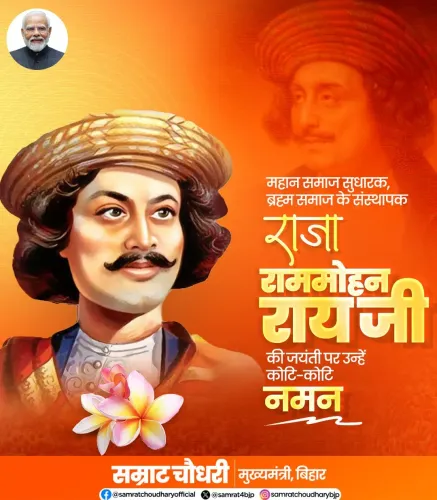
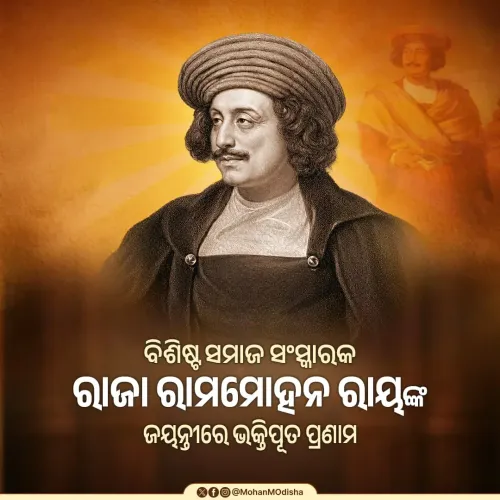
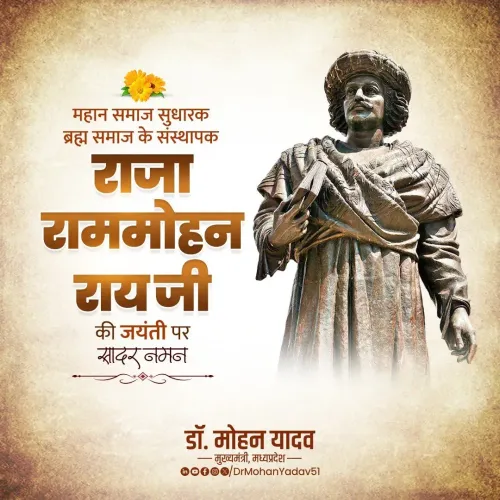
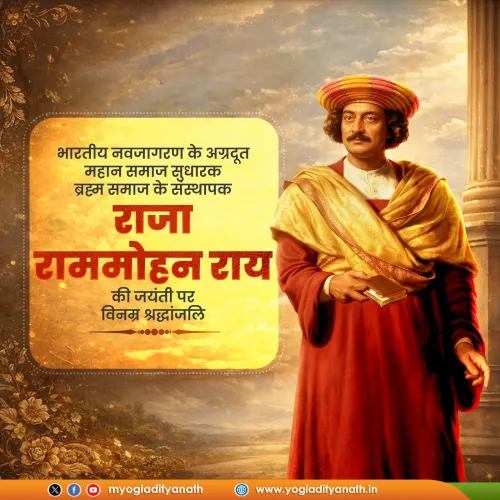
Raja Ram Mohan Roy birth anniversary: Amit Shah, Yogi lead tributes to India's Renaissance pioneer
Synopsis
On Raja Ram Mohan Roy's birth anniversary, Home Minister Amit Shah, Union Minister Nitin Gadkari, and UP CM Yogi Adityanath all took to X to honour the 19th-century reformer — a rare cross-party convergence on a figure who challenged orthodox religion, championed women's rights, and laid the intellectual groundwork for modern India.
Key Takeaways
Home Minister Amit Shah paid tribute to Raja Ram Mohan Roy on his birth anniversary on 22 May , calling him the pioneer of the Indian Renaissance.
Shah credited Roy's founding of the Brahmo Samaj with awakening society against superstition, blind faith, and inequality.
Union Minister Nitin Gadkari and UP CM Yogi Adityanath also offered tributes on X , highlighting Roy's role in spreading modern education and rational thought.
Raja Ram Mohan Roy was born on 22 May 1772 in Radhanagar, Bengal , and is widely regarded as the 'Father of Modern India'.
Roy's contributions spanned religion, social justice, education, and journalism, culminating in the founding of the Brahmo Samaj reform movement.
Union Home Minister Amit Shah on Friday, 22 May paid tribute to social reformer Raja Ram Mohan Roy on his birth anniversary, describing him as the pioneer of the Indian Renaissance and crediting his ideologies with continuing to guide India toward social awakening and nation-building.
Shah's Tribute on X
In a post on X, Shah offered what he called 'millions of salutations' to the reformer. 'Through the establishment of the Brahmo Samaj, Raja Ram Mohan Roy awakened people against social superstitions, blind faith, and inequalities. At the same time, through Gaudiya Vyakarana, he endowed the Bengali language with new ideologies and intellectual directions,' Shah wrote.
He added: 'His contributions in the fields of education, social reform, and public administration have firmly strengthened the foundation of modern India. Raja Ram Mohan Roy's ideologies and ideals will forever illuminate the path of nation-building and social awakening.'
Gadkari and Yogi Adityanath Also Pay Homage
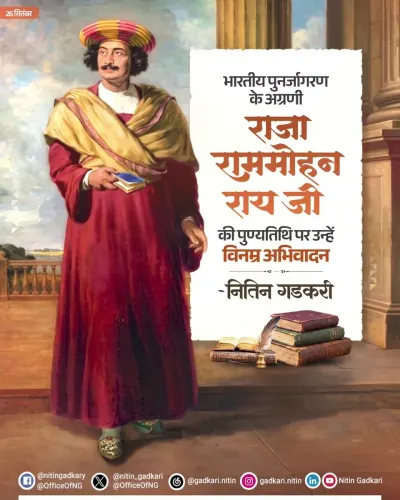
Union Minister for Road Transport and Highways Nitin Gadkari also remembered the reformer, calling him 'the father of modern India' and offering 'humble salutations' in a message on X.
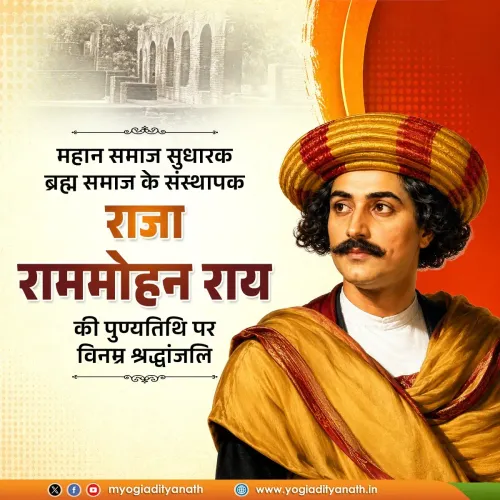
Uttar Pradesh Chief Minister Yogi Adityanath highlighted Roy's role in promoting rational thought and modern education. In his own X post, Yogi wrote: 'He led society from superstition towards reason, from regressive customs towards progressive consciousness. His contribution to the spread of modern education will forever continue to inspire the nation.'
Who Was Raja Ram Mohan Roy
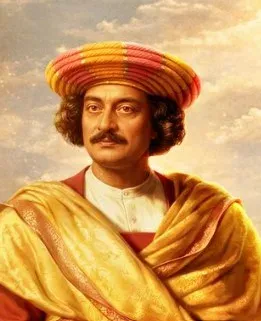
Raja Ram Mohan Roy (1772–1833) was born on 22 May 1772 in Radhanagar, Bengal, into a prosperous and orthodox Brahmin family. He went on to become one of the foremost voices for progressive social change in 19th-century India.
Often called the 'Father of Modern India', Roy founded the Brahmo Samaj, a socio-religious reform movement that challenged caste discrimination, idol worship, and the practice of Sati. His contributions spanned religion, social justice, education, and journalism, leaving an enduring imprint on modern Indian society.
Legacy and Significance
Roy's intellectual legacy — from advocating English education to championing women's rights at a time when both were deeply contested — remains a touchstone for reformers across the political spectrum. Notably, his birth anniversary draws tributes from leaders of varied ideological persuasions, reflecting the breadth of his influence on the idea of modern India.
As India continues to grapple with questions of social equity and educational access, Roy's 19th-century interventions retain a contemporary resonance that few historical figures can claim.
Point of View
Gadkari, and Yogi — in honouring Raja Ram Mohan Roy on his birth anniversary is politically telling. Roy's legacy is fundamentally one of challenging orthodox religious practice and caste hierarchy, values that sit in some tension with the cultural nationalism the ruling party more typically foregrounds. That all three chose to emphasise his nation-building and educational contributions, rather than his explicit critiques of Hindu orthodoxy, reflects how political memory selectively curates historical figures. The deeper question mainstream coverage rarely asks: is Roy's reformist radicalism being honoured, or simply domesticated into a safe patriotic symbol?
NationPress
13 Oct 2026
Frequently Asked Questions
Why is Raja Ram Mohan Roy called the Father of Modern India?
Raja Ram Mohan Roy is called the Father of Modern India because of his pioneering role in the 19th-century Indian Renaissance, during which he challenged social evils such as Sati, caste discrimination, and idol worship while advocating modern education and women's rights. He founded the Brahmo Samaj, a socio-religious reform movement that reshaped Indian intellectual and social life.
What did Amit Shah say about Raja Ram Mohan Roy on his birth anniversary?
Home Minister Amit Shah, in a post on X, described Roy as the pioneer of the Indian Renaissance and praised his founding of the Brahmo Samaj for awakening society against superstition and inequality. Shah also credited Roy's work in education, social reform, and public administration with strengthening the foundation of modern India.
When and where was Raja Ram Mohan Roy born?
Raja Ram Mohan Roy was born on 22 May 1772 in Radhanagar, Bengal, into a prosperous and orthodox Brahmin family. He lived until 1833, leaving behind a transformative legacy across religion, education, and social reform.
What is the Brahmo Samaj and why did Roy found it?
The Brahmo Samaj was a socio-religious reform movement founded by Raja Ram Mohan Roy to challenge social superstitions, blind faith, and caste-based inequalities prevalent in 19th-century Indian society. It became one of the most influential reform movements of the Indian Renaissance.
Which other leaders paid tribute to Raja Ram Mohan Roy on his birth anniversary?
Apart from Home Minister Amit Shah, Union Minister for Road Transport and Highways Nitin Gadkari and Uttar Pradesh Chief Minister Yogi Adityanath both paid homage to Raja Ram Mohan Roy on his birth anniversary, each posting tributes on X that highlighted his contributions to modern education and rational thought.