Amit Shah: India a Global Crisis Management Model Under Modi
Synopsis
Union Home Minister Amit Shah declared on June 11, 2026, that India has emerged as a global model for crisis management under PM Narendra Modi, with its institutional framework drawing research and study from across the world.
Key Takeaways
Union Home Minister Amit Shah stated on June 11, 2026 that India is now a global model for crisis management under PM Narendra Modi .
Shah said India's crisis management approach is 'being researched across the world.' India's framework is anchored in the Disaster Management Act, 2005 and the National Disaster Management Authority (NDMA) .
The National Disaster Management Plan was last updated in 2019 , outlining prevention, mitigation and response protocols.
India's COVID-19 vaccination drive , launched in January 2021 , is among the largest public health operations globally.
The Home Ministry has expanded NDMA's mandate post- 2014 to include technology-driven early warning systems and international practice-sharing.
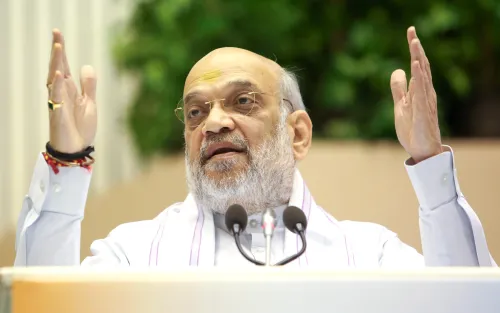
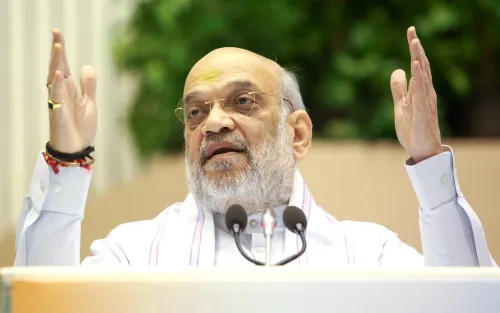
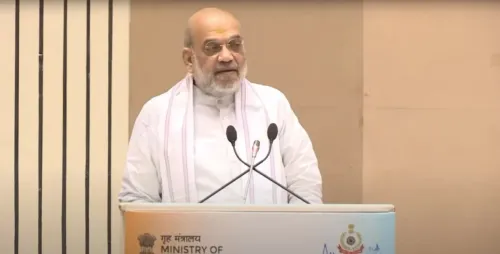
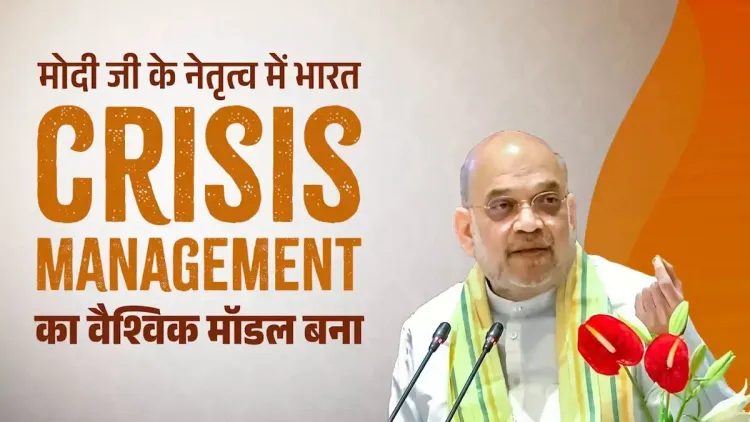
Union Home Minister Amit Shah on Thursday, June 11, 2026, declared that India has emerged as a global model for crisis management under the leadership of Prime Minister Narendra Modi, with the approach drawing study and research worldwide.
Context
In a post on X, Shah wrote in Hindi: 'Modi ji ke netritva mein Bharat aaj crisis management ka vaishvik model bankar ubhra hai, jiska vishwabhar mein shodh ho raha hai' — 'Under Modi ji's leadership, India has today emerged as a global model of crisis management, which is being researched across the world.' The statement positions India's institutional response to crises — spanning natural disasters, public health emergencies, and internal security — as a benchmark for other nations.
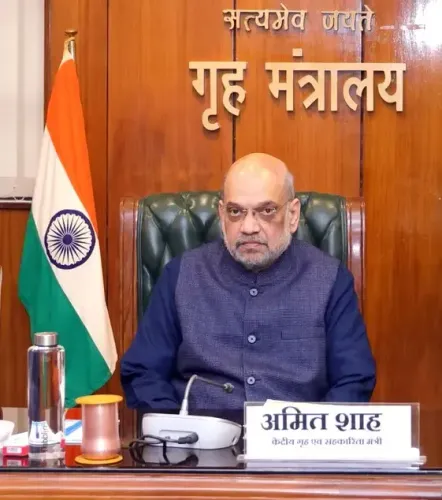
Shah, as Union Home Minister, oversees the Ministry of Home Affairs and the National Disaster Management Authority (NDMA), the apex statutory body responsible for coordinating India's disaster response architecture.
Policy Backdrop
India's crisis management framework has its legal foundation in the Disaster Management Act, 2005, which established the NDMA and mandated structured coordination between central and state governments. The National Disaster Management Plan, last updated in 2019, laid out prevention, mitigation, and response protocols across sectors.
A significant milestone came with India's COVID-19 vaccination drive, launched in January 2021, which became one of the largest public health operations in recorded history. Successive governments have expanded NDMA's mandate to incorporate technology-driven early warning systems and inter-state coordination, a trajectory that accelerated after 2014 with greater emphasis on proactive risk reduction.
The post-2014 period also saw increased international engagement, with India sharing disaster management practices in multilateral forums including discussions linked to the United Nations Office for Disaster Risk Reduction (UNDRR) and global health bodies.
Stakeholders and Impact
The primary stakeholders in India's crisis management ecosystem include Indian citizens, state disaster response forces, central paramilitary agencies, and inter-ministerial bodies. Effective crisis management directly affects millions of Indians living in disaster-prone zones across the subcontinent.
Shah's framing of India as a 'global model' also carries diplomatic weight, suggesting that Indian practices — from flood response to pandemic management — are being studied and potentially adopted by other countries. This positions the Home Ministry's work as a soft-power asset alongside its domestic mandate.
What's Next
Observers will watch for a formal revision of the National Disaster Management Plan or updated NDMA guidelines that could institutionalise the practices Shah is referencing. Any citation of Indian crisis management frameworks in upcoming UNDRR or World Health Organization reports would lend independent weight to the claim. The government may also use this narrative ahead of multilateral summits to present India's governance record on the global stage.
Point of View
Ahead of what may be a broader diplomatic or electoral messaging push. By invoking 'worldwide research,' he elevates domestic policy achievements to a global legitimacy argument, a pattern seen consistently from senior BJP leaders when consolidating the government's second-decade narrative. The statement also subtly reinforces Shah's own portfolio: as Home Minister, he oversees the NDMA and internal security, making India's crisis management record a direct reflection of his ministerial stewardship. Whether independent multilateral bodies formally echo this assessment will determine how durable the claim proves in public discourse.
NationPress
26 Oct 2026
Frequently Asked Questions
Why did Amit Shah say India is a global crisis management model?
Amit Shah made the statement to highlight what he described as India's internationally recognised approach to handling crises — including disasters and public health emergencies — developed under PM Narendra Modi's leadership since 2014.
What is India's crisis management framework?
India's crisis management is governed by the Disaster Management Act, 2005, which established the National Disaster Management Authority (NDMA) under the Ministry of Home Affairs, supported by the National Disaster Management Plan last updated in 2019.
What role does Amit Shah play in India's disaster management?
As Union Home Minister, Amit Shah oversees the Ministry of Home Affairs, which has administrative jurisdiction over the NDMA, the apex body coordinating disaster prevention, mitigation, and response across central and state governments.
How has India's crisis management been recognised internationally?
India has shared its disaster management practices in multilateral forums linked to the UN Office for Disaster Risk Reduction. Its COVID-19 vaccination drive, launched in January 2021, was one of the largest public health operations in history and drew global attention.
What could follow Amit Shah's statement on India's crisis management model?
Analysts expect a possible revision of the National Disaster Management Plan or updated NDMA guidelines, and the government may use this narrative at upcoming multilateral summits to present India's governance record internationally.