Amit Shah launches WAG-12 loco shed, Kavach projects in Gujarat
Synopsis
Union Home Minister Amit Shah on 27 September 2026 inaugurated a WAG-12 locomotive maintenance shed and automatic signalling on two Gujarat rail sections, and laid foundation stones for three track-doubling and Kavach projects at Sabarmati, advancing freight capacity and rail safety.
Key Takeaways
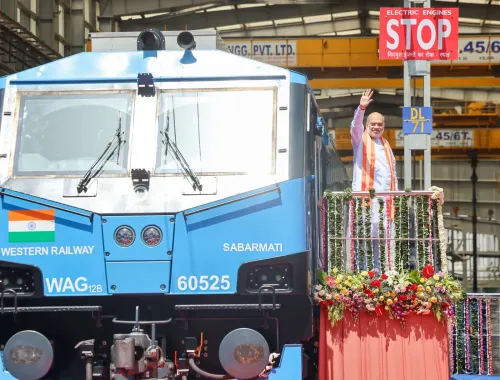
WAG-12 locomotive maintenance shed inaugurated at Sabarmati Railway Station, Ahmedabad on 27 September 2026 .
Automatic signalling commissioned on the Sabarmati–Kalol and Sabarmati–Sanand rail sections.
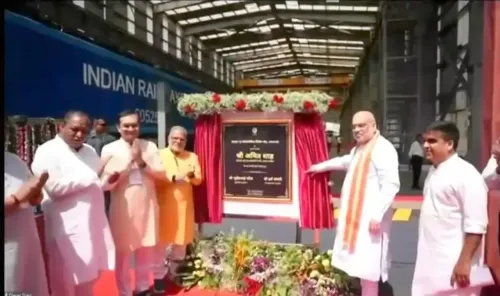
Foundation stones laid for three projects covering track doubling and Kavach automatic train-protection installations in Gujarat.
WAG-12 is an indigenous broad-gauge electric freight locomotive aligned with the Atmanirbhar Bharat initiative launched in 2020.
Kavach , India's collision-prevention ATP system, has been in development and field trials since roughly 2015–2020.
Projects are expected to improve freight movement, enhance operational safety, and generate local employment in the region.
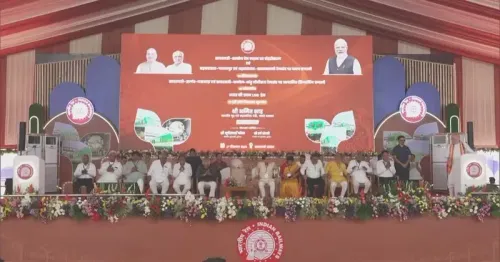
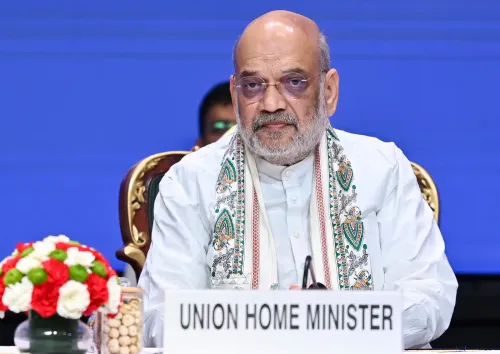
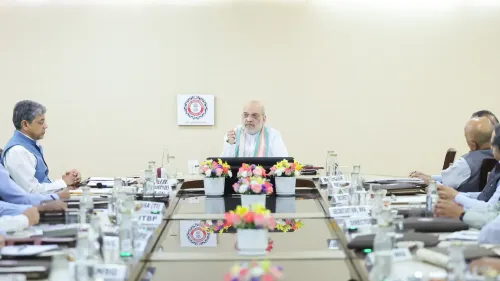
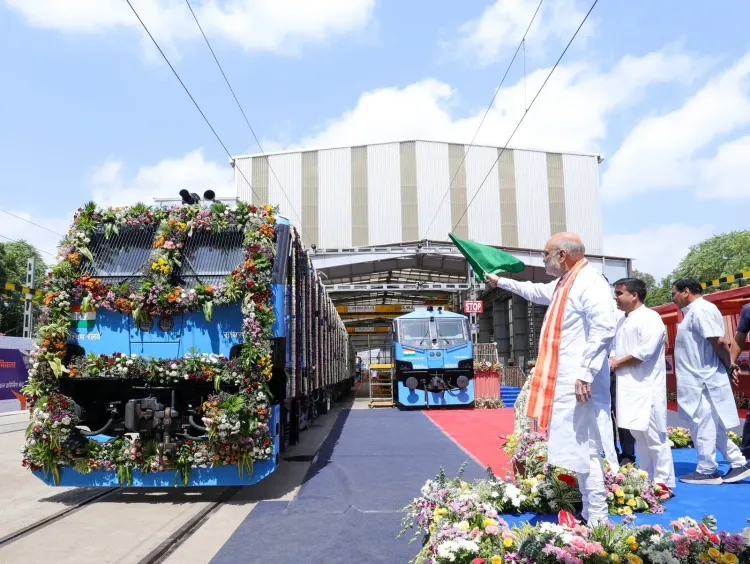
Three rail safety projects laid, one maintenance shed opened, and automatic signalling switched on — all in a single afternoon at Sabarmati Railway Station, Ahmedabad. Union Home Minister Amit Shah on Sunday, 27 September 2026 inaugurated and laid the foundation stone for a clutch of Indian Railways upgrades in Gujarat, framing them as proof of the Modi government's twin drive toward self-reliance and operational safety on the national network.
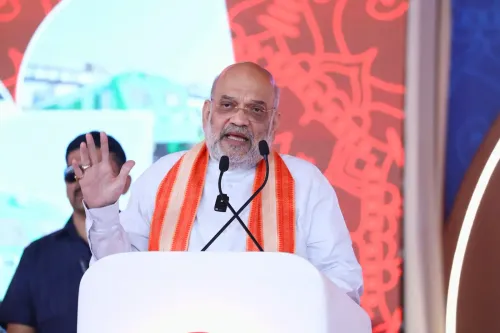
In his post, Shah wrote: 'मोदी सरकार में रेल नेटवर्क का विस्तार और आधुनिकीकरण होने के साथ भारतीय रेल आत्मनिर्भरता की दिशा में भी तेजी से आगे बढ़ रही है' — 'Under the Modi government, even as the rail network expands and modernises, Indian Railways is also advancing rapidly toward self-reliance.' He inaugurated the WAG-12 locomotive maintenance shed at Sabarmati, commissioned automatic signalling on the Sabarmati–Kalol and Sabarmati–Sanand rail sections, and laid the foundation stones for three projects covering track doubling and Kavach automatic train-protection installations.
What the WAG-12 shed means for freight in Gujarat
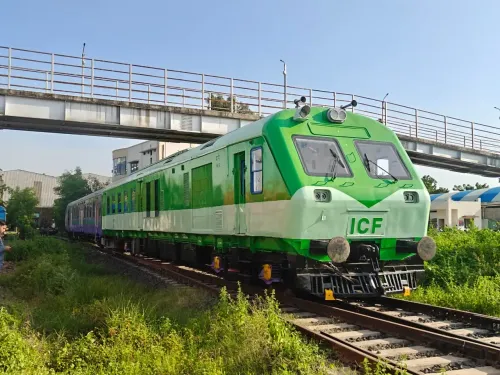
The WAG-12 is an indigenously developed broad-gauge electric locomotive built specifically for heavy freight haulage — a direct product of the Atmanirbhar Bharat push announced in 2020, which prioritised home-grown rolling stock and rail technology. A dedicated maintenance shed at Sabarmati means these high-capacity engines can be serviced locally, reducing turnaround time and keeping freight corridors running without long diversions for repairs. Shah specifically noted that the projects would make freight movement 'smoother' and generate new employment in the region.
Automatic signalling on Sabarmati–Kalol and Sabarmati–Sanand
Automatic signalling is a force-multiplier on busy commuter and freight corridors: it shortens the headway between trains, allowing more services to run on the same track without new construction. The Sabarmati–Kalol and Sabarmati–Sanand sections serve industrial and passenger traffic around Ahmedabad, and their upgrade slots into a broader pattern of signalling investments that successive railway budgets since 2014 have funded on high-density routes across India.
Kavach foundation stones: India's collision-prevention shield moves to Gujarat
Kavach — India's indigenous Automatic Train Protection system — has been under development and field trial since roughly 2015–2020, designed as an affordable answer to the collision risks that have historically plagued the network. By laying foundation stones for Kavach installations alongside new track-doubling projects, the government is effectively baking the safety layer into fresh infrastructure rather than retrofitting it later. Shah said the combined projects would make rail operations 'safer and more efficient.' The Kavach rollout on additional routes remains the metric to watch as commissioning timelines for today's Gujarat projects take shape.
Six projects in one event, three domains — freight capacity, signalling intelligence, and collision prevention — all converging at a single station. That is the rhythm India's rail modernisation has set for itself, and Gujarat just got a measurable push forward.
Point of View
Which, if sustained, could structurally reduce accident risk on busy routes. Gujarat, as the home state of both Prime Minister Modi and Amit Shah, has historically received prominent rail investment announcements, making these projects politically and administratively significant. The real test will be commissioning timelines: India's rail safety ambitions have often outpaced actual Kavach deployment speeds.
NationPress
28 Sept 2026
Frequently Asked Questions
What is the WAG-12 locomotive and why does it matter for Indian Railways?
The WAG-12 is an indigenously developed broad-gauge electric locomotive designed for heavy freight haulage, built under India's Atmanirbhar Bharat self-reliance push. A dedicated maintenance shed at Sabarmati allows local servicing of these engines, reducing turnaround time on freight corridors.
What is Kavach and how does it improve rail safety?
Kavach is India's indigenous Automatic Train Protection system that automatically applies brakes to prevent collisions. It has been in development and field trials since roughly 2015–2020 and is designed as an affordable safety layer for the national rail network.
Which rail sections received automatic signalling on 27 September 2026?
Automatic signalling was commissioned on the Sabarmati–Kalol and Sabarmati–Sanand rail sections in Gujarat, allowing more trains to run on the same track by reducing headway between services.
What projects did Amit Shah lay foundation stones for at Sabarmati?
Amit Shah laid foundation stones for three projects related to track doubling and Kavach automatic train-protection installations in the Sabarmati area of Gujarat.
What is the significance of track doubling on Indian Railways?
Track doubling adds a second line alongside existing single-track sections, enabling trains to run in both directions simultaneously. This significantly increases line capacity, reduces delays, and is a core part of Indian Railways' capacity expansion programme.