Amit Shah Marks Partition Horrors Remembrance Day, Blames Congress
Synopsis
On Partition Horrors Remembrance Day, Union Home Minister Amit Shah paid tribute to the millions killed or displaced in the 1947 partition, attributed the division to Congress, and reaffirmed the Modi government's mission to transmit partition's lessons to India's youth under the 'Ek Bharat, Shreshtha Bharat' vision.
Key Takeaways
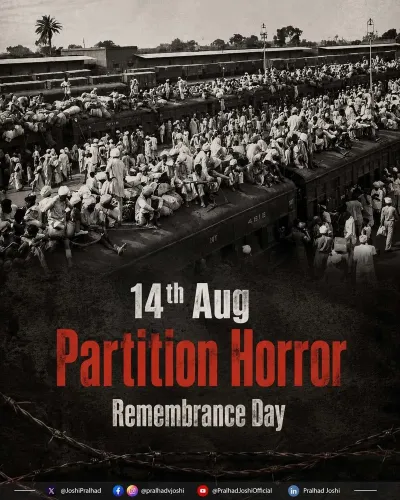
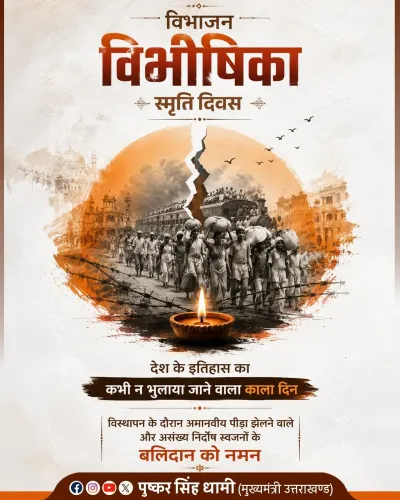
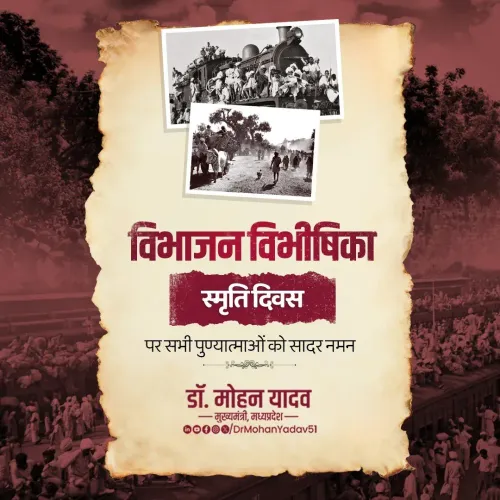
14 August is observed annually as Partition Horrors Remembrance Day , declared by the Ministry of Home Affairs in 2021 .
Union Home Minister Amit Shah paid tribute to partition victims and explicitly attributed the 1947 division to the Indian National Congress .
The 1947 Partition killed hundreds of thousands and displaced an estimated 10–20 million people in one of history's largest forced migrations.
Shah framed the remembrance day as a tool to ensure India's youth understand partition's cost and resist 'divisive forces.' The 'Ek Bharat, Shreshtha Bharat' slogan anchors the BJP's stated national-unity objective behind the annual observance.
Seventy-nine years after one of history's most violent forced migrations, Union Home Minister Amit Shah on 14 August 2026 paid solemn tribute to the millions who lost their lives or were uprooted in the 1947 Partition of India — and used the occasion to deliver a pointed political charge against the Indian National Congress.
Posting in Hindi on the morning of Partition Horrors Remembrance Day, Shah called 14 August 1947 a witness to 'history's cruellest chapter' — one in which lakhs perished amid inhumane suffering and crores were forced to abandon their homes, property, and loved ones. 'देश के बँटवारे का यह दंश, जो कांग्रेस की देन है, उसे इतिहास कभी भूल नहीं पाएगा' — 'This wound of partition, which is Congress's doing, history will never forget,' he wrote.
A Day Born from the Modi Government's 2021 Declaration
The observance itself has a precise origin point. In 2021, the Ministry of Home Affairs under Shah declared 14 August as Partition Horrors Remembrance Day — an annual commemoration to keep the memory of partition's violence alive in national consciousness. The date is not accidental: it is the eve of Independence Day, a deliberate juxtaposition of grief and celebration.
Shah framed the remembrance day as a generational mission. The Modi government, he wrote, is using this observance to carry the memories of the tragedy to India's youth — 'so that forces seeking to break the country again can never succeed, and Ek Bharat, Shreshtha Bharat remains our highest goal.'
The Congress Attribution — and the Political Charge It Carries
Shah's explicit attribution of partition to Congress decisions is a recurring BJP political argument, not a neutral historical consensus. Historians debate the roles of multiple actors — the British colonial administration, the Muslim League, and the Congress leadership — in the events leading to the August 1947 division of British India into India and Pakistan. The partition triggered mass communal violence that killed hundreds of thousands and displaced an estimated 10 to 20 million people in one of the largest forced migrations in human history.
By anchoring the remembrance day message in a direct blame narrative, Shah signals that for the BJP, Partition Horrors Remembrance Day is simultaneously a humanitarian commemoration and a live political argument — one that speaks to questions of national unity the party has made central to its identity.
What the Remembrance Day Is Meant to Do
The stated policy goal is transmission: ensuring that a generation born decades after 1947 understands the human cost of division. School and university programmes marking 14 August have become part of the observance's annual footprint, with curriculum discussions on partition history gaining institutional momentum since the day was instituted.
Shah closed his post with a reverent salute — 'श्रद्धापूर्वक नमन' — to all those who lost their lives in the violence and to those who fought against the atrocities of that era. The solemnity of the tribute and the sharpness of the political charge sit side by side, which is precisely the register the BJP has chosen for this date every year since 2021.
As long as that dual framing holds, 14 August will remain both a day of mourning and a day of contested memory.
Point of View
Since its 2021 inception, functioned on two tracks simultaneously: a genuine humanitarian commemoration and a BJP political argument that pins the 1947 catastrophe on Congress. Shah's 2026 post maintains that dual architecture without modification, suggesting the framing is now institutionalised rather than situational. The 'Ek Bharat, Shreshtha Bharat' closing is not decorative — it ties the historical grief directly to the party's current national-unity messaging, making the past a live instrument of present politics. The question analysts will watch is whether the remembrance day's educational mandate — school programmes, curriculum modules — develops independent institutional depth beyond the annual political statement.
NationPress
14 Aug 2026
Frequently Asked Questions
What is Partition Horrors Remembrance Day?
Partition Horrors Remembrance Day is an annual observance on 14 August declared by the Ministry of Home Affairs in 2021 to commemorate the victims of the 1947 partition of British India into India and Pakistan, which caused mass violence and displacement.
Why did Amit Shah blame Congress for the partition?
Shah repeated the BJP's long-standing political argument that Congress leadership's decisions led to the 1947 partition . This is a contested historical claim; scholars attribute the division to multiple actors including the British colonial administration and the Muslim League alongside Congress.
How many people were affected by the 1947 partition?
The 1947 Partition of India is estimated to have killed hundreds of thousands of people and displaced between 10 and 20 million , making it one of the largest forced migrations in human history.
What is 'Ek Bharat, Shreshtha Bharat'?
Ek Bharat, Shreshtha Bharat — 'One India, Best India' — is a central government programme and slogan promoting national unity and cultural integration across India's states and regions, frequently invoked by BJP leaders in policy messaging.
When was Partition Horrors Remembrance Day first observed?
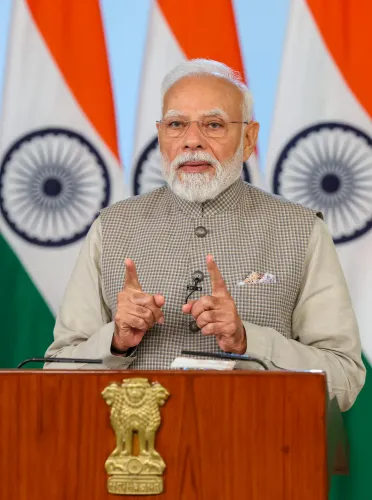
The day was first observed in 2021 after Prime Minister Narendra Modi announced the declaration, with the Ministry of Home Affairs formally designating 14 August as the annual date of commemoration.