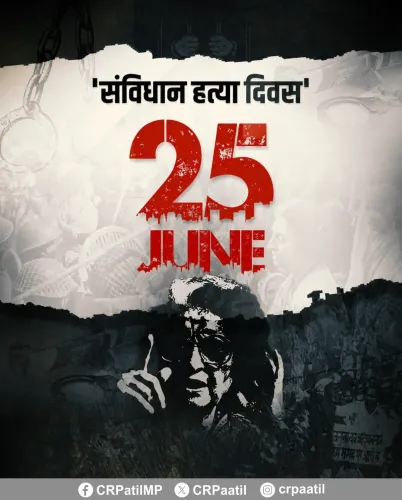
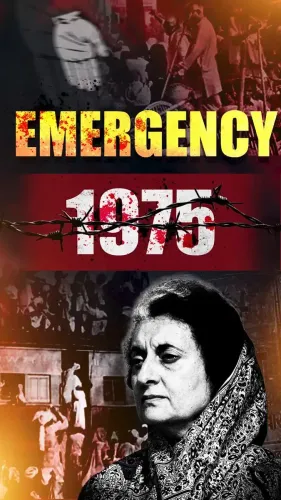
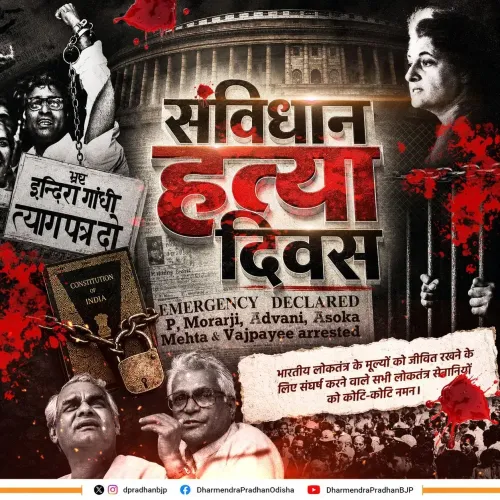
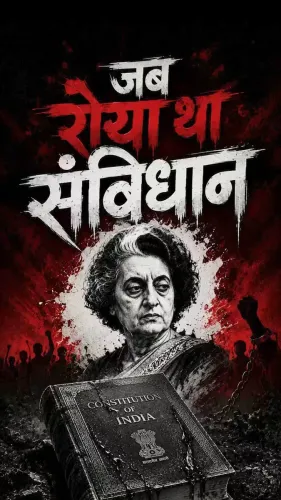
Amit Shah marks Samvidhan Hatya Diwas, slams 1975 Emergency
Synopsis
Union Home Minister Amit Shah marked Samvidhan Hatya Diwas on 25 June 2026, condemning the 1975 Emergency as an attempt by Indira Gandhi and Congress to crush the Constitution and press freedom, and paying tribute to those who resisted it.
Key Takeaways
Union Home Minister Amit Shah posted on 25 June 2026 to mark Samvidhan Hatya Diwas , condemning the 1975 Emergency as a dark chapter in Indian democratic history.
Shah accused Indira Gandhi and the Indian National Congress of attempting to crush the Constitution, press freedom, and the right to expression during the Emergency.
The national Emergency was proclaimed on 25 June 1975 under Article 352 and lasted 21 months until March 1977 .
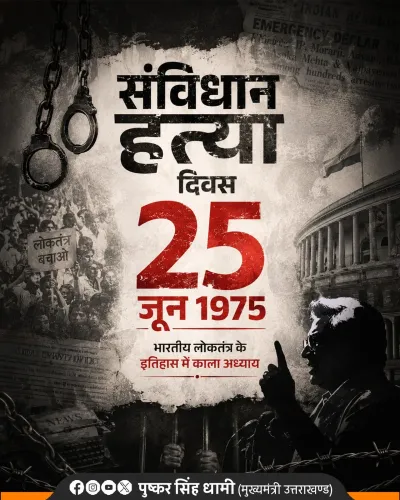
The Modi government designated 25 June as Samvidhan Hatya Diwas to institutionalise annual remembrance of the Emergency and resistance to it.
Shah paid tribute to those he called 'soldiers of democracy' who fought against the Emergency to protect democratic values.
The BJP continues to invoke the 1975 Emergency as a cautionary reference in public discourse on constitutional safeguards.
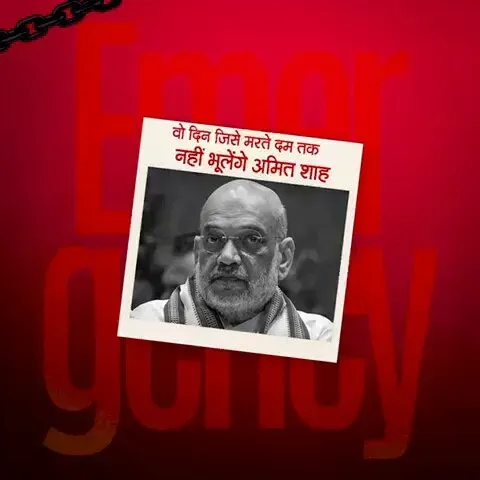
Union Home Minister Amit Shah on Thursday, 25 June 2026, marked Samvidhan Hatya Diwas by condemning the 1975 Emergency as a dark chapter in Indian democratic history, accusing the Indian National Congress and Indira Gandhi of attempting to crush the Constitution, press freedom, and the right to expression.
In his post on X, Shah wrote: '25 जून 1975 भारतीय लोकतंत्र के इतिहास का वह काला अध्याय है' — '25 June 1975 is that dark chapter in the history of Indian democracy, when the arrogance and greed for power of Indira Gandhi and the Congress Party attempted to crush the soul of the Constitution, press freedom, and the right to expression.' He paid tribute to all those who fought against the Emergency to protect democratic values, calling them 'लोकतंत्र के सेनानी' — 'soldiers of democracy.'
Context
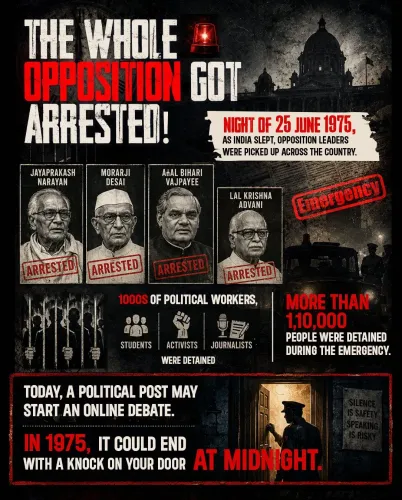
On 25 June 1975, then Prime Minister Indira Gandhi advised the proclamation of a national Emergency under Article 352 of the Constitution. The Emergency remained in force for 21 months, until March 1977. During this period, fundamental rights were suspended, the press was subjected to censorship, and opposition leaders were arrested across the country.
The period remains one of the most contested episodes in post-independence Indian political history, with civil liberties groups and constitutional scholars continuing to cite it as a reference point for institutional safeguards.
Policy Backdrop
The Modi government designated 25 June as Samvidhan Hatya Diwas — 'Constitution Murder Day' — to institutionalise annual remembrance of the Emergency and resistance to it. Shah stated that the purpose of this observance is 'to keep this dark chapter alive in the nation's memory and to ensure that the Congress Party can never again inflict such a blow on democracy and the Constitution.'
The BJP has consistently invoked the 1975 Emergency in public discourse on constitutional safeguards, using its anniversary to contrast its own governance record with that of the Congress-led government of that era.
Stakeholders and Impact
The observance is aimed at citizens, students, and institutions as a reminder of what the government frames as a constitutional crisis. Opposition parties, including the Congress, have in past years contested the framing, arguing that the designation is politically motivated rather than a genuine commemorative exercise.
Civil liberties groups have long maintained independent records of Emergency-era detentions and press restrictions, and the annual observance renews public debate on those events.
What's Next
Government programmes and public events are expected to mark Samvidhan Hatya Diwas across the country on 25 June each year. Any proposed curriculum additions or memorial initiatives linked to the observance will be closely watched by educators, historians, and political observers alike.
With the BJP continuing to position the Emergency as a defining cautionary moment in Indian democratic history, the anniversary is likely to remain a fixture in the party's political calendar and in broader national discourse on constitutional resilience.
Point of View
Using the anniversary to draw a sharp contrast with the Congress. By framing the observance as a safeguard against future democratic backsliding, the government converts a historical grievance into an active political argument. The institutionalisation of Samvidhan Hatya Diwas signals that this narrative is being embedded into the state's commemorative calendar, not just party rhetoric. How the opposition responds — and whether civil society engages the day on its own terms — will shape how the Emergency's legacy is contested in public memory.
NationPress
25 Jun 2026
Frequently Asked Questions
What is Samvidhan Hatya Diwas?
Samvidhan Hatya Diwas, meaning 'Constitution Murder Day', is observed on 25 June to mark the anniversary of the 1975 Emergency proclaimed by then Prime Minister Indira Gandhi. The Modi government designated this day to keep the memory of the Emergency and resistance to it alive in national consciousness.
What happened on 25 June 1975 in India?
On 25 June 1975, Prime Minister Indira Gandhi advised the proclamation of a national Emergency under Article 352 of the Constitution. The Emergency lasted 21 months until March 1977, during which fundamental rights were suspended, the press was censored, and opposition leaders were arrested.
Why did Amit Shah post about the 1975 Emergency on 25 June 2026?
Union Home Minister Amit Shah posted to mark Samvidhan Hatya Diwas, condemning the Emergency as a dark chapter in Indian democratic history and paying tribute to those who resisted it. He also reiterated the Modi government's stated aim of ensuring such an assault on the Constitution never recurs.
What was the Emergency period in India?
The Emergency period in India ran from 25 June 1975 to March 1977 under the Congress government led by Indira Gandhi. It involved the suspension of civil liberties, press censorship, and the arrest of opposition figures, and is widely regarded as one of the most controversial episodes in post-independence Indian history.
How does the BJP commemorate Samvidhan Hatya Diwas?
The BJP-led central government observes 25 June as Samvidhan Hatya Diwas through public programmes, statements by senior leaders, and tributes to those who resisted the Emergency. The party uses the occasion to highlight constitutional safeguards and contrast its governance record with the Congress era.