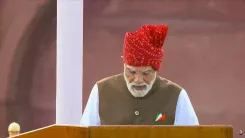
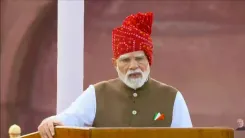
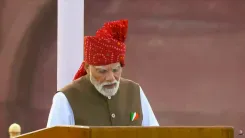
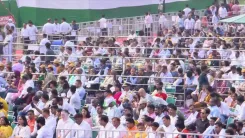
Amit Shah moved as Vande Mataram rings from Red Fort
Synopsis
On Independence Day 2026, Union Home Minister Amit Shah witnessed Vande Mataram being sung from Red Fort's ramparts for the first time in 80 years, calling it a spine-tingling historic moment that moved him to his core.
Key Takeaways
Amit Shah says Vande Mataram was performed from Red Fort on 15 August 2026 — the first time in 80 years of independence, according to his account.
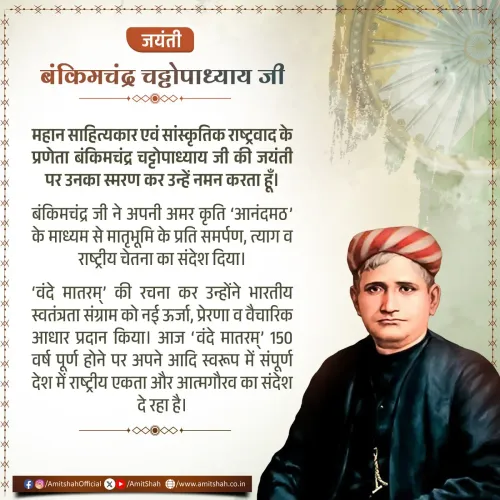
Vande Mataram was composed by Bankim Chandra Chatterjee and served as the defining rallying cry of India's anti-colonial freedom movement.
The Constituent Assembly adopted it as India's national song in 1950 , alongside Jana Gana Mana as the national anthem.
Red Fort has hosted the Prime Minister's annual Independence Day address every year since 1947 , with the core ceremonial protocol remaining largely unchanged across governments.
Shah described the moment as making 'every fibre of his being surge with joy' — underscoring the personal and symbolic weight he attached to the event.
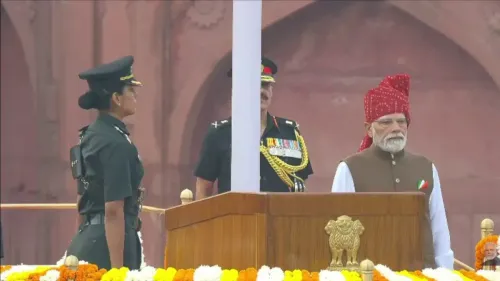
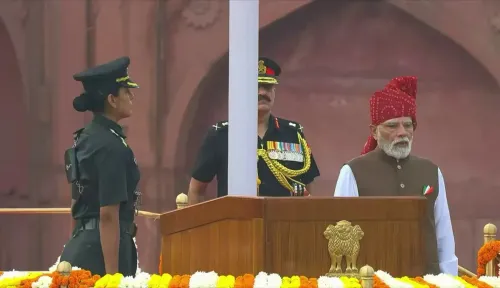
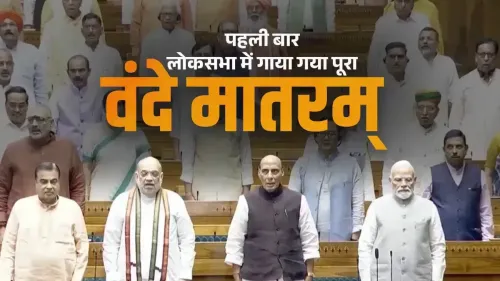
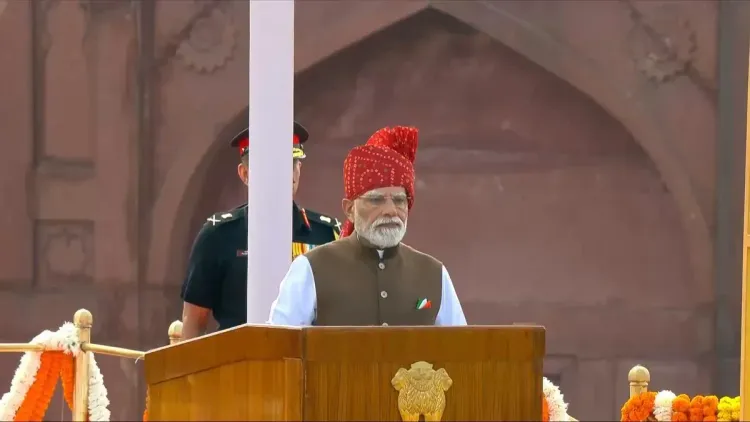
Eighty years after independence, the song that once electrified a nation into revolt echoed from the ramparts of Red Fort — and Union Home Minister Amit Shah said every hair on his body stood on end. On Saturday, 15 August 2026, Shah witnessed what he described as a historic first: 'Vande Mataram', the war cry of India's freedom movement, sung from the Lal Qila parapet for the first time since independence.
Shah posted in Hindi: 'Vande Mataram, jo swatantrata andolan ka prakhar jaighosh raha, uska aazadi ke 80 varsh baad aaj pehli baar Lal Qile ki praacheer se gaan hua.' — 'Vande Mataram, which was the fierce battle cry of the freedom movement, was sung for the first time from the ramparts of Red Fort today, 80 years after independence.' He added that witnessing the moment made not just his skin bristle, but every fibre of his being surge with joy.
The song that fuelled a revolution
Vande Mataram — 'I bow to thee, Mother' — was composed by Bankim Chandra Chatterjee in the 19th century and became the anthem of the anti-colonial movement decades before independence. The Constituent Assembly formally adopted it as India's national song in 1950, alongside Jana Gana Mana as the national anthem. Yet despite that constitutional recognition, the song had never, according to Shah's account, been performed as part of the formal Independence Day programme at Red Fort.
Red Fort's unbroken ritual — and a new addition
Red Fort, the 17th-century Mughal citadel in Old Delhi, has been the stage for the Prime Minister's Independence Day address every year since 1947. The core protocol — flag hoisting, address, military salute — has remained remarkably constant across governments and generations. Successive administrations have occasionally adjusted the symbolic or musical texture of the event to foreground aspects of national heritage, but the addition of Vande Mataram to the formal proceedings, if confirmed by official records, would mark a meaningful shift in that long-settled ceremonial grammar.
For Shah, a leader who has consistently framed BJP's politics around cultural and civilisational continuity, the moment carried unmistakable personal resonance. His post carries no political argument — only the language of goosebumps and a swelling chest, the vocabulary of witnessed history.
Seventy-nine years of Independence Days passed without the freedom movement's loudest song ringing from its most symbolic stage. On the eightieth, it finally did — and the Home Minister wanted the country to feel exactly what he felt standing there.
Point of View
A party that has long argued its cultural nationalism is the natural heir to that struggle, placing the movement's most charged anthem at its most charged venue carries deliberate political and civilisational messaging. Shah's post is framed in purely emotional terms, but the choice of moment — the 80th Independence Day — amplifies the symbolism considerably. Whether the Ministry of Culture formalises this as a standing protocol will signal how institutionalised the change is intended to be.
NationPress
15 Aug 2026
Frequently Asked Questions
Was Vande Mataram really sung at Red Fort for the first time on Independence Day 2026?
According to Union Home Minister Amit Shah's post on X, Vande Mataram was sung from the ramparts of Red Fort on 15 August 2026 for the first time since independence. This claim has not been independently verified from official records in the public domain.
What is Vande Mataram and why is it significant?
Vande Mataram — meaning 'I bow to thee, Mother' — was composed by Bankim Chandra Chatterjee in the 19th century. It became the most powerful rallying song of India's anti-colonial freedom movement and was adopted as India's national song by the Constituent Assembly in 1950.
What is the difference between India's national anthem and national song?
India has both a national anthem and a national song. Jana Gana Mana is the national anthem, played at formal state occasions with a defined protocol. Vande Mataram is the national song, carrying equal honour but without the same mandatory ceremonial standing.
Why does the Prime Minister address the nation from Red Fort on Independence Day?
Red Fort in Old Delhi has been the site of India's Independence Day address by the Prime Minister every year since 1947. The fort's symbolic weight — as a seat of Mughal power and later a site of British colonial authority — made it the chosen backdrop for marking India's freedom.
What did Amit Shah say about Vande Mataram at Red Fort?
Amit Shah posted in Hindi that witnessing Vande Mataram being sung from Red Fort's ramparts 80 years after independence made every hair on his body stand on end and filled every fibre of his being with joy, calling it a historic moment.