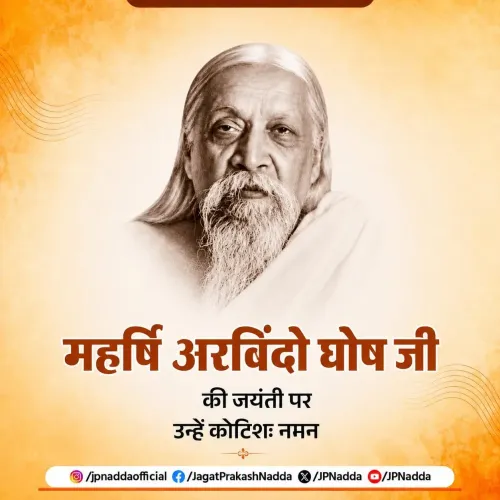
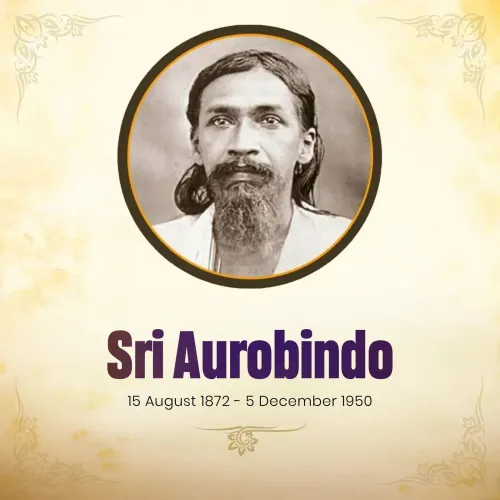
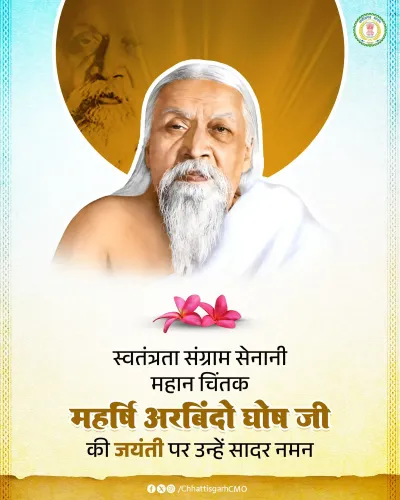
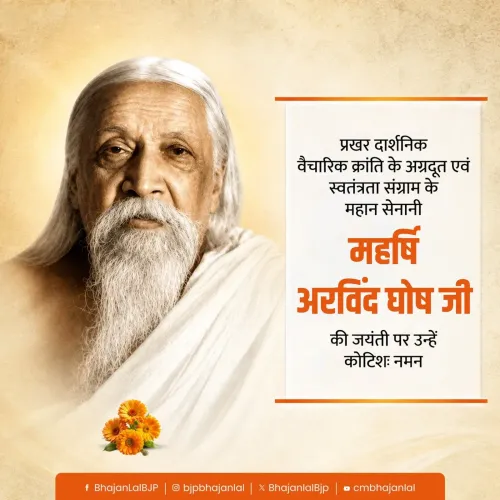
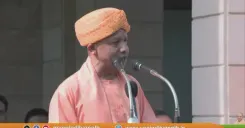
Amit Shah pays tribute to Sri Aurobindo on his Jayanti

Synopsis
Union Home Minister Amit Shah marked Sri Aurobindo's Jayanti — which falls on Independence Day, August 15 — with a bilingual tribute honouring the philosopher-revolutionary's role in India's freedom struggle and his enduring spiritual legacy.
Key Takeaways
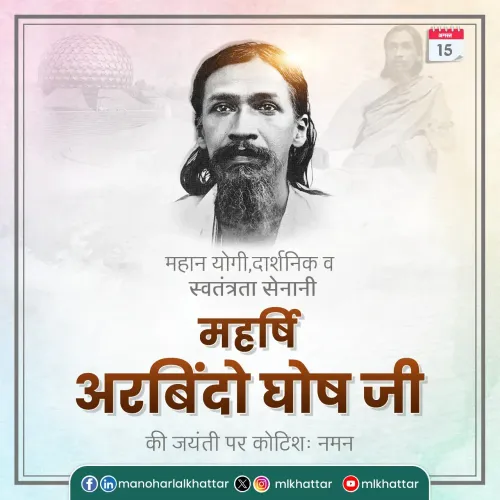
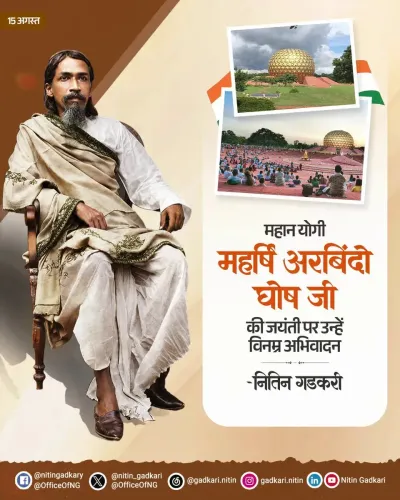
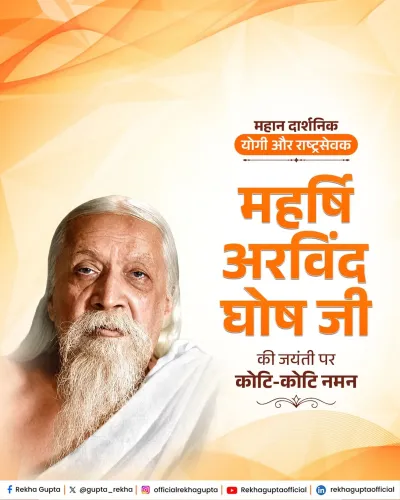
Union Home Minister Amit Shah posted a solemn tribute to Sri Aurobindo on his birth anniversary, August 15 .
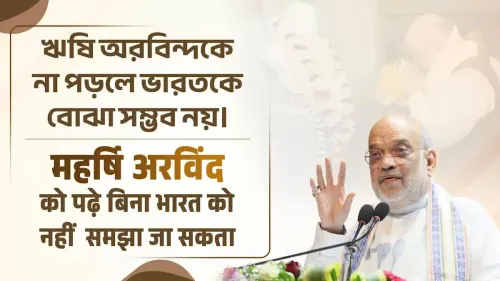
The tribute was posted bilingually in English and Bangla , acknowledging Aurobindo's Bengali heritage.
Sri Aurobindo (1872–1950) was a key early figure in India's independence movement before founding the Sri Aurobindo Ashram in Pondicherry.
His birth anniversary coincides with India's Independence Day — a convergence Aurobindo himself acknowledged.
Shah linked Aurobindo's 'profound wisdom' to India's contemporary path of progress while 'holding on to our glorious heritage.'
On a morning that doubles as India's Independence Day, Union Home Minister Amit Shah offered his homage to Sri Aurobindo — sage, philosopher, and one of the most luminous figures of the freedom movement — on the occasion of his Jayanti (birth anniversary).
Shah wrote: 'Sri Aurobindo Ji awakened India to its spiritual greatness and powered our freedom movement to overthrow oppressive colonial rule. His profound wisdom inspires our path to the summit of progress, while holding on to our glorious heritage.' The tribute was posted bilingually — in English and Bangla — a fitting acknowledgement of Aurobindo's Bengali roots.
The revolutionary who turned inward
Sri Aurobindo (1872–1950) began as one of the most firebrand voices of the early independence movement — a man the colonial administration feared enough to imprison. His Alipore Bomb Case trial of 1908–09 became a flashpoint in the struggle against British rule. Yet it was inside a jail cell that he reported a profound spiritual experience, one that would redirect the rest of his life.
He eventually withdrew from active politics and settled in Pondicherry, where he founded the Sri Aurobindo Ashram and developed his philosophy of Integral Yoga — a synthesis of spiritual evolution and worldly engagement that argued the inner transformation of the individual was inseparable from the transformation of society. His major works, including The Life Divine and the epic poem Savitri, remain touchstones of Indian philosophical literature.
Why August 15 carries a double weight
Sri Aurobindo's birth anniversary falls on August 15 — the same date as India's Independence Day — a coincidence he himself noted with quiet significance. That convergence makes tributes on this day carry an extra resonance: the man who helped ignite the freedom struggle was born on the day the nation ultimately became free.
Indian leaders across the political spectrum mark this Jayanti annually, threading Aurobindo's legacy into contemporary narratives of national identity, civilisational pride, and spiritual heritage. Shah's tribute fits squarely within that tradition, invoking Aurobindo's dual legacy — the revolutionary and the rishi — as a single, unbroken arc.
On a day when the tricolour flies over Red Fort and the nation reflects on its journey since 1947, the reminder of the minds that made independence thinkable — and possible — lands with particular force.
Point of View
Reaching Bengali-speaking audiences on a day that carries double national significance. The framing of Aurobindo as both a freedom fighter and a spiritual guide reflects the BJP's broader effort to weave India's civilisational and spiritual heritage into its mainstream political narrative. By invoking Aurobindo's legacy on Independence Day itself, the tribute reinforces the party's positioning of cultural pride and national identity as inseparable from the idea of progress. Such ceremonial tributes, while routine in Indian politics, serve as consistent reference points for a government that has made 'Amrit Kaal' — a civilisational golden age — a central motif.
NationPress
15 Aug 2026
Frequently Asked Questions
Why is Sri Aurobindo Jayanti celebrated on August 15?
Sri Aurobindo was born on August 15, 1872 , which is the same date as India's Independence Day. This remarkable coincidence — which Aurobindo himself noted — makes the day doubly significant for Indians.
What is Sri Aurobindo known for?
Sri Aurobindo (1872–1950) was a philosopher, poet, and early leader of India's independence movement who later developed the philosophy of Integral Yoga and founded the Sri Aurobindo Ashram in Pondicherry.
What did Amit Shah say about Sri Aurobindo?
Amit Shah said Sri Aurobindo 'awakened India to its spiritual greatness and powered our freedom movement to overthrow oppressive colonial rule,' adding that his 'profound wisdom inspires our path to the summit of progress.'
Why did Amit Shah post the tribute in Bangla?
Sri Aurobindo was of Bengali origin, born in Calcutta (now Kolkata) . Posting in Bangla is a culturally respectful gesture acknowledging his roots and reaching Bengali-speaking audiences across India and Bangladesh.
What was Sri Aurobindo's role in India's independence movement?
Sri Aurobindo was one of the most radical voices of the early independence movement, advocating complete self-rule at a time when many sought only reform. He was tried in the Alipore Bomb Case (1908–09) before eventually withdrawing from politics to pursue spiritual work.