Amit Shah Reviews India-Pak Maritime Border at Harami Nala, Kutch

Synopsis
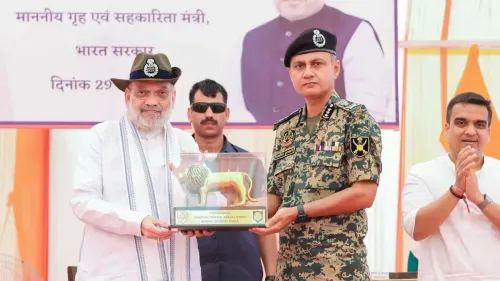
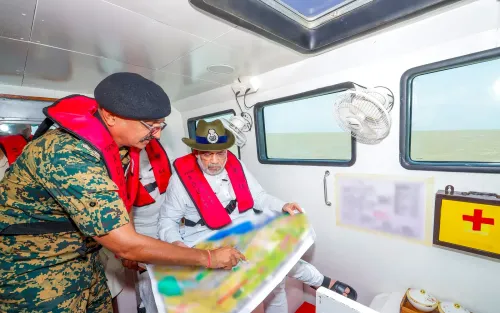
Union Home Minister Amit Shah conducted a speed-boat inspection of the Harami Nala creek — a sensitive India-Pakistan maritime border zone in Kutch — on 29 May 2026, accompanied by Gujarat Chief Minister Bhupendra Patel, Deputy CM Harsh Sanghvi, and senior BSF officers, to carry out a full security evaluation.
Key Takeaways
Amit Shah visited the Harami Nala creek in Kutch by speed boat on 29 May 2026 for a security review.
The creek forms part of the highly sensitive India-Pakistan maritime border and is considered strategically critical.
Chief Minister Bhupendra Patel and Deputy Chief Minister Harsh Sanghvi were present during the review.
Senior officers of the Border Security Force (BSF) also participated in the security assessment.
The inspection is part of a long-standing pattern of joint central-state security reviews in the Rann of Kutch region following the 2008 coastal security overhaul.
Union Home and Cooperation Minister Amit Shah on Friday, 29 May 2026, conducted a high-level security review of the Harami Nala creek — one of India's most sensitive maritime border zones along the India-Pakistan boundary in Kutch, Gujarat — travelling through the area by speed boat to assess ground-level security conditions.
The Chief Minister's Office of Gujarat announced that Chief Minister Bhupendra Patel and Deputy Chief Minister Harsh Sanghvi accompanied Shah during the review, along with senior officers of the Border Security Force (BSF).
Context
The Gujarati-language post from the Chief Minister's Office states that Shah 'સ્પીડ બોટમાં મુલાકાત લઈને સુરક્ષાની સ્થિતિનું સંપૂર્ણ મૂલ્યાંકન કર્યું' — meaning he 'conducted a complete evaluation of the security situation by visiting in a speed boat.' The Harami Nala creek sits within the Rann of Kutch region and forms part of the India-Pakistan maritime boundary, making it one of the most operationally challenging zones for border security forces.
The visit was described as a review of security arrangements in a 'strategically important creek area,' with the presence of both central and state-level leadership signalling the seriousness with which the government is treating western border preparedness.
Policy Backdrop
Following the 2008 Mumbai attacks, India significantly expanded BSF creek patrols and overhauled coastal security infrastructure across Gujarat, recognising the vulnerability of its western maritime frontier. Since then, joint high-level reviews involving central ministers, state governments, and the BSF have become a recurring feature of India's border management strategy in the region.
The Rann of Kutch and its creek network present unique challenges — tidal flats, shifting channels, and remote terrain — that demand continuous assessment of both equipment and personnel deployment. These inspections are part of a broader modernisation drive for border guarding along India's western flank.
Stakeholders and Impact
The BSF, which bears primary responsibility for guarding India's land and creek borders with Pakistan, is the central operational stakeholder in this review. Senior BSF officers were present at the inspection, though their identities have not been officially confirmed in the post.
Border communities in Kutch are also directly affected by the security posture in this zone, given that the region has historically been susceptible to cross-border smuggling and infiltration attempts through the creek network. A robust security review at the ministerial level sends a clear signal of institutional attention to these vulnerabilities.
What's Next
Following such high-level physical inspections, the government typically follows up with directives on equipment upgrades, patrol enhancements, or inter-agency coordination mechanisms between the BSF and the Indian Coast Guard. Any policy outcomes from this review are likely to surface in subsequent official statements or parliamentary discussions on border security. The joint presence of the Union Home Minister alongside Gujarat's top leadership also suggests a coordinated central-state approach to western border security ahead of what may be a broader strategic assessment of India's frontier preparedness.
Point of View
A pattern that has intensified since the 2008 coastal security reforms. Such high-visibility ministerial inspections also serve a strategic communication function, projecting resolve on border management. The follow-through in terms of equipment or patrol upgrades will determine whether this visit translates into operational change.
NationPress
14 Oct 2026
Frequently Asked Questions
What is Harami Nala and why is it strategically important?
Harami Nala is a creek in the Kutch district of Gujarat that forms part of the India-Pakistan maritime border. Its remote tidal terrain and shifting channels make it one of the most challenging and sensitive zones for border security, historically vulnerable to smuggling and infiltration.
Why did Amit Shah visit Harami Nala in May 2026?
Amit Shah visited Harami Nala on 29 May 2026 to conduct a comprehensive evaluation of security arrangements at the sensitive India-Pakistan maritime border zone, travelling through the area by speed boat alongside Gujarat's Chief Minister, Deputy Chief Minister, and senior BSF officers.
Who accompanied Amit Shah during the Harami Nala security review?
Chief Minister Bhupendra Patel, Deputy Chief Minister Harsh Sanghvi, and senior officers of the Border Security Force (BSF) accompanied Amit Shah during the security review.
What is the BSF's role at the Harami Nala creek border?
The Border Security Force (BSF) is responsible for guarding India's land and creek borders with Pakistan, including the Harami Nala zone. It conducts patrols and maintains surveillance in the challenging creek and tidal flat terrain of the Rann of Kutch.
What security upgrades might follow Amit Shah's Harami Nala inspection?
Following such ministerial reviews, the government typically issues directives on patrol enhancements, equipment upgrades, or improved coordination between the BSF and the Indian Coast Guard, though specific outcomes of this particular visit have not yet been officially announced.