Amit Shah Visits Jain Sanghatana and Mutha Foundation HQ in Pune
Synopsis
Union Home Minister Amit Shah visited the Pune headquarters of the Bharatiya Jain Sanghatana — a disaster-relief body active since the 1993 Latur earthquake — and the Shantilal Mutha Foundation, whose 'Mulyavardhan' programme delivers value-based education to lakhs of students across India.
Key Takeaways
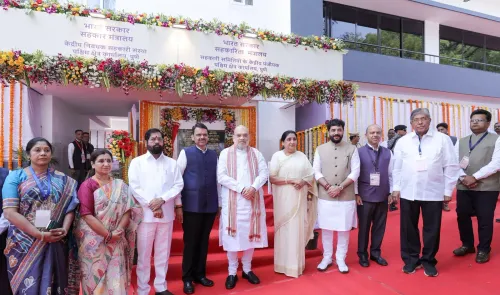
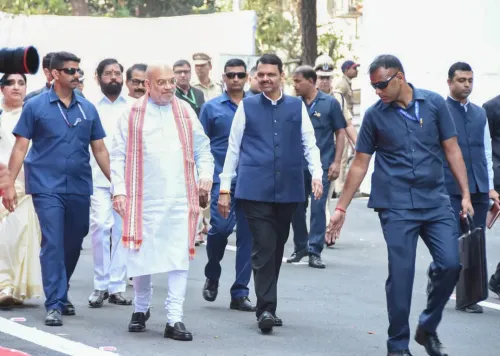
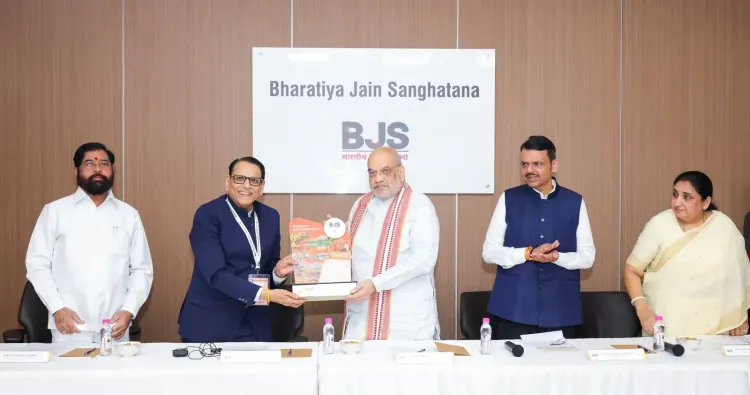
Amit Shah visited the HQ of Bharatiya Jain Sanghatana and Shantilal Mutha Foundation in Pune, Maharashtra on 16 November 2026 .
Bharatiya Jain Sanghatana , founded in 1985 , has conducted disaster relief, rehabilitation, and school reconstruction from the 1993 Latur earthquake through subsequent calamities.
Shah attended a formal presentation on the nation-building work of both organisations.
The Shantilal Mutha Foundation runs the 'Mulyavardhan' programme, delivering Indian-values-based education aimed at character formation to lakhs of students .
No formal partnership or new government commitment was announced during the visit.
The visit reflects the Ministry of Home Affairs' broader interest in mapping and acknowledging civil-society capacity in disaster response and education.
From the rubble of the 1993 Latur earthquake to classrooms across the country, two Pune-based organisations have quietly built one of India's most enduring civil-society legacies — and on Monday, 16 November 2026, Union Home Minister Amit Shah made a point of witnessing it firsthand. Shah visited the headquarters of the Bharatiya Jain Sanghatana (BJA) and the Shantilal Mutha Foundation in Pune, Maharashtra, attending a presentation on their nation-building work.
Posting on X in both Hindi and Marathi, Shah noted that the Bharatiya Jain Sanghatana — founded in 1985 — had performed 'remarkable work in relief, rehabilitation, and school reconstruction in the country's many disasters, from the Latur earthquake until today.' The organisation's decades-long track record spans some of India's most devastating natural calamities, with the 1993 Latur earthquake in Maharashtra — which killed over 9,000 people — marking its first major large-scale humanitarian intervention.
Four Decades of Disaster Response, One Founding Principle
The Bharatiya Jain Sanghatana was established in 1985 with an explicit mandate to channel community resources into national welfare. What began as a faith-community initiative grew into a structured disaster-response body capable of mobilising volunteers, construction teams, and educational resources rapidly after earthquakes, floods, and other emergencies. Its model — relief followed by rebuilding of schools as anchors of community recovery — has become a template noted by civil-society researchers studying post-disaster resilience in India.
Successive Union Home Ministers have recognised the value of such faith-based organisations in supplementing the official State Disaster Response Force and national relief machinery. Shah's visit continues that pattern of institutional acknowledgement, though no formal partnership announcement between the Ministry of Home Affairs and either organisation was confirmed during the visit.
'Mulyavardhan' and the Bet on Character Education
The second organisation at the centre of Shah's visit — the Shantilal Mutha Foundation — operates on a different but complementary axis. Its flagship 'Mulyavardhan' programme (Mulyavardhan, meaning 'value enhancement') delivers Indian-values-based education to lakhs of students with an explicit focus on character formation. Shah highlighted that the programme reaches millions of students, contributing to what he described as their charitra nirmaan — character building.
The emphasis on value-based schooling resonates with threads running through India's National Education Policy, which has underscored integrating ethical and cultural grounding alongside academic content. The Shantilal Mutha Foundation's approach — delivering this through a structured programme rather than a curriculum overhaul — represents a civil-society complement to those policy aims.
Why a Home Minister Is Taking Notes in Pune
Shah's choice to attend a formal presentation — rather than a ceremonial photo-op — signals something specific: the Ministry of Home Affairs, which oversees national disaster management architecture under the National Disaster Management Authority (NDMA), is actively mapping civil-society capacity. With India's disaster frequency and intensity rising, the gap between state resources and ground-level needs has only widened. Organisations like the BJA, with four decades of field experience from Latur to subsequent floods and earthquakes, represent institutional knowledge the state cannot easily replicate.
India's civil-society disaster response has rarely received prime-ministerial or ministerial-level attention outside of acute crisis moments. A pre-planned headquarters visit and structured presentation in a non-crisis period is a different kind of signal entirely — one that asks what sustainable, state-civil society collaboration in disaster preparedness and value education could look like going forward.
Point of View
Not merely applauded. Bharatiya Jain Sanghatana's model of post-disaster school reconstruction aligns closely with the government's focus on community resilience under the National Disaster Management framework. The parallel spotlight on the 'Mulyavardhan' programme echoes the National Education Policy's value-based schooling thrust, suggesting the government may be exploring civil-society delivery channels for goals it cannot achieve through state machinery alone. Watch for whether this visit translates into formal MoU-level partnerships between the Ministry of Home Affairs and either organisation.
NationPress
16 Nov 2026
Frequently Asked Questions
What is Bharatiya Jain Sanghatana and what does it do?
Bharatiya Jain Sanghatana is a civil-society organisation founded in 1985 that conducts disaster relief, rehabilitation, and school reconstruction across India. It first gained national attention for its work after the 1993 Latur earthquake in Maharashtra and has since responded to multiple natural disasters.
What is the Mulyavardhan programme of Shantilal Mutha Foundation?
'Mulyavardhan' — meaning 'value enhancement' — is a programme run by the Shantilal Mutha Foundation that delivers Indian-values-based education focused on character building to lakhs of students across India.
Why did Amit Shah visit Pune on 16 November 2026?
Union Home Minister Amit Shah visited the headquarters of the Bharatiya Jain Sanghatana and the Shantilal Mutha Foundation in Pune to attend a presentation on their nation-building, disaster-relief, and value-education work.
What was the 1993 Latur earthquake and what relief work followed?
The 1993 Latur earthquake was a devastating tremor in Maharashtra that killed over 9,000 people and triggered large-scale relief and reconstruction efforts. The Bharatiya Jain Sanghatana played a notable role in relief, rehabilitation, and rebuilding schools in the aftermath.
Did Amit Shah announce any government partnership with these organisations?
No formal partnership or new commitment between the Ministry of Home Affairs and either organisation was announced during the 16 November 2026 visit, according to available information.