Andhra Pradesh adds 3,865 MW renewable energy in 2025-26, a near four-fold surge
Synopsis
Andhra Pradesh's renewable energy capacity addition jumped from under 60 MW in 2023-24 to nearly 3.9 GW in 2025-26 — a near four-fold year-on-year surge confirmed in Parliament. The state is now targeting ₹10 lakh crore in clean energy investments by 2029, positioning itself as a front-runner in India's race to 500 GW of non-fossil capacity.
Key Takeaways
Andhra Pradesh added 3,865.63 MW of renewable energy capacity in 2025-26 , per data tabled in the Lok Sabha .
This is nearly four times the 1,085.15 MW added in 2024-25 .
Between 2021-22 and 2023-24 , the state added a combined 333.19 MW across three years.
The state is targeting ₹10 lakh crore in clean energy investments by 2029 under its Integrated Clean Energy Policy .
India has crossed the 50% non-fossil fuel electricity capacity milestone, five years ahead of its 2030 target.
Andhra Pradesh added 3,865.63 MW of renewable energy capacity in 2025-26, according to data tabled by the Union Ministry of New and Renewable Energy in the Lok Sabha. The figure represents a near four-fold jump over the 1,085.15 MW added in 2024-25, marking one of the sharpest single-year capacity surges recorded by any Indian state in recent years.
The Scale of the Turnaround
The data was placed before Parliament in response to an Unstarred Question raised by Dr M.K. Vishnu Prasad, Member of Parliament from Tamil Nadu. The numbers lay bare just how dramatic the state's trajectory has been. Between 2021-22 and 2023-24, Andhra Pradesh added a cumulative 333.19 MW across three years — just 125.42 MW, 148.62 MW, and 59.15 MW respectively. The momentum began building in 2024-25 when additions crossed 1 GW for the first time, before accelerating sharply to nearly 3.9 GW in 2025-26.
What Is Driving the Surge
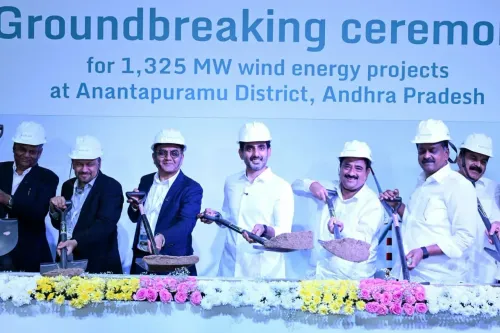
According to an official release, the acceleration reflects a combination of investor-friendly policies, faster project approvals, improved implementation timelines, and large-scale infrastructure investment. The state government had announced in May 2025 that it was accelerating implementation of its Integrated Clean Energy Policy, under which Andhra Pradesh aims to attract investments worth ₹10 lakh crore across renewable energy, storage, green hydrogen, transmission, and manufacturing ecosystems by 2029.
India's Broader Clean Energy Milestone
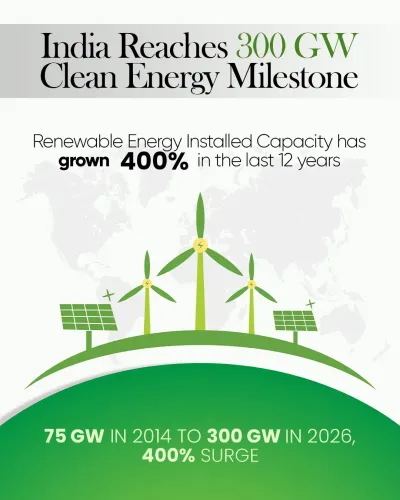
The Union government, in its parliamentary reply, also confirmed that India has already achieved the milestone of sourcing 50 per cent of its installed electricity capacity from non-fossil fuel sources — five years ahead of the 2030 target. The country remains on track to reach 500 GW of installed non-fossil fuel-based electricity capacity by 2030. Andhra Pradesh's surge is a meaningful contributor to that national ambition.
What It Means for the State
Andhra Pradesh has rapidly repositioned itself as a preferred destination for renewable energy projects, contributing to India's clean energy transition while also generating fresh investment flows and employment opportunities. This is a notable contrast to the sluggish additions recorded between 2021 and 2024, when policy uncertainty and implementation delays kept capacity growth subdued. The state's current government has credited its policy overhaul for reversing that trend. Whether the ₹10 lakh crore investment target by 2029 is met will depend on sustained execution — but the 2025-26 data provides early evidence that the policy reset is producing measurable results.
Point of View
And the current administration's approval-speed reforms appear to be the primary catalyst. The ₹10 lakh crore investment target by 2029 is ambitious, but the 2025-26 data gives it credibility it lacked a year ago. The harder question is grid absorption: rapid capacity addition without matching transmission and storage investment risks curtailment, which has historically undermined returns and deterred follow-on investment in high-growth renewable states.
NationPress
26 Oct 2026
Frequently Asked Questions
How much renewable energy capacity did Andhra Pradesh add in 2025-26?
Andhra Pradesh added 3,865.63 MW of renewable energy capacity in 2025-26 , according to data tabled by the Union Ministry of New and Renewable Energy in the Lok Sabha. This is nearly four times the 1,085.15 MW added in the previous year.
Where was the Andhra Pradesh renewable energy data revealed?
The data was tabled in the Lok Sabha by the Union Ministry of New and Renewable Energy in response to an Unstarred Question raised by Dr M.K. Vishnu Prasad , MP from Tamil Nadu.
What is Andhra Pradesh's Integrated Clean Energy Policy?
It is a state-level policy framework under which Andhra Pradesh aims to attract investments worth ₹10 lakh crore by 2029 across renewable energy, storage, green hydrogen, transmission, and manufacturing. The state government announced accelerated implementation of the policy in May 2025.
Has India met its clean energy targets ahead of schedule?
Yes. The Union government confirmed in its parliamentary reply that India has already sourced 50 per cent of its installed electricity capacity from non-fossil fuel sources, achieving this milestone five years ahead of the 2030 deadline. India is also on track for 500 GW of non-fossil capacity by 2030.
Why were Andhra Pradesh's renewable energy additions so low between 2021 and 2024?
Capacity additions remained modest during that period — just 125.42 MW, 148.62 MW, and 59.15 MW in 2021-22, 2022-23, and 2023-24 respectively. According to official statements, the subsequent surge has been attributed to investor-friendly policy reforms, faster approvals, and improved project implementation under the current state government.