Anurag Thakur Visits Masrur Rock-Cut Temples in Kangra
Synopsis
BJP MP Anurag Thakur visited the 8th-century Masrur Rock-Cut Temples in Kangra, Himachal Pradesh on June 15, 2026, praying for universal welfare at the ancient Shaivite shrine known as the Pyramid of the Himalayas.
Key Takeaways
BJP MP Anurag Thakur visited the Masrur Rock-Cut Temples in Kangra district on June 15, 2026 .
The temples are an 8th-century monolithic Shaivite complex carved from a single sandstone outcrop near the Beas river .
The site is popularly called the 'Pyramid of the Himalayas' and is set against the Dhauladhar mountain range .
The complex is a centrally protected monument under the Archaeological Survey of India .
The visit aligns with the BJP's sustained promotion of Himachal Pradesh's 'Devbhoomi' cultural identity and Himalayan religious tourism.
Government schemes including PRASAD and Swadesh Darshan have targeted heritage and pilgrimage infrastructure development at sites like Masrur.
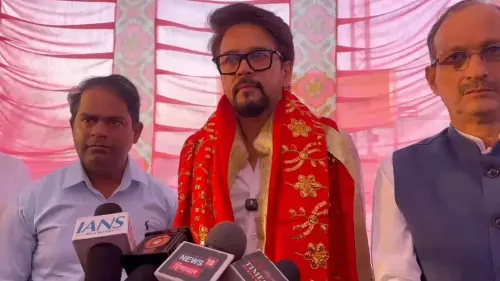
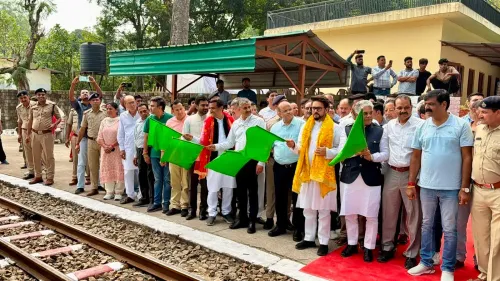
BJP MP Anurag Thakur on Monday, June 15, 2026, visited the Masrur Rock-Cut Temples in Kangra district, Himachal Pradesh, offering prayers and invoking blessings for universal welfare at one of the Himalayan region's most celebrated ancient shrines.
Context
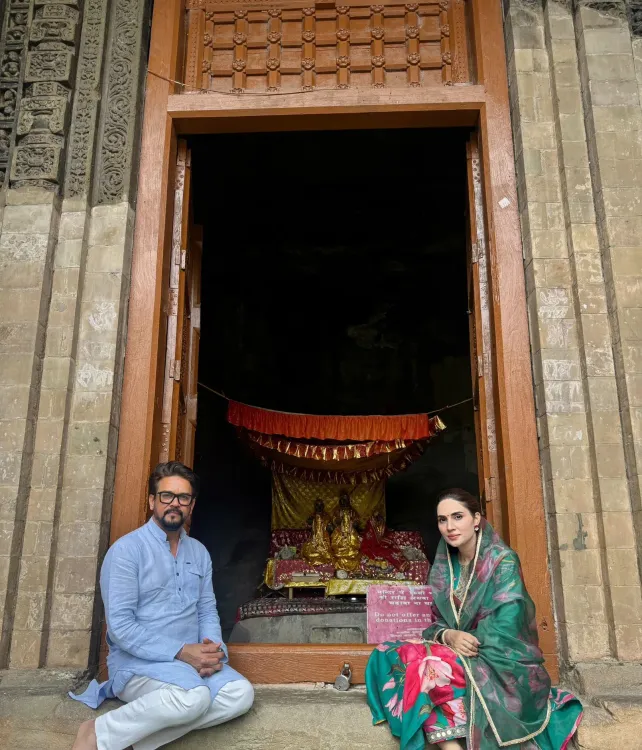
In his post, Thakur described Masrur as 'divyata, bhakti, kala va sundarta ka anupam sangam' — 'an unparalleled confluence of divinity, devotion, art, and beauty.' He noted that the temple complex, situated near the Beas river in Kangra, was carved from rock by the Pandavas in the 8th century and is popularly known as the 'Pyramid of the Himalayas.' He concluded with the invocation 'Har Har Mahadev.'
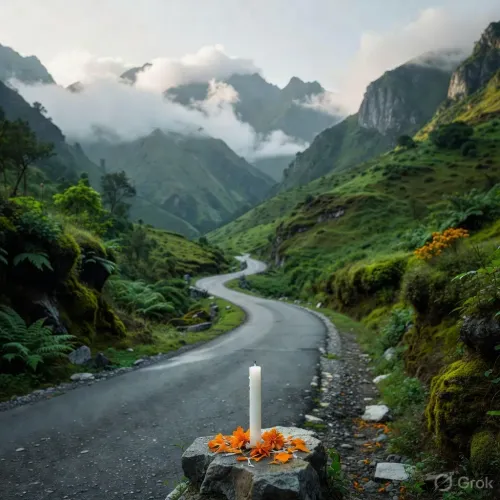
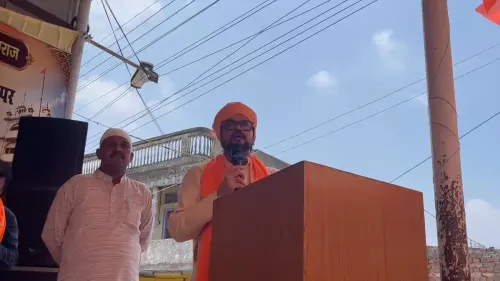
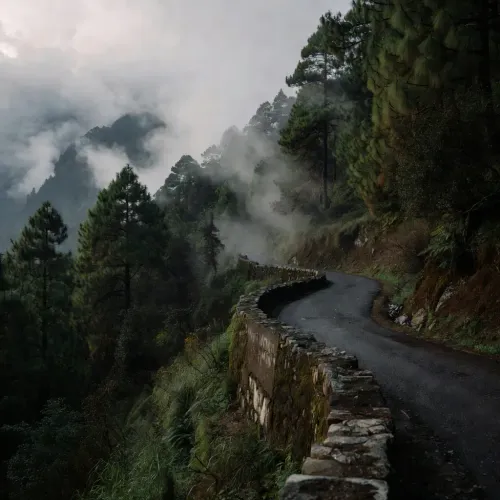
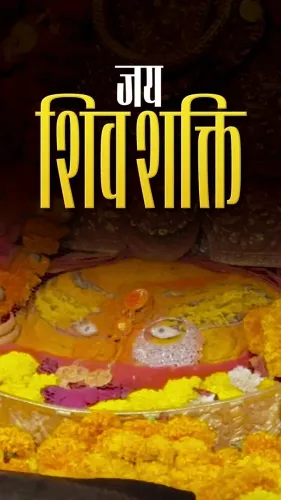
Thakur, who represents the Hamirpur constituency in Himachal Pradesh, shared four images from the visit, underscoring the site's dramatic setting against the Dhauladhar mountain range.
Policy Backdrop
The Masrur Rock-Cut Temples are a centrally protected monument under the Archaeological Survey of India (ASI), designated under the Ancient Monuments and Archaeological Sites and Remains Act. The monolithic sandstone complex features a cluster of early 8th-century Shaivite shrines carved from a single rock outcrop, distinguished by their pyramidal shikhara-style architecture.
The central government's PRASAD scheme, launched in 2014-15, has been directed at developing pilgrimage infrastructure at Himalayan heritage sites, and the Swadesh Darshan scheme has similarly promoted heritage tourism circuits across hill states. Masrur has been discussed in policy circles as a candidate for inclusion in future expansions of such programmes.
Stakeholders and Impact
The Kangra valley draws a significant share of Himachal Pradesh's heritage tourism, with the Masrur temples attracting Hindu devotees, domestic tourists, and international visitors interested in rock-cut architecture. Local communities in the Beas river valley depend on pilgrimage and heritage footfall for livelihoods in hospitality and transport.
BJP representatives from hill states have consistently amplified the 'Devbhoomi' — 'Land of the Gods' — identity of Himachal Pradesh through visits and social media engagement with ancient temple sites. Such outreach aligns with the broader political and policy push for religious tourism as an economic driver in mountain districts.
What's Next
Attention will turn to whether the Masrur complex receives enhanced coverage under upcoming Swadesh Darshan or PRASAD project cycles, and whether the Himachal Pradesh government announces a dedicated Kangra heritage tourism circuit. Thakur's visit, amplified on social media, is likely to renew public interest in the site's conservation status and accessibility infrastructure.
Point of View
Blending cultural identity politics with the central government's religious tourism agenda. The post's emphasis on the Pandava association and the 8th-century antiquity of the site signals an effort to connect the region's heritage to a pan-Hindu civilisational consciousness. With Kangra positioned as a potential heritage tourism hub, such high-profile visits by sitting MPs can accelerate policy attention and infrastructure funding. The broader arc points to religious and heritage tourism increasingly serving as both an economic and electoral lever in Himalayan constituencies.
NationPress
14 Sept 2026
Frequently Asked Questions
Where is the Masrur Rock-Cut Temple located?
The Masrur Rock-Cut Temple is located in Kangra district of Himachal Pradesh , near the Beas river and at the foothills of the Dhauladhar mountain range .
How old is the Masrur temple in Himachal Pradesh?
The Masrur temple complex dates to the 8th century , making it over 1,200 years old. It is a monolithic rock-cut Shaivite shrine carved from a single sandstone outcrop.
Why is Masrur called the Pyramid of the Himalayas?
Masrur is called the 'Pyramid of the Himalayas' because of its distinctive pyramidal shikhara-style towers carved directly from rock, which resemble a stepped pyramid when viewed against the Himalayan backdrop.
Who protects and maintains the Masrur temple?
The Archaeological Survey of India (ASI) protects and maintains the Masrur temples as a centrally protected monument under the Ancient Monuments and Archaeological Sites and Remains Act.
What is the PRASAD scheme and does it cover Himachal Pradesh temples?
The PRASAD scheme , launched in 2014-15 , is a central government initiative to develop pilgrimage infrastructure and amenities at identified heritage and religious sites. Several Himalayan temple locations have been covered under the scheme, and Masrur has been discussed as a potential candidate for future inclusion.