Anurag Thakur's three-word mantra for India's young jurists
Synopsis
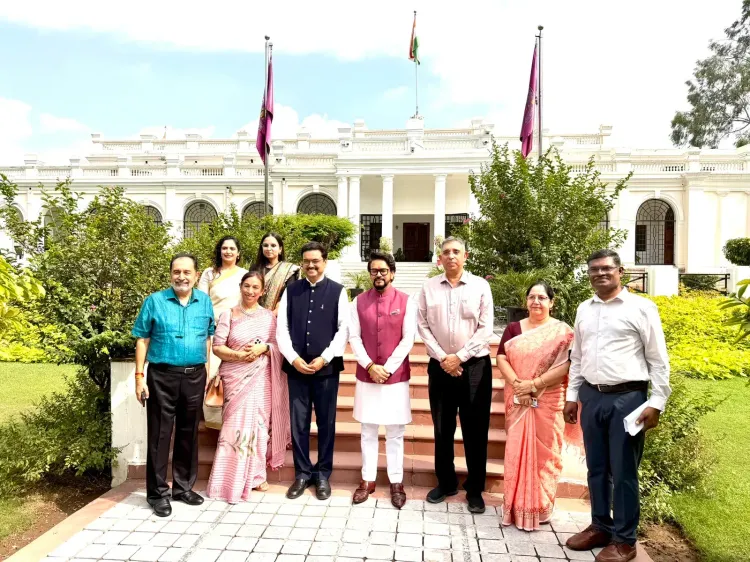
BJP MP Anurag Thakur on September 25 urged young Indian lawyers to ground their advocacy in Antyodaya and truth, invoking a three-word classical Sanskrit framework — Shastra, Shaastra, and Shastrartha — as a guiding mantra for the nation's legal youth.
Key Takeaways
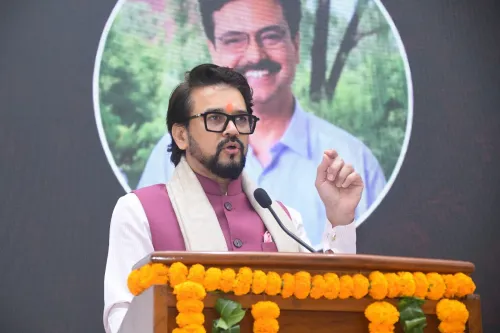
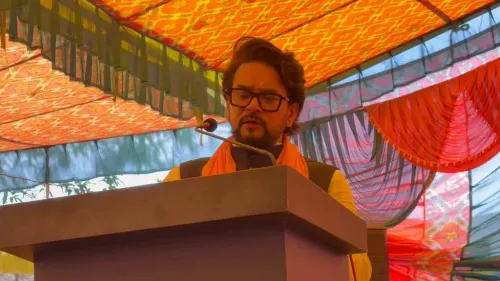
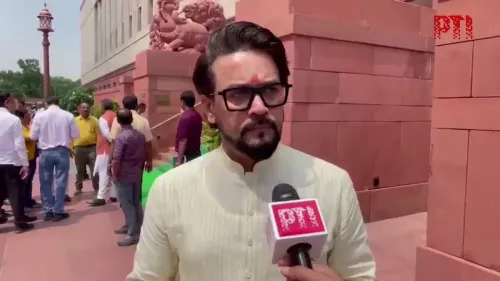
Anurag Thakur , BJP Lok Sabha MP from Hamirpur, Himachal Pradesh , addressed India's young jurists on 25 September 2026 .
He proposed a three-word mantra drawn from Sanskrit: Shastra (defence), Shaastra (social guidance), and Shastrartha (pursuit of truth through debate).
He specifically urged young lawyers to use advocacy for Antyodaya — upliftment of the poorest — and for protection of Satya (truth), not personal ego.
Antyodaya is rooted in Deendayal Upadhyaya's integral humanism and has been a core BJP welfare and ideological theme since 2014 .
The message aligns with the National Education Policy 2020's push to integrate Indian knowledge traditions into professional disciplines.
Three words — and a challenge. BJP MP Anurag Thakur addressed India's young legal community with a call to root their advocacy not in ego but in the service of the weakest and the pursuit of truth, invoking classical Sanskrit concepts to frame a modern professional ethic.
Shastra, Shastra, Shastrartha: unpacking the three pillars
Thakur outlined a three-part framework — each built on a classical Sanskrit term. Shastra (शस्त्र), the weapon, represents defence of the nation. A second invocation of Shastra — here likely pointing to Shaastra (शास्त्र), meaning scripture or disciplinary knowledge — stands for guiding society. And Shastrartha (शास्त्रार्थ), the classical tradition of structured philosophical debate, represents the pursuit of truth and the preservation of India's intellectual heritage.
The distinction between the two near-homonyms is deliberate and substantive. One is the sword; the other is the text. Together with Shastrartha's debating tradition, they form what Thakur described as a mantra 'to take the nation forward' — handed specifically to the young.
Antyodaya and Satya: the legal mandate he put on the table
The sharpest line in the message was a direct instruction: use advocacy and the art of debate 'not for personal ego, but to serve Antyodaya and protect Satya.' Antyodaya — literally 'rise of the last person' — is the welfare philosophy rooted in Deendayal Upadhyaya's integral humanism and has been a recurring ideological touchstone for the BJP-led government since 2014, underpinning a range of social welfare programmes aimed at the most marginalised citizens.
For Thakur to invoke Antyodaya in a legal context is a pointed move. It reframes the courtroom not as an arena for career advancement but as a front line of social justice — placing the young lawyer's brief in service of those who cannot otherwise afford one.
Classical debate tradition meets National Education Policy's vision
The invocation of Shastrartha connects directly to the National Education Policy 2020, which explicitly calls for the integration of Indian knowledge traditions into mainstream education and professional training. The BJP has repeatedly cited NEP 2020 as a civilisational reset — moving away from what it describes as a colonial academic inheritance toward rooting professional disciplines in indigenous intellectual frameworks.
That framing now extends, in Thakur's telling, to the Bar. The message to young jurists is unambiguous: your skill in argument has ancient precedent, and that precedent comes with a moral obligation.
Whether this translates into formal legal education reforms — incorporating classical debate pedagogy or Antyodaya-oriented pro bono mandates — is the question the legal community will now be watching.
Point of View
Shaastra, and Shastrartha for young jurists is part of a consistent BJP effort to reattach contemporary professional roles to classical Indian intellectual lineages — a cultural-nationalist framing that has accelerated since the National Education Policy 2020. By pairing this with Antyodaya, the party simultaneously anchors the message in a social-justice idiom, complicating a reading of it as purely symbolic. Whether this marks a substantive policy signal toward legal education reform or remains aspirational rhetoric will depend on whether ministerial follow-up materialises. The dual audience — ideologically aligned youth and the broader legal community — makes it a calibrated message designed to travel on both registers.
NationPress
25 Sept 2026
Frequently Asked Questions
What is the three-word mantra Anurag Thakur gave to young lawyers?
Anurag Thakur outlined three Sanskrit concepts: Shastra (the weapon, for national defence), Shaastra (scripture/disciplinary knowledge, for guiding society), and Shastrartha (classical philosophical debate, for pursuing truth and preserving India's knowledge tradition).
What does Antyodaya mean and why did Thakur invoke it for jurists?
Antyodaya means 'rise of the last person' and is rooted in Deendayal Upadhyaya's philosophy of integral humanism. Thakur urged young lawyers to direct their advocacy toward uplifting the most marginalised, reframing the courtroom as a space of social service rather than personal advancement.
What is Shastrartha and how is it relevant to legal practice?
Shastrartha is an ancient Indian tradition of structured, rule-bound philosophical debate aimed at establishing truth. Thakur invoked it to connect a lawyer's courtroom skills to a classical intellectual heritage, arguing the tradition of rigorous debate has deep roots in Indian civilisation.
How does this connect to the National Education Policy 2020?
NEP 2020 explicitly calls for integrating Indian knowledge traditions into mainstream education and professional training. Thakur's appeal to young jurists extends that vision to legal education, suggesting that classical frameworks like Shastrartha should inform how lawyers are trained and how they practise.
Who is Anurag Thakur?
Anurag Thakur is a BJP Lok Sabha MP from Hamirpur in Himachal Pradesh and a former Union Minister of Information and Broadcasting as well as Youth Affairs and Sports.