Anurag Thakur urges youth to shed colonial lens at DU law debate
Synopsis
BJP MP Anurag Thakur told Delhi University law students on September 25 that democracy is rooted in Bharat's civilizational DNA, called for 'Swa-Bodh' in public policy, invoked Nyaya and Lok Kalyan as indigenous legal anchors, and condemned 'Dimagi Naxalism' in universities.
Key Takeaways
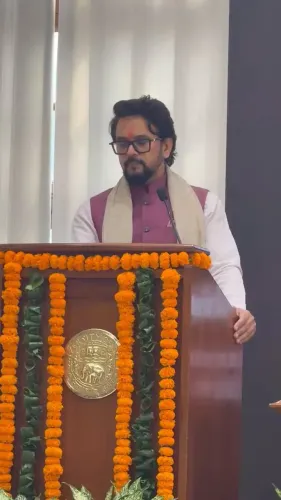
BJP MP Anurag Thakur spoke at the 'Abhivyakti 1.0' Asian Parliamentary Debate at University of Delhi Faculty of Law on September 25, 2026 .
He introduced the concept of 'Swa-Bodh' (civilizational self-realization) as a lens for decolonising Indian public policy and law.
He urged students to integrate indigenous frameworks — specifically Nyaya (justice) and Lok Kalyan (public welfare) — into modern legislation.
He condemned 'Dimagi Naxalism' , targeting university-based activism he described as anti-national, and referenced the case of Afzal Guru .
He linked the civilizational-assertion agenda to the government's Viksit Bharat vision for a developed India by 2047 .
The speech aligns with the National Education Policy 2020 's mandate to integrate Indian Knowledge Systems into higher education.
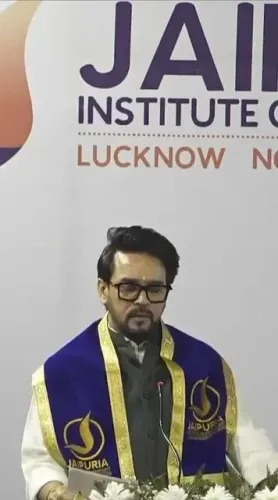
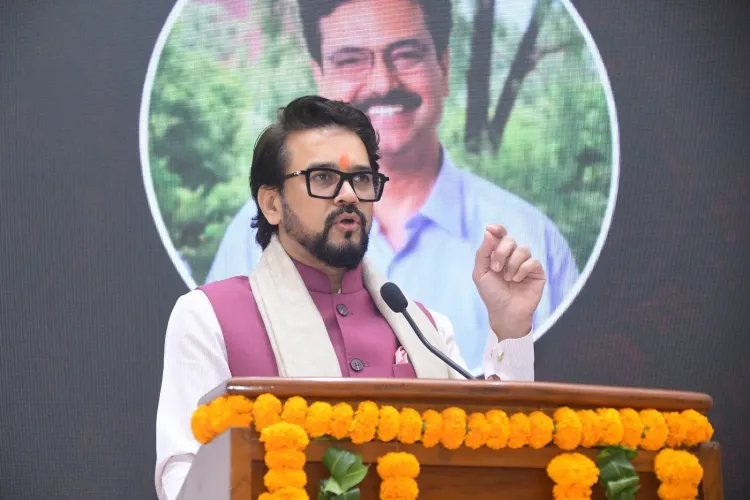
Democracy was never a gift the West handed to Bharat — it runs through the subcontinent's oldest civilizational roots. That was the central argument BJP MP Anurag Thakur made on Friday, September 25, 2026, when he addressed students at the University of Delhi Faculty of Law during the 'Abhivyakti 1.0' Asian Parliamentary Debate, urging India's brightest young minds to fearlessly dismantle colonial narratives and anchor modern law in indigenous frameworks.
The core argument: 'Swa-Bodh' over Eurocentric frameworks
Thakur's address pivoted on a single, pointed idea he called 'Swa-Bodh' — civilizational self-realization. His case: centuries of colonial conditioning have led Indian policymakers and legal scholars to instinctively reach for Western frameworks when homegrown concepts such as Nyaya (justice) and Lok Kalyan (public welfare) have been embedded in Indian thought far longer than Montesquieu or Locke. 'Democracy and debate are intrinsic to Bharat's civilizational DNA, not a Western import,' he told the audience, calling for a decisive move beyond Eurocentric lenses in public policy.
The argument is not new to BJP's ideological vocabulary, but the setting — a law faculty parliamentary debate stage — gave it a sharper edge. The audience was legal academia's next generation: the very people who will draft legislation, argue cases, and eventually sit on benches.
The sharp turn: 'Dimagi Naxalism' and the Afzal Guru reference
The speech then pivoted from aspiration to accusation. Thakur strongly condemned what he called 'Dimagi Naxalism' — intellectual or ideological Naxalism — targeting those who, in his framing, 'sit in universities to divide our country, create an anti-India atmosphere, and knock on the Supreme Court's doors at midnight to save the likes of Afzal Guru.' The Guru reference is a recurring flashpoint in campus politics: Afzal Guru, convicted for his role in the 2001 Indian Parliament attack and executed in 2013, has been invoked repeatedly in debates over judicial activism and student politics ever since protests at select campuses brought his name into the national conversation.
Thakur's formulation explicitly drew a line: those pursuing such activism, he argued, 'can have no connection with building a Viksit Bharat' — the government's flagship vision of a developed India by 2047.
Where policy backs the rhetoric: NEP 2020 and Indian Knowledge Systems
Thakur's call for decolonised public policy has a formal policy anchor. The National Education Policy 2020 explicitly mandated the integration of Indian Knowledge Systems into higher education curricula — a structural move designed to shift pedagogical defaults away from purely Western intellectual traditions. The Abhivyakti debate stage, in that sense, is downstream of a policy already in motion.
Since 2014, BJP leaders have consistently argued that Indian democratic institutions and legal thought predate colonial rule — that concepts like Nyaya are not translations of foreign ideas but originals with their own philosophical depth. Thakur's Delhi University address is the latest expression of that broader civilizational-assertion project, now increasingly aimed at the campus ecosystem.
What to watch from here
The speech sets up a watch-list with two items. First, whether concepts like Nyaya and Lok Kalyan begin appearing with greater frequency in legislative drafting notes or judicial reform proposals — moving from rhetorical framing to actual statutory language. Second, whether Delhi University's law faculty and broader campus debate circuit become more prominent arenas for this civilizational-policy conversation in the coming academic year. The 'Abhivyakti' series, if it continues, could become a recurring platform.
For now, one thing is clear: Thakur chose a law school podium — not a rally stage — to make this argument. That audience, and that setting, is the point.
Point of View
The speech attempts to shift the terrain of this argument from partisan politics into academic legitimacy. The invocation of NEP 2020's Indian Knowledge Systems framework gives the rhetoric a policy spine, suggesting the party is now trying to move this agenda from slogan to statute. The Afzal Guru reference, however, ensures the speech remains a red line in campus politics — a deliberate signal that the civilizational project comes bundled with a specific definition of who does and does not belong inside it.
NationPress
25 Sept 2026
Frequently Asked Questions
What is 'Swa-Bodh' as used by Anurag Thakur?
'Swa-Bodh' literally means civilizational self-realization. Thakur used the term to argue that India must develop policy and law from within its own intellectual and civilizational traditions rather than defaulting to Western or colonial frameworks.
What is 'Dimagi Naxalism' according to Anurag Thakur?
Thakur used the phrase 'Dimagi Naxalism' to describe what he characterised as ideological or intellectual activism in universities that he believes promotes anti-national sentiment and divides the country, distinguishing it from armed Naxalism.
Why did Anurag Thakur mention Afzal Guru at a university debate?
Afzal Guru was convicted for his role in the 2001 Indian Parliament attack and executed in 2013. Thakur referenced him to criticise activists who, in his framing, sought legal intervention on his behalf — using it as a symbol of campus activism he considers incompatible with the Viksit Bharat vision.
What are Nyaya and Lok Kalyan in the context of Indian law?
Nyaya means justice in Sanskrit and represents a classical Indian philosophical and legal concept. Lok Kalyan means public welfare. Thakur invoked both as examples of indigenous frameworks that he argues should inform modern Indian legislation instead of purely Western legal theory.
How does NEP 2020 relate to decolonising Indian education?
The National Education Policy 2020 explicitly mandated the integration of Indian Knowledge Systems into higher education curricula, providing a formal policy basis for the kind of civilizational-reorientation of learning that Thakur advocated in his Delhi University speech.