Army kills 2 infiltrators at LoC in Kupwara's Keran sector
Synopsis
At 3.30 am on 17 October, Indian Army troops in Kupwara's Keran sector spotted suspicious movement near Jumagund, challenged the intruders, and killed two infiltrators who tried to retreat across the LoC. A search operation is now underway — signalling that the Kupwara corridor remains under active infiltration pressure.
Key Takeaways
Two infiltrators were killed by the Indian Army in the Keran sector of Kupwara district , Jammu and Kashmir , on 17 October 2026 .
The encounter began at approximately 3.30 am after troops detected suspicious movement in the Jumagund area .
Both bodies are reported to be on the Pakistani side of the LoC after the militants were shot while retreating.
A search operation is underway to check for additional infiltrators in the area.
The LoC in Jammu and Kashmir stretches roughly 740 km , guarded by a 550-km anti-infiltration fence and multi-tier security systems.
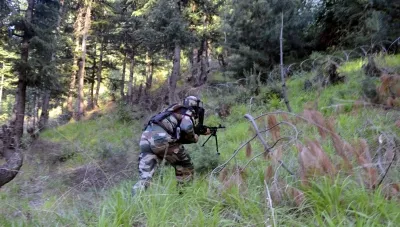
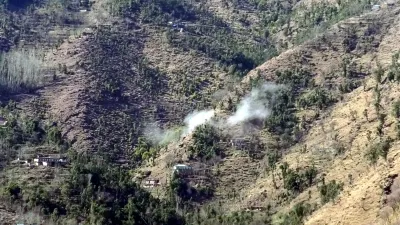
The Indian Army foiled an infiltration attempt on the Line of Control (LoC) in the Keran sector of Kupwara district, Jammu and Kashmir, in the early hours of Saturday, 17 October 2026, killing two infiltrators in the ensuing firefight. The bodies of both militants are reported to be lying on the Pakistani side of the LoC after they were shot while attempting to retreat across the border.
How the Operation Unfolded
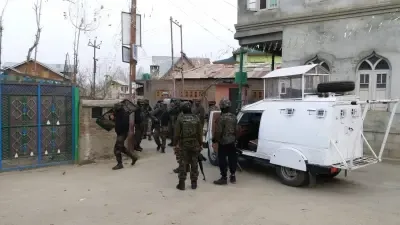
According to Army sources, troops noticed suspicious movement in the Jumagund area of the Keran sector at around 3.30 am. The soldiers issued a challenge, which triggered an exchange of fire. The swift response by the alert patrol neutralised both infiltrators before they could breach deeper into Indian territory.
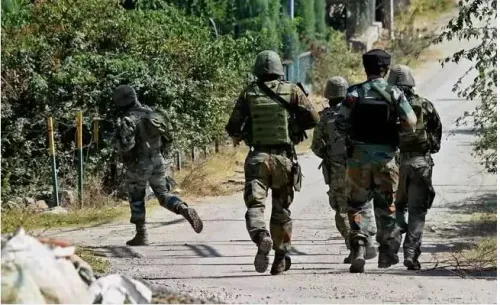
'Two terrorists have been killed in this operation and their bodies are lying on the other side of the LoC after they were shot and they tried to rush back into the Pakistani side,' Army sources said. A search operation was subsequently launched in the area to determine whether any additional infiltrators remain concealed in the surrounding terrain.
The LoC's Multi-Layered Defence Architecture
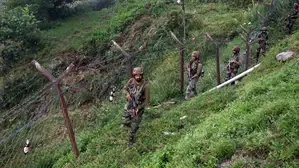
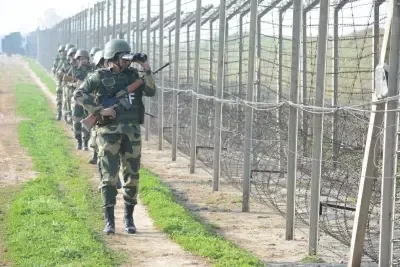
Jammu and Kashmir shares a roughly 740-km-long LoC running through the districts of Kupwara, Bandipora, and Baramulla in the Kashmir Valley, as well as Rajouri, Poonch, and parts of Jammu district. The Army maintains a multi-tiered anti-infiltration obstacle system, including a heavily patrolled fence spanning approximately 550 km, designed to intercept cross-border movement, smuggling, and militant activity.
Sectors including Rajouri, Poonch, Baramulla, and Kupwara operate under heightened security alertness. Digital Aadhaar-based border crossing systems have been deployed at checkpoints such as Poonch to manage authorised local resident movement.
The Broader Border Security Framework
Beyond the LoC, Jammu and Kashmir also has a nearly 200-km-long International Border in the districts of Jammu, Samba, and Kathua, guarded by the Border Security Force (BSF). Both the Army and the BSF are tasked with countering infiltration, exfiltration, smuggling, and drone activity directed by terror handlers operating from across the border.
Drones have increasingly been used to drop payloads — arms, ammunition, cash, and narcotics — which are recovered by overground workers of terrorist groups and funnelled to active militants. This incident underscores the persistent pressure on the LoC, particularly in the Kupwara belt, which has historically been a favoured infiltration corridor.
Significance and What Comes Next
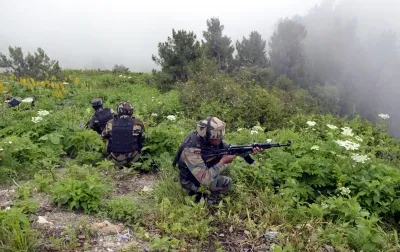
This operation reflects the Army's continued capacity to detect and neutralise infiltration attempts before they can escalate into threats deeper inside the Valley. The ongoing search operation in the Jumagund area will establish whether Saturday's foiled bid was an isolated attempt or part of a larger push. Security forces in Kupwara remain on high alert as the operation continues.
Point of View
But it also signals that infiltration pressure along the Kupwara corridor has not eased — if anything, the frequency of such encounters in 2026 suggests a sustained push by handlers across the border. The Army's multi-tier fence system is demonstrably functioning, yet the persistence of these bids raises questions about whether diplomatic and intelligence channels are doing enough to address the origin of these attempts. The shift toward drone-assisted logistics — separate from physical infiltration — also points to a hybrid threat model that the 550-km fence alone cannot fully contain. What happens in the next 48 hours of the search operation will reveal whether this was a two-man probe or the forward element of a larger group.
NationPress
17 Oct 2026
Frequently Asked Questions
What happened at the LoC in Keran sector on 17 October 2026?
Indian Army troops killed two infiltrators in the Jumagund area of the Keran sector in Kupwara district, Jammu and Kashmir, in the early hours of 17 October 2026. The encounter began around 3.30 am after soldiers spotted suspicious movement and challenged the intruders, triggering an exchange of fire.
Where are the bodies of the killed infiltrators?
According to Army sources, the bodies of both infiltrators are on the Pakistani side of the LoC. They were shot while attempting to retreat back across the border after the encounter.
Is a search operation still underway in the Keran sector?
Yes. Following the encounter, the Army launched a search operation in the Jumagund area to determine whether any additional infiltrators are hiding in the surrounding terrain. Security forces in Kupwara remain on high alert.
How does the Indian Army guard the Line of Control in Jammu and Kashmir?
The Army maintains a multi-tiered anti-infiltration obstacle system along the roughly 740-km LoC, including a heavily patrolled fence of approximately 550 km. High-alert sectors such as Kupwara, Baramulla, Rajouri, and Poonch are supported by digital Aadhaar-based border crossing systems at authorised checkpoints.
What is the role of drones in cross-border militant activity along the LoC?
Terror handlers across the border have increasingly used drones to drop payloads — including arms, ammunition, cash, and drugs — into Indian territory. These are retrieved by overground workers and passed on to active militants, representing a growing hybrid threat alongside physical infiltration attempts.