Indian Army shifts J&K drug strategy from border watch to demand curb
Synopsis
The Indian Army's anti-drug playbook in Jammu and Kashmir has quietly but fundamentally changed. With drone drops neutralising border surveillance gains and 5.4 lakh opioid addicts in the UT alone, the Army is now betting on demand destruction — community outreach, youth rehabilitation, and trust-building — over interdiction. Treated cases have jumped nearly ninefold since 2021, and officials see rehabilitated youth as both a public health win and a counter-radicalisation asset.
Key Takeaways
The Indian Army has shifted its Jammu and Kashmir drug strategy from border surveillance to demand-side reduction through community outreach and rehabilitation.
Jammu and Kashmir ranks among the top five states/UTs in India for opioid abuse; an estimated 5.4 lakh individuals are addicted to opioids.
Persons treated for addiction rose from 5,382 in 2021 to 46,491 in 2025–26 , a nearly ninefold increase.
1.68 lakh children aged 10 to 17 are reportedly addicted to opioids in the region.
Pakistan-based smugglers have shifted to drone drops after traditional border transit routes were disrupted, partially undermining earlier gains.
Addicts reportedly spend close to ₹88,000 a month on substances, making them vulnerable to ISI-linked recruitment for terror activities, officials say.
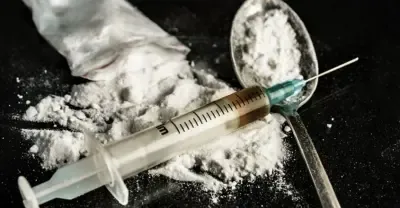
The Indian Army has pivoted its counter-narcotics strategy in Jammu and Kashmir, moving beyond border surveillance and supply-chain interdiction toward dismantling the domestic consumer market — a shift officials describe as essential to addressing the drug crisis at its roots. The recalibration comes as Jammu and Kashmir ranks among the top five states and Union Territories in India for opioid abuse, with surveys estimating 5.4 lakh individuals addicted to opioids across the region.
Why Border Surveillance Alone Is Not Enough
For years, the Army's primary counter-narcotics tool was surveillance and intelligence sharing along the border, which significantly disrupted traditional smuggling corridors. According to officials, this approach succeeded in suppressing established transit routes — but it also triggered an adaptation by traffickers.
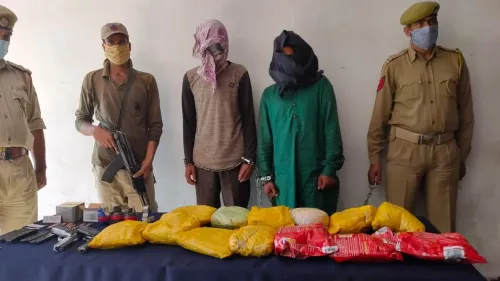
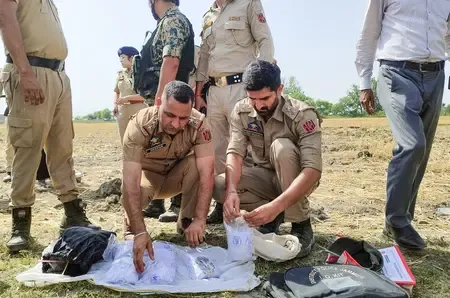
'This has largely helped in keeping the supply chains down, as a result of which the transit routes were off the charts for the narcotic smugglers. This, however, led to an increase in drone drops by the Pakistan-based smugglers,' an official said. Drone-based deliveries have allowed traffickers to partially recover ground lost to ground-level interdiction, with security agencies intercepting some consignments while others continue to get through.
Officials also warn of a displacement effect: if supply routes into Jammu and Kashmir are sealed entirely at the border, addicts would seek narcotics from Himachal Pradesh or Punjab — states already battling severe drug crises — effectively redistributing rather than reducing the problem.
The Demand-Side Strategy
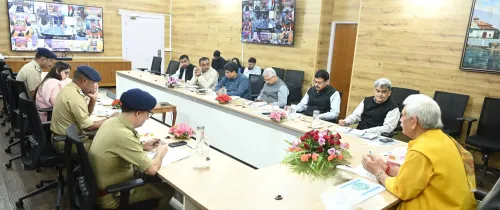
The Army's revised approach centres on a 'whole-of-society' model, working closely with the Jammu and Kashmir administration, local NGOs, senior citizens, and religious leaders to enable early detection of addiction and facilitate counselling. 'Public outreach programmes based on a whole-of-society approach have helped many young people overcome addiction. Community engagement is also being encouraged, with senior citizens and religious leaders playing an active role,' an official said.
The Army has also organised youth engagement initiatives, skill-training programmes, and sponsored sports events, alongside providing medical assistance and identifying and shutting down supply routes. Officials say the dual approach — disrupting supply while eradicating demand — is the only sustainable solution.
Scale of the Crisis: Numbers That Demand Attention
The scale of the problem in Jammu and Kashmir is stark. In 2021, the number of persons treated for drug addiction stood at 5,382. By 2025–26, that figure had surged to 46,491 — nearly a ninefold increase — reflecting both the worsening crisis and the expansion of treatment outreach. Daily hospital caseloads for drug-related treatment have jumped from 10–15 cases per day to 150–200 cases per day.
Approximately 90 per cent of hard-core drug users fall within the 17-to-33 age group, according to officials. More alarmingly, 1.68 lakh children aged 10 to 17 are reportedly addicted to opioids — a figure that local NGOs say threatens the developmental future of an entire generation.
The National Security Dimension
Officials highlight a direct link between addiction and national security in the region. Addicts, who reportedly spend close to ₹88,000 a month to sustain their habit, are described as particularly vulnerable to recruitment by elements backed by Pakistan's Inter-Services Intelligence (ISI), which allegedly lures such individuals into committing acts of terror in exchange for drugs rather than money.
Rehabilitated youth, officials argue, become community assets and trust anchors. 'Once the local population backs the security agencies to the fullest, then it is hard for Pakistan-based elements to crack them and provoke them against the Indian state,' an official said. The Army's community-engagement model is thus framed as both a public health intervention and a long-term counter-radicalisation effort.
Broader National Context
India has, over the past decade, transitioned from being primarily a transit country for narcotics to becoming a significant consumer market in its own right. The Narendra Modi government has intensified its nationwide anti-drug campaign in response, with central agencies including the Narcotics Control Bureau (NCB) and state police forces bearing the primary enforcement burden. In Jammu and Kashmir, the Army's involvement adds a structured, resource-backed layer to this effort — one that civil agencies operating alone have found difficult to replicate.
As the Army's outreach programmes scale up, officials say the next phase will focus on deepening institutional linkages with healthcare providers and expanding the geographic reach of counselling networks across the Union Territory.
Point of View
But also raises a harder question: are the numbers rising because addiction is spreading, or because detection has improved? The national security framing of the rehabilitation effort — rehabilitated youth as counter-radicalisation assets — is strategically astute, but it risks instrumentalising public health. Sustainable outcomes will require civilian healthcare infrastructure to eventually own this mission; the Army cannot and should not be the permanent frontline of a drug-treatment programme.
NationPress
29 Oct 2026
Frequently Asked Questions
Why has the Indian Army changed its anti-drug strategy in Jammu and Kashmir?
The Army found that border surveillance and supply-chain disruption, while effective initially, prompted Pakistan-based smugglers to switch to drone drops, partially recovering lost ground. Officials concluded that cutting supply alone displaces the problem rather than solving it, prompting a shift toward reducing consumer demand through community outreach and rehabilitation.
How serious is the drug addiction crisis in Jammu and Kashmir?
Jammu and Kashmir ranks among the top five states and Union Territories in India for opioid abuse. Surveys estimate 5.4 lakh individuals are addicted to opioids, including 1.68 lakh children aged 10 to 17. About 90 per cent of hard-core users are aged 17 to 33.
What progress has the Army's outreach made so far?
The number of persons treated for drug addiction in Jammu and Kashmir rose from 5,382 in 2021 to 46,491 in 2025–26 — a nearly ninefold increase. Daily hospital caseloads for drug treatment have also jumped from 10–15 cases per day to 150–200, reflecting both the worsening crisis and expanded outreach.
What is the national security link to drug addiction in Jammu and Kashmir?
Officials say addicts, who reportedly spend close to ₹88,000 a month to sustain their habit, are prime targets for ISI-backed elements that allegedly offer drugs in exchange for carrying out acts of terror. The Army views rehabilitated youth as community trust-builders who are harder for Pakistan-based operatives to recruit or radicalise.
How does the Army's 'whole-of-society' approach work?
The approach involves the Army working alongside the Jammu and Kashmir administration, NGOs, religious leaders, and senior citizens to enable early detection of addiction and facilitate counselling. It is supplemented by youth engagement events, skill-training programmes, sports sponsorships, and medical assistance — with the goal of eliminating demand rather than just disrupting supply.