Indian Army's Northern Command completes first-ever cadaveric organ retrieval in J&K
Synopsis
In a first for Jammu and Kashmir, the Indian Army's Command Hospital in Udhampur retrieved the liver and kidneys of a deceased soldier after his family consented to donate his organs — a landmark moment that combined military medicine, IAF airlift, civil administration, and SOTTO coordination into a single life-saving operation unprecedented in the region.
Key Takeaways
Indian Army's Northern Command Hospital, Udhampur conducted Jammu and Kashmir's first-ever cadaveric organ retrieval on 19 November 2026 .
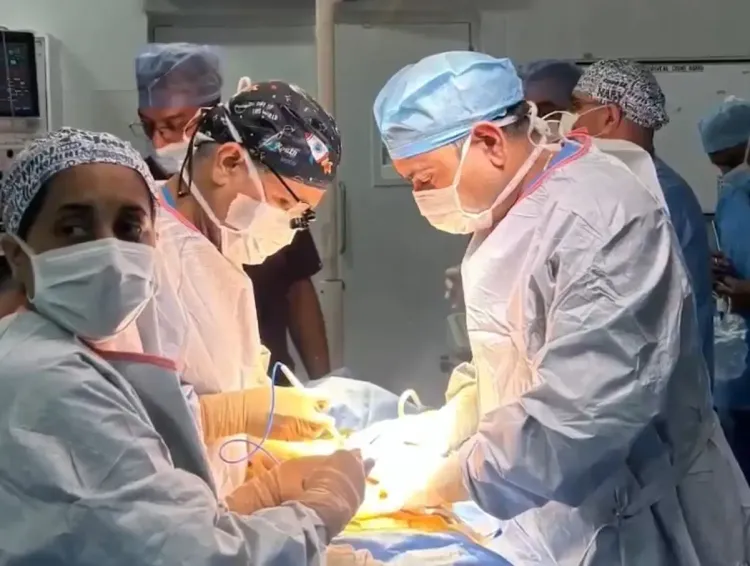
The liver and kidneys of a deceased serving soldier were retrieved by joint teams from Command Hospital, Udhampur and Army Hospital (R&R), New Delhi .
A dedicated green corridor was established with support from Headquarters Northern Command , civil administration, SOTTO , and the Indian Air Force .
Elias Sharma , Head of Urology and Renal Transplant at GMC Jammu , called it a feat unprecedented in J&K.
The donor's family consented to organ donation amid grief, with the Northern Command saluting their courage and selflessness.
Deceased organ donation remains exceptionally rare even in major Indian metropolitan centres, making this milestone regionally significant.
The Indian Army's Northern Command, headquartered at Udhampur, on 19 November 2026 announced that its Command Hospital had successfully conducted the first-ever cadaveric organ retrieval in Jammu and Kashmir, after the family of a deceased serving soldier consented to donate his organs. The milestone marks an unprecedented moment in the region's healthcare history and in the Armed Forces Medical Services' clinical record.
What Was Retrieved and How
The liver and kidneys of the deceased soldier were retrieved by joint specialist teams drawn from Command Hospital, Udhampur, and Army Hospital (Research and Referral), New Delhi. The procedure required seamless coordination between two of the Army's premier medical institutions, underscoring the operational depth of the Armed Forces' healthcare network.
To facilitate the swift and secure transfer of the harvested organs, a dedicated green corridor was established through coordinated efforts involving Headquarters Northern Command, the civil administration, and the State Organ and Tissue Transplant Organisation (SOTTO). Airlift support was provided by the Indian Air Force, ensuring time-critical logistics were met.
A Family's Act of Extraordinary Courage
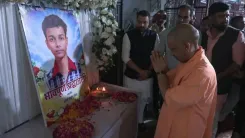
The Northern Command described the donor family's decision as an act of profound compassion in the face of grief. 'Amid profound grief, the family of a serving soldier made an extraordinary act of compassion, transforming their personal loss into a gift of life for someone else,' the Northern Command said in a post on social media platform X.
The command saluted the courage and selflessness of the donor's family, stating that the operation reflected the Armed Forces Medical Services' commitment to clinical excellence and institutional synergy in service of saving lives.
Expert Reaction and Regional Significance
Elias Sharma, Head of the Department of Urology and Renal Transplant at Government Medical College (GMC), Jammu, commended the achievement, noting that the medical team at Udhampur Command Hospital had accomplished a feat unprecedented in Jammu and Kashmir. Medical professionals at GMC Jammu emphasised that a single organ donor has the potential to save multiple lives.
Notably, deceased organ donation remains exceptionally rare even across major metropolitan centres in India, making this achievement in a predominantly military hospital in a border region all the more significant.
Broader Impact on J&K Healthcare
The Northern Command described the procedure as a defining milestone in Jammu and Kashmir's healthcare journey, signalling that the region's medical infrastructure is now capable of conducting cadaveric organ retrieval — a complex, multi-agency undertaking that demands specialist surgical teams, cold-chain logistics, and regulatory coordination. This comes amid broader efforts to strengthen tertiary healthcare capacity in the Union Territory.
Advocates for organ donation have long argued that institutional leadership from bodies like the Armed Forces can help normalise deceased donation in communities where awareness and acceptance remain low. The successful retrieval at Udhampur may serve as a template for future multi-agency organ donation drives across the region.
Point of View
By mobilising specialist surgeons, the IAF, civil administration, and SOTTO in a single coordinated operation, has demonstrated a model that civilian hospital networks in J&K — and across Tier-2 India — could replicate. What mainstream coverage will likely miss is the policy implication: if the Armed Forces Medical Services can normalise cadaveric retrieval in a border region with limited tertiary infrastructure, the argument for mandatory organ donation opt-out legislation — long stalled in India — gains fresh urgency. The donor family's consent, freely given in profound grief, deserves to be more than a footnote; it should anchor a national conversation about how India closes its catastrophic organ availability gap.
NationPress
19 Nov 2026
Frequently Asked Questions
What is cadaveric organ retrieval and why is this a milestone for J&K?
Cadaveric organ retrieval involves removing viable organs from a deceased, brain-dead donor for transplantation into living recipients. This was the first time such a procedure was successfully conducted in Jammu and Kashmir, marking a historic step for the region's healthcare infrastructure.
Which organs were retrieved and by which medical teams?
The liver and kidneys of the deceased soldier were retrieved by joint specialist teams from Command Hospital, Udhampur, and Army Hospital (Research and Referral), New Delhi. The two institutions collaborated to perform the complex multi-organ retrieval procedure.
How were the organs transported after retrieval?
A dedicated green corridor was established through coordinated efforts of Headquarters Northern Command, the civil administration, and the State Organ and Tissue Transplant Organisation (SOTTO). The Indian Air Force provided airlift support to ensure the organs reached their destination within critical time windows.
Who was the donor and why did the family agree to donation?
The donor was a deceased serving Indian Army soldier whose family consented to organ donation following his death. The Northern Command described the family's decision as an extraordinary act of compassion that transformed personal loss into a gift of life for others.
How rare is deceased organ donation in India?
Deceased organ donation remains exceptionally rare even in India's major metropolitan centres, according to medical professionals at Government Medical College, Jammu. India's deceased donor rate is among the lowest globally, making this first-of-its-kind retrieval in J&K especially significant.