Arunachal Pradesh launches sweeping deregulation across 51 reform areas to attract investment
Synopsis
Arunachal Pradesh has quietly executed one of the most sweeping regulatory overhauls in its history — 51 reform areas, an MSME ordinance with a three-year inspection moratorium, 32 industries freed from pollution consent, and all 17 industrial estates mapped on a live GIS portal. For a frontier state long seen as investment-hostile terrain, this is a significant structural shift.
Key Takeaways
Arunachal Pradesh has implemented reforms across 51 areas under the BRAP framework; 16 priority areas are fully accepted by the Centre.
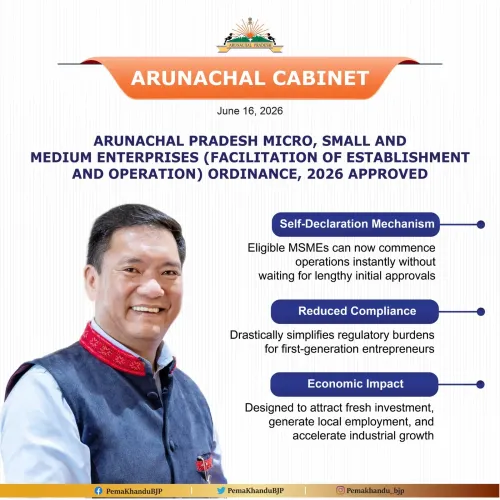
The Arunachal Pradesh MSME Facilitation Ordinance, 2026 introduces self-certification and a three-year inspection moratorium for eligible enterprises.
32 additional industries were added to the White Category in February 2026 , exempting them from prior pollution-control consent.
All 17 industrial estates are now integrated with the GIS-based India Industrial Land Bank (IILB) portal.
A fully digital Online Building Permission System consolidates multiple NOCs into a single workflow.
Minimum land ownership requirements for private schools and universities have been removed.
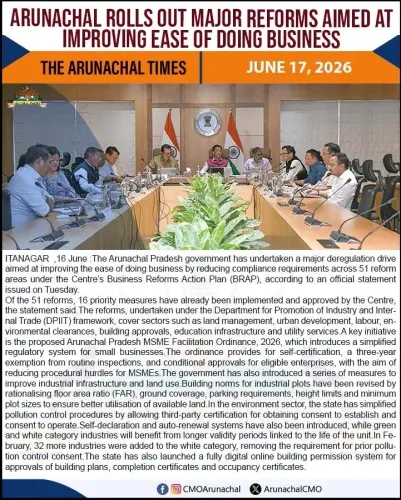
The Arunachal Pradesh government has rolled out one of the most comprehensive deregulation drives in the northeastern state's history, implementing business-environment reforms across 51 areas under the Business Reforms Action Plan (BRAP) framework, officials said on Tuesday, 16 June 2025. The initiative, aimed at slashing compliance burdens and drawing fresh investment, has already seen 16 priority reform areas fully implemented and accepted by the Centre.
Cabinet Push and Reform Scope
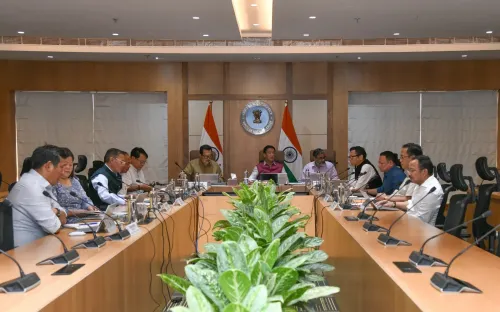
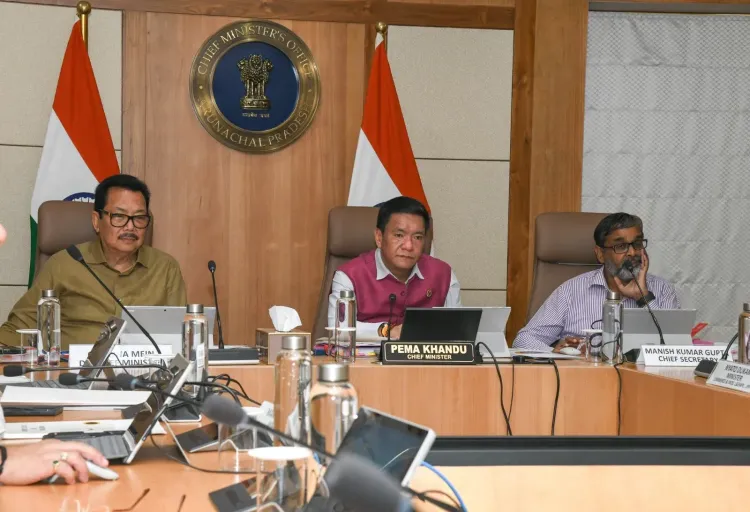
The State Cabinet, chaired by Chief Minister Pema Khandu, deliberated on strategies to sharpen the state's investment climate and ease of doing business. A senior official of the Chief Minister's Office (CMO) confirmed that reforms span two phases of the BRAP framework under the Department for Promotion of Industry and Internal Trade (DPIIT). The programme touches land administration, urban development, labour regulation, environmental clearances, building approvals, education infrastructure, and utility services — covering virtually every regulatory touchpoint an investor encounters.
MSME Ordinance and Industrial Land Reforms
A central pillar of the drive is the Arunachal Pradesh MSME Facilitation Ordinance, 2026, which establishes a legislative framework for micro, small and medium enterprises. The ordinance introduces self-certification provisions, a three-year inspection moratorium, and conditional approvals for eligible enterprises, significantly trimming compliance requirements for smaller businesses. On the industrial land front, building regulations for industrial plots have been revised — rationalising Floor Area Ratio (FAR), ground coverage norms, parking requirements, building height restrictions, and minimum plot size rules to maximise land utilisation.
Environmental and Construction Clearances Streamlined
In the environmental sector, the government has introduced third-party certification for Consent to Establish and Consent to Operate approvals, while auto-renewal and self-declaration mechanisms have been operationalised. Validity periods for approvals have been extended and linked to the operational life of industrial units in the Green and White categories. Notably, 32 additional industries were added to the White Category list in February 2026, exempting them from prior consent requirements under pollution control regulations. To ease construction approvals, a fully digital Online Building Permission System has been launched, integrating multiple departmental No Objection Certificates (NOCs) into a single end-to-end workflow covering building plan approvals, occupancy certificates, and completion certificates.
Digital Infrastructure and Education Liberalisation
All 17 industrial estates and parks in the state have been integrated with the GIS-based India Industrial Land Bank (IILB) portal, giving investors real-time online access to estate-wise land availability. Trade licence issuance and renewal have been fully digitised with minimal documentation, and online systems for electricity and water connections are now operational. Industries have also been exempted from obtaining separate permissions for groundwater extraction. In education, the state has removed minimum land ownership requirements for establishing private schools and universities, with no compliance obligations beyond those mandated under the Right to Education (RTE) Act, 2009.
What Officials Say
Officials stated that the reforms reflect the state government's commitment to fostering investment, entrepreneurship, and economic growth while safeguarding Arunachal Pradesh's ecological balance, cultural diversity, and tribal heritage. They expressed confidence that the measures would strengthen investor confidence, enhance industrial competitiveness, and create sustainable economic opportunities across the state. The reform push positions Arunachal Pradesh as a test case for whether India's northeastern frontier states can convert geographic remoteness into a regulatory advantage.
Point of View
Constrained by geography, limited connectivity, and layered regulatory friction. The MSME inspection moratorium and White Category expansion are the most substantive moves — they reduce the cost of compliance uncertainty that deters small capital from frontier markets. The real test, however, is implementation: digital portals and self-certification only deliver value if backend departmental coordination keeps pace. The Centre's acceptance of 16 priority areas is a credibility signal, but investor confidence will ultimately track whether approvals on the IILB portal translate into actual land transactions.
NationPress
16 Sept 2026
Frequently Asked Questions
What is the Business Reforms Action Plan (BRAP) framework Arunachal Pradesh is following?
The BRAP is a framework developed by the Department for Promotion of Industry and Internal Trade (DPIIT) under the Government of India to benchmark and improve the ease of doing business across states. Arunachal Pradesh has implemented reforms across 51 areas under two phases of this framework, with 16 priority areas already accepted by the Centre.
What does the Arunachal Pradesh MSME Facilitation Ordinance, 2026 do?
The ordinance provides a legislative framework for micro, small and medium enterprises in the state. It introduces self-certification provisions, a three-year inspection moratorium, and conditional approvals for eligible businesses, significantly reducing compliance burdens for smaller enterprises.
Which industries were added to the White Category in Arunachal Pradesh?
In February 2026, 32 additional industries were added to the White Category list, exempting them from the requirement to obtain prior consent under pollution control regulations. This is part of the state's broader effort to streamline environmental clearances.
How has Arunachal Pradesh improved access to industrial land information?
All 17 industrial estates and parks in the state have been integrated with the GIS-based India Industrial Land Bank (IILB) portal, allowing investors to check estate-wise land availability online in real time.
What changes have been made to building and construction approvals in Arunachal Pradesh?
The state has launched a fully digital Online Building Permission System that consolidates multiple departmental No Objection Certificates into a single workflow, covering building plan approvals, occupancy certificates, and completion certificates end-to-end.