CM Pema Khandu approves Arunachal MSME Facilitation Ordinance 2026
Synopsis
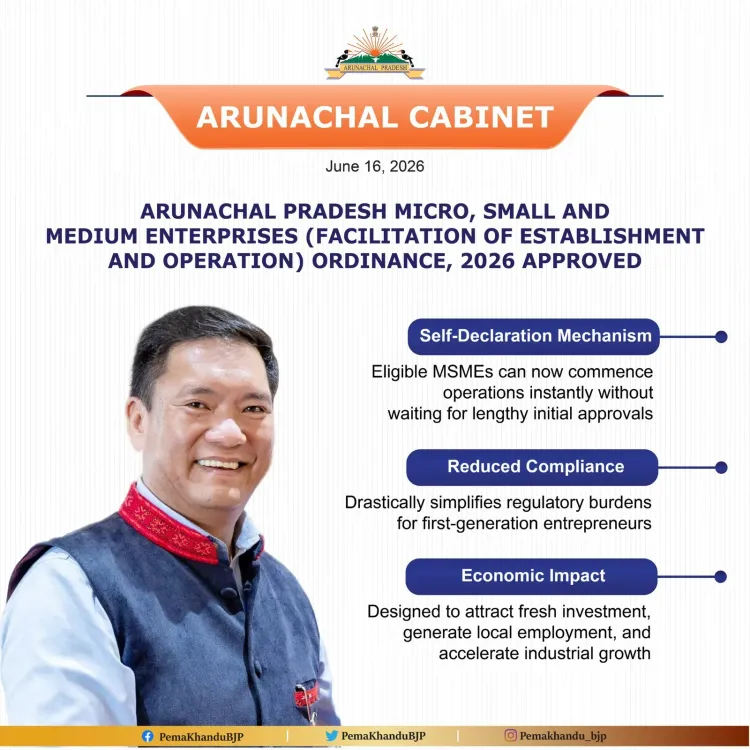
The Arunachal Pradesh cabinet, led by Chief Minister Pema Khandu, has approved the MSME Facilitation Ordinance 2026, allowing eligible small businesses to begin operations through a simplified self-declaration mechanism — a significant step in the state's ease-of-doing-business push under the Act East Policy.
Key Takeaways
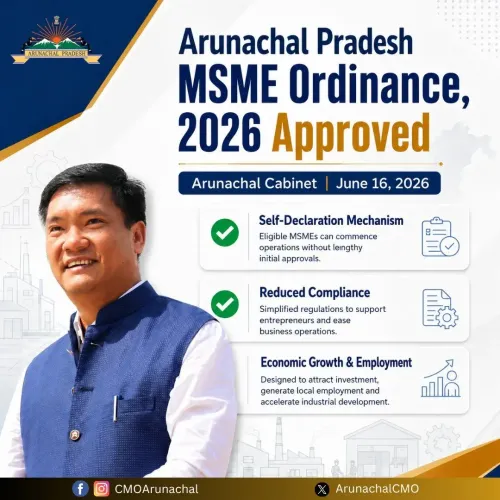
The Arunachal Pradesh cabinet approved the MSME Facilitation Ordinance, 2026 on 16 June 2026 .
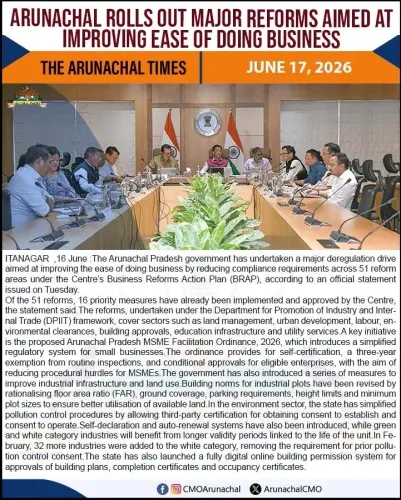
Eligible MSMEs can now start operations via a self-declaration mechanism , removing the need for prior multi-stage regulatory approvals.
The reform is aimed at making it faster and easier to invest, build, and create jobs in the state.
The ordinance aligns with India's national Ease of Doing Business push and the Act East Policy for northeastern states.
The move builds on the national MSMED Act, 2006 and the Udyam Registration framework launched in 2020.
Rollout rules, eligibility thresholds, and the effective date of the ordinance are yet to be formally notified.
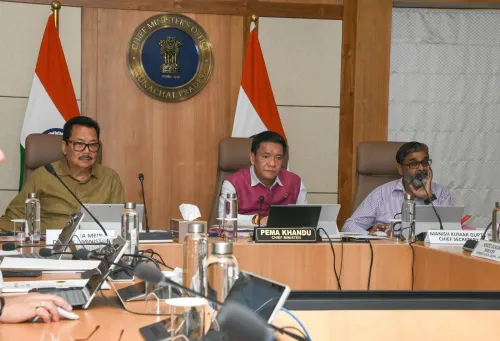
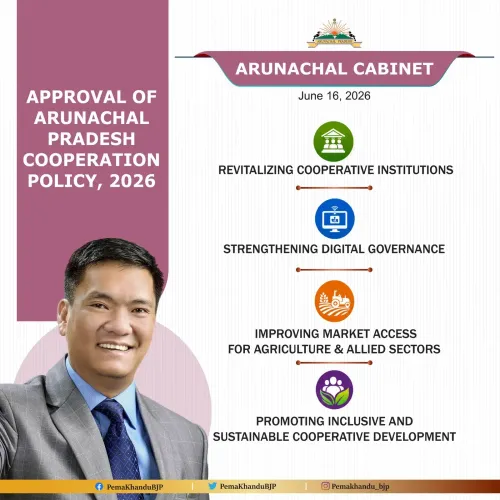
Arunachal Pradesh Chief Minister Pema Khandu announced on Tuesday, 16 June 2026 that the state cabinet has approved the Arunachal Pradesh MSME Facilitation Ordinance, 2026, a sweeping regulatory reform aimed at making it faster and simpler for small businesses to begin operations in the northeastern state.
Context
Describing the ordinance as a 'game-changing reform for entrepreneurs,' CM Khandu said eligible Micro, Small and Medium Enterprises (MSMEs) will now be able to start operations through a simplified self-declaration mechanism, eliminating the layered approvals that have historically delayed business launches. The announcement was made via his official social media handle and is attributed to a formal cabinet decision, signalling immediate policy intent.
The move reduces the compliance burden at the point of entry, allowing investors to build and create jobs without waiting for multiple regulatory clearances. This is a significant departure from the conventional licensing-first model that has long been a friction point for small enterprises in Arunachal Pradesh.
Policy Backdrop
India's MSME sector is governed nationally by the Micro, Small and Medium Enterprises Development (MSMED) Act, 2006, which laid the foundational framework for promoting and regulating small businesses across states. In 2020, the central government launched the Udyam Registration portal to further streamline online registration and ease access to government benefits for MSMEs.
Since 2014, Indian states have progressively adopted self-declaration and single-window clearance systems as part of a national push to improve Ease of Doing Business rankings. Arunachal Pradesh and other northeastern states have aligned such reforms with the Act East Policy, which seeks to attract manufacturing investment and generate local employment by integrating the region more deeply with domestic and Southeast Asian economic corridors. The 2026 Ordinance fits squarely within this pattern of state-level facilitation measures.
Stakeholders and Impact
The primary beneficiaries are MSME entrepreneurs and local investors in Arunachal Pradesh, a state that has historically faced geographical and infrastructural challenges in attracting private capital. By lowering the administrative barrier to entry, the ordinance is designed to accelerate formalisation of small businesses and expand the state's employment base.
Broader stakeholders include the state's workforce, which stands to gain from new job creation, and the central government's MSME formalisation drive, which receives a boost every time a state operationalises a complementary facilitation framework. Similar ordinances in other states have demonstrated that self-declaration regimes can measurably reduce the time between investment intent and actual business commencement.
What's Next
Attention will now turn to the rollout timeline, the notified rules that will define eligibility thresholds, and the specific categories of MSMEs covered under the 2026 Ordinance. Observers will also watch for any investment commitments announced at subsequent Arunachal Pradesh investor summits that could signal early uptake of the new framework.
If implemented effectively, the ordinance could position Arunachal Pradesh as a more competitive destination for small-scale manufacturing and services investment in the Northeast India region, reinforcing the state government's broader economic development agenda under CM Pema Khandu.
Point of View
2026 is a pointed signal from the Pema Khandu government that Arunachal Pradesh is actively competing for small-business investment in a region historically seen as difficult terrain for private capital. The self-declaration model mirrors a broader national trend where states have used regulatory simplification as a proxy for economic ambition, particularly in the context of annual Ease of Doing Business assessments. For a BJP-governed frontier state, this also carries political weight — demonstrating developmental momentum in a region where the party has staked significant electoral capital. The real test will be in implementation: whether the notified rules are permissive enough to genuinely reduce entry friction, or whether they replicate existing bottlenecks under a new label.
NationPress
15 Sept 2026
Frequently Asked Questions
What is the Arunachal Pradesh MSME Facilitation Ordinance 2026?
The Arunachal Pradesh MSME Facilitation Ordinance 2026 is a state cabinet-approved reform that allows eligible Micro, Small and Medium Enterprises to begin operations through a simplified self-declaration mechanism, reducing the need for multiple prior regulatory approvals.
Who approved the MSME Facilitation Ordinance in Arunachal Pradesh?
The ordinance was approved by the Arunachal Pradesh state cabinet, as announced by Chief Minister Pema Khandu on 16 June 2026.
What is a self-declaration mechanism for MSMEs?
A self-declaration mechanism allows business owners to certify their own compliance with applicable norms at the time of starting operations, rather than obtaining prior government approvals — significantly reducing the time and paperwork needed to launch a business.
How does this ordinance connect to India's Ease of Doing Business push?
Since 2014, Indian states have adopted self-declaration and single-window systems to improve their Ease of Doing Business rankings. The Arunachal ordinance follows this national pattern, also aligning with the Act East Policy to attract investment to the northeast.
What happens next after the Arunachal MSME Facilitation Ordinance is approved?
The state government is expected to notify the specific rules, eligibility thresholds, and effective date of the ordinance. Subsequent investor summits may reveal early investment commitments made under the new framework.