Assam discovers India's first new sedge moth species in nearly 100 years
Synopsis
India's sedge moth record hadn't been updated in nearly a century — until now. A 6.5 mm moth collected near Assam's Hollongapar Gibbon Sanctuary has been formally described as a new species, Glyphipterix brevimucronata, breaking a taxonomic silence dating back to British entomologist Edward Meyrick's work between 1907 and 1923, and signalling how much of India's insect diversity remains undiscovered.
Key Takeaways
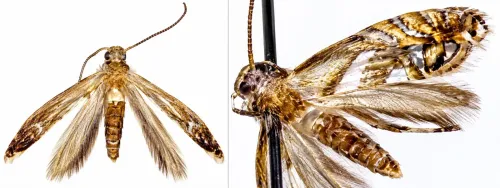
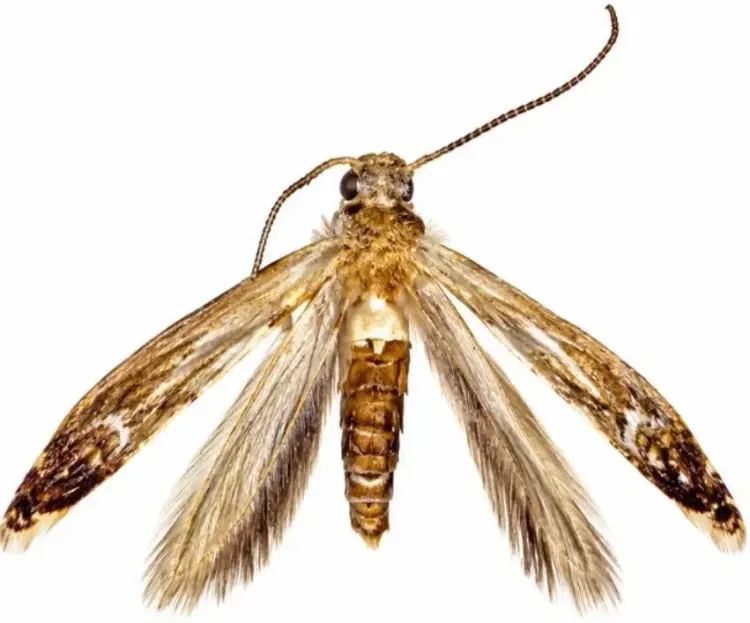
A new micro moth species, Glyphipterix brevimucronata , has been described from near Hollongapar Gibbon Sanctuary , Jorhat district, Assam .
It is India's first addition to the sedge moth family (Glyphipterigidae) in nearly 100 years .
The holotype was collected on 2 October 2025 by Kishore Chandra Sahoo (IARI) and Abhijith K.P.
The discovery was published in the peer-reviewed journal Zootaxa .
Only 25 of the 530+ globally described sedge moth species have ever been recorded in India.
Assam Chief Minister Himanta Biswa Sarma welcomed the finding in a post on X .
A tiny micro moth with a wingspan of just 6.5 mm has earned Assam a rare place in scientific history. Researchers have formally described a new species near the Hollongapar Gibbon Sanctuary in Jorhat district, marking India's first addition to the sedge moth family in nearly a century. The find was published in the peer-reviewed journal Zootaxa.
The New Species: What Was Found
Named Glyphipterix brevimucronata, the moth was discovered near Mariani in Jorhat district. The holotype — the specimen used as the defining reference — was collected on 2 October 2025 by Kishore Chandra Sahoo, a scientist at the ICAR-Indian Agricultural Research Institute (IARI), Assam, and his colleague Abhijith K.P.
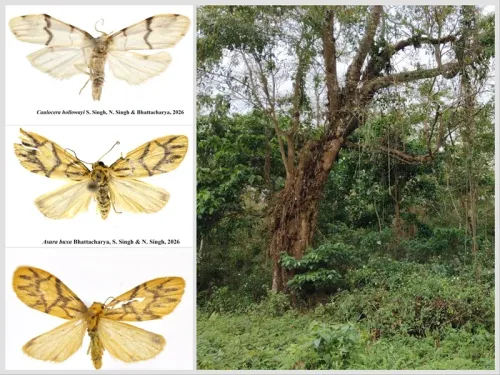
The insect is identifiable by its brown forewings with a yellowish metallic sheen and distinctive white markings. Its species name combines Latin words meaning 'short' and 'pointed', referencing a short, pointed structure in its reproductive anatomy — a key taxonomic marker used to distinguish it from related species.
Why This Discovery Matters
Sedge moths, formally classified under the family Glyphipterigidae, number more than 530 described species worldwide. Yet only 25 have ever been recorded in India. More strikingly, barring one exception, all Indian species of the genus Glyphipterix were described by British entomologist Edward Meyrick between 1907 and 1923 — meaning this new discovery breaks a near-century-long gap in domestic taxonomic research on the group.
Scientists say the finding underlines how inadequately studied India's sedge moth diversity remains, and calls for more systematic surveys of lesser-known insect groups across the Northeast, a region where many small species are still undocumented.
The Role of Hollongapar Gibbon Sanctuary
The discovery adds to the growing scientific profile of the Hollongapar Gibbon Sanctuary, spread over just 20.98 sq km in Jorhat district — Assam's smallest wildlife sanctuary. The reserve is best known as the home of the hoolock gibbon, India's only ape species, and is also recognised for its rich diversity of butterflies and moths. The region is increasingly emerging as a biodiversity hotspot for entomological research.
Government Response
Assam Chief Minister Himanta Biswa Sarma welcomed the discovery on social media on Friday. In a post on X, Sarma wrote: 'Wonderful news for nature lovers! Assam is once again making headlines with the discovery of a new micro moth species near Hollongapar Gibbon Sanctuary. Named Glyphipterix brevimucronata, this discovery marks India's first addition to the sedge moth family in nearly a century. Another reminder that Assam's natural world still holds so many fascinating secrets waiting to be discovered.' He also shared pictures of the species.
What Comes Next
Researchers and conservationists are calling for expanded, structured insect surveys in Northeast India, arguing that the region's forests likely harbour many more undescribed species. The Hollongapar sanctuary, despite its small footprint, continues to demonstrate outsized scientific value — and this discovery may renew momentum for dedicated funding of invertebrate taxonomy in India.
Point of View
The gap is scientific, not biological. Northeast India's forests are among Asia's most biodiverse, yet systematic entomological surveys remain sparse and underfunded. This discovery, made by a single researcher at a regional IARI station, raises a pointed question: how many more species are waiting in India's protected areas simply for want of a trained eye looking for them?
NationPress
20 Nov 2026
Frequently Asked Questions
What is Glyphipterix brevimucronata?
Glyphipterix brevimucronata is a newly described micro moth species with a wingspan of just 6.5 mm, found near Mariani in Jorhat district, Assam. It belongs to the sedge moth family Glyphipterigidae and is India's first new addition to this family in nearly a century. The description was published in the journal Zootaxa.
Where was the new moth species discovered?
The moth was discovered near the Hollongapar Gibbon Sanctuary in Jorhat district, Assam. The holotype specimen was collected on 2 October 2025 by scientist Kishore Chandra Sahoo of ICAR-IARI, Assam, and his colleague Abhijith K.P.
Why is this discovery significant for India?
This is India's first new sedge moth species to be described in nearly 100 years, breaking a taxonomic gap that stretches back to British entomologist Edward Meyrick's work between 1907 and 1923. Only 25 of more than 530 globally described sedge moth species have been recorded in India, highlighting how little-studied the group remains in the country.
What is the Hollongapar Gibbon Sanctuary known for?
Hollongapar Gibbon Sanctuary is Assam's smallest wildlife sanctuary, covering just 20.98 sq km in Jorhat district. It is primarily known as the home of the hoolock gibbon, India's only ape species, and is also recognised for its rich diversity of butterflies and moths.
How did Assam's government respond to the discovery?
Assam Chief Minister Himanta Biswa Sarma welcomed the discovery on Friday in a post on X, calling it 'wonderful news for nature lovers' and noting it as a reminder that Assam's natural world holds many undiscovered secrets. He also shared pictures of the new species.