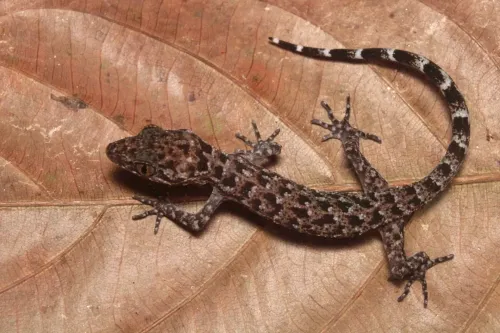
New Bent-Toed Gecko Species Discovered in Assam's Urpad Beel
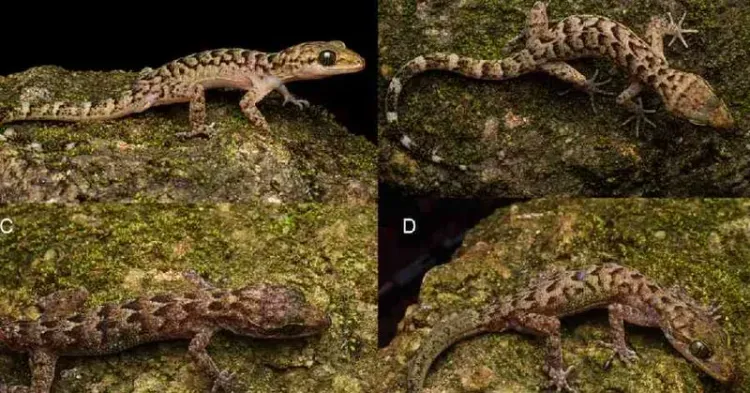
Synopsis
A new bent-toed gecko species has been found at Urpad Beel, a freshwater wetland in Assam's Goalpara district, the Chief Minister's Office announced on 29 May 2026, adding to Northeast India's growing list of newly described reptiles from the Indo-Burma biodiversity hotspot.
Key Takeaways
The Chief Minister's Office of Assam announced the discovery of a new bent-toed gecko species on 29 May 2026 .
The gecko was found at Urpad Beel , a freshwater wetland in Goalpara district , Assam.
Bent-toed geckos belong to the genus Cyrtodactylus , one of the most species-rich reptile genera in Asia.
Northeast India lies within the Indo-Burma biodiversity hotspot , known for high reptile endemism and regular new species descriptions.
A formal peer-reviewed taxonomic publication is required to officially name and validate the new species.
The discovery may strengthen conservation proposals for Urpad Beel and prompt further herpetological surveys in Assam's wetlands.
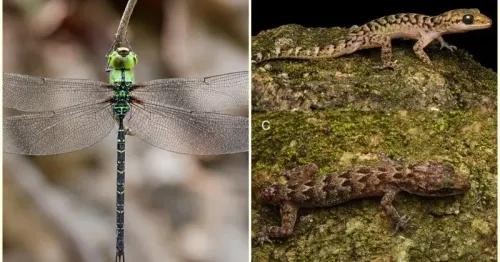
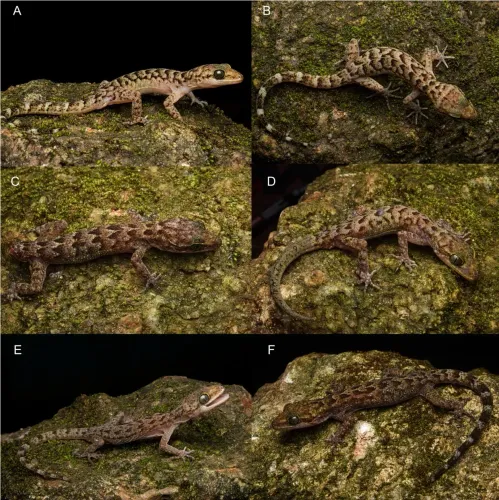
The Chief Minister's Office of Assam announced on Friday, 29 May 2026 the discovery of a new bent-toed gecko species in Urpad Beel, a freshwater wetland in the state's Goalpara district, marking a significant addition to the region's documented reptile diversity.
Context
The CMO Assam post highlighted the find with the note: 'New bent-toed gecko species found in Assam's Urpad Beel,' drawing attention to a wetland habitat not conventionally associated with gecko discoveries. Bent-toed geckos belong to the genus Cyrtodactylus, one of the most species-rich reptile genera in Asia, with new members being regularly described from Northeast India. The announcement underscores the ecological significance of Assam's lesser-surveyed wetland systems.
Urpad Beel is a recognised freshwater wetland in Goalpara district, known primarily for its aquatic biodiversity and as a stopover for resident and migratory bird species. The discovery of a gecko here points to the wetland's broader terrestrial and riparian habitat value, which has received comparatively less scientific attention than its open-water zones.
Policy Backdrop
India's Biological Diversity Act, 2002 established formal mechanisms for the documentation, conservation, and sustainable use of biological resources, including newly described species. New species discoveries in Assam are typically followed by formal taxonomic publication and, where warranted, proposals for inclusion in the state's biodiversity registers maintained under the Act. The National Biodiversity Authority and Assam's State Biodiversity Board play key roles in this process.
Northeast India sits within the Indo-Burma biodiversity hotspot, one of the world's 36 recognised hotspots for endemic and threatened species. The region's complex topography — spanning wetlands, subtropical forests, and hill ranges — creates conditions for high species endemism, and herpetological surveys here have consistently yielded new records over the past two decades.
Stakeholders and Impact
Herpetologists and wetland conservation groups are the immediate stakeholders in this discovery. A formally described new species strengthens the scientific case for habitat protection at Urpad Beel, potentially influencing land-use decisions in and around Goalpara district. Local communities dependent on the wetland's ecosystem services also stand to benefit if heightened scientific interest translates into conservation investment.
For Assam's government, the announcement aligns with a broader pattern of publicising biodiversity milestones as evidence of the state's ecological wealth. Such discoveries also support ecotourism narratives and reinforce the case for sustained funding of biodiversity inventories in the state's protected and unprotected wetland areas.
What's Next
The next critical step is the formal peer-reviewed taxonomic publication that will assign the new gecko a scientific name and establish its morphological and genetic distinctiveness. Following publication, conservationists and state authorities may initiate proposals for the species' inclusion in Assam's biodiversity registers and evaluate whether Urpad Beel's existing habitat protections are adequate for its survival. Continued herpetological surveys of Assam's wetland systems are likely to reveal further undescribed species, given how under-surveyed much of the region remains.
Point of View
A narrative that has gained traction across several northeastern states in recent years. The find at Urpad Beel is scientifically significant because wetland-associated gecko records are comparatively rare, and the discovery broadens the known habitat range for the genus Cyrtodactylus in the region. Politically, such announcements also serve as soft arguments for stronger wetland protection policies at a time when Assam's water bodies face pressure from agriculture and infrastructure expansion. Until the formal taxonomic paper is published, however, the species remains scientifically provisional — a detail that official communications often elide.
NationPress
22 Sept 2026
Frequently Asked Questions
What is the new gecko species found in Assam?
A new bent-toed gecko species has been discovered at Urpad Beel in Assam's Goalpara district. Bent-toed geckos belong to the genus Cyrtodactylus. The exact scientific name will be confirmed upon formal taxonomic publication.
Where is Urpad Beel located in Assam?
Urpad Beel is a freshwater wetland located in Goalpara district in western Assam. It is known for its aquatic biodiversity and serves as habitat for both resident and migratory bird species.
Why is Northeast India significant for new species discoveries?
Northeast India falls within the Indo-Burma biodiversity hotspot , one of the world's most species-rich regions. Its varied terrain of wetlands, forests, and hills supports high endemism, and much of the area remains under-surveyed, making new discoveries relatively frequent.
What happens after a new species is discovered in India?
After a discovery, researchers must publish a formal peer-reviewed taxonomic paper to officially name and describe the species. Under India's Biological Diversity Act, 2002 , new species may also be added to state and national biodiversity registers for conservation tracking.
Is Urpad Beel a protected wetland in Assam?
Urpad Beel is recognised for its biodiversity value in Goalpara district. The discovery of a new gecko species there may prompt authorities to review and potentially strengthen its existing habitat protections, though no formal upgraded status has been announced.