CM Himanta flags new flower species found in Manas National Park
Synopsis
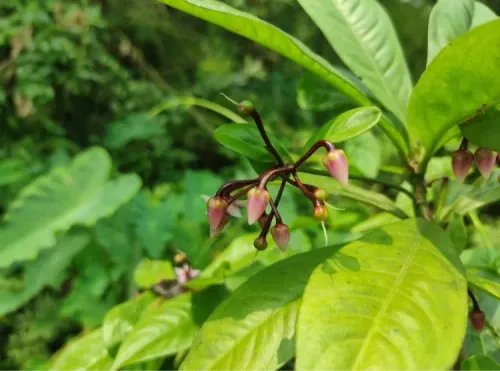
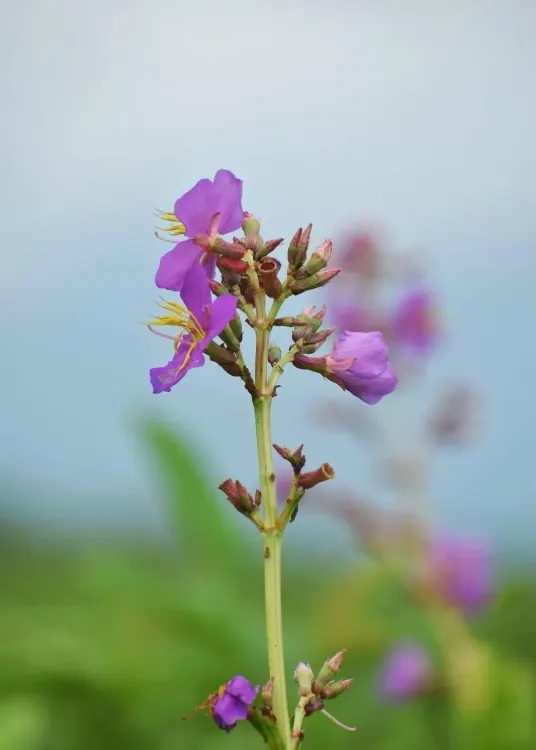
A new flowering plant species, Osbeckia assamensis, has been discovered in Assam's Manas National Park — a UNESCO World Heritage Site and tiger reserve. Chief Minister Himanta Biswa Sarma highlighted the find as proof of his government's consistent nature conservation work across the state.
Key Takeaways
Osbeckia assamensis is a newly discovered flowering plant species found in Manas National Park , Assam.
Manas is a UNESCO World Heritage Site (inscribed 1985 ) and one of India's earliest Project Tiger reserves ( 1973 ).
CM Himanta Biswa Sarma has made sharing new species discoveries from Assam a regular part of his social media communication.
The discovery points to large tracts of scientifically undocumented habitat still existing within the park's boundaries.
Formal scientific validation through peer-reviewed publication will determine the species' official status in botanical records.
A new flowering plant, named Osbeckia assamensis, has been discovered inside Manas National Park — the UNESCO World Heritage Site and tiger reserve in Assam — adding yet another chapter to the state's expanding biodiversity record. Assam Chief Minister Himanta Biswa Sarma shared the discovery on Monday, 26 October 2026, framing it as evidence of sustained conservation work under his government.
A name born in Assam's forests
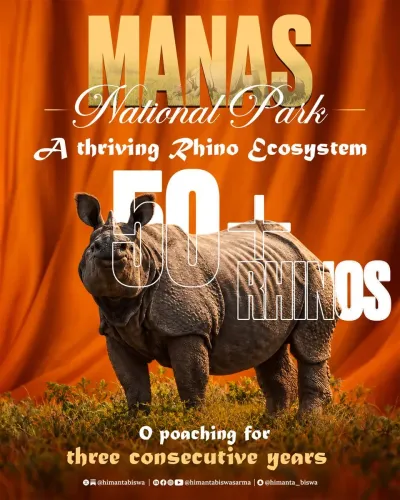
Osbeckia assamensis belongs to the Melastomataceae family, a group of flowering plants widespread across tropical Asia. That a new member of this genus has surfaced in Manas underlines how much of the park's undergrowth remains scientifically undercharted. Manas, spread across the foothills of the Bhutan border, has sheltered everything from the one-horned rhinoceros to the Bengal florican — and now, apparently, a bloom science had not yet named.
Manas: where UNESCO endorsement meets living discovery
Manas National Park was inscribed as a UNESCO World Heritage Site in 1985 for its 'outstanding universal value' in biodiversity. It was also one of India's earliest Project Tiger reserves, designated in 1973. Decades of protection have kept enough habitat intact for species to exist — and occasionally be found — before they vanish. That continuity of protection is precisely the backdrop against which a discovery like this becomes possible.
CM Sarma noted in his post that followers of his handle would recognise a pattern: he regularly shares news of new plant, flower, and animal species found across Assam. It is a deliberate communication approach — linking governance decisions on forest management to tangible, verifiable outcomes in the natural world.
Conservation messaging as governance strategy
Across Northeast India, state governments have increasingly spotlighted biodiversity findings alongside infrastructure announcements — a shift in how development is narrated publicly. For the Government of Assam, each new species discovery feeds a broader argument: that conservation and economic priority need not be in conflict. The CM's framing — 'our government as an extension of our society' — deliberately roots the scientific finding in a community identity, not just an administrative outcome.
What gives the discovery lasting significance is not the social media post but what comes next: peer-reviewed publication of Osbeckia assamensis in a botanical journal, followed by formal listing in national biodiversity surveys. Until that scientific record is sealed, the name remains provisional — but the attention it draws to Manas's fragile, still-undocumented corners is real.
Assam's forests are still speaking. The question is whether anyone is writing it all down fast enough.
Point of View
Repeated social media posts on new species serve a dual function: they project administrative competence in a domain (forest protection) that is both popular and verifiable, and they subtly position Assam as a biodiversity frontier rather than merely a conflict-affected or flood-prone state. The broader implication is that habitat continuity — kept intact by decades of protected-area policy — is the silent infrastructure behind every such discovery, making the case, indirectly, for sustaining that protection going forward.
NationPress
26 Oct 2026
Frequently Asked Questions
What is Osbeckia assamensis?
Osbeckia assamensis is a newly discovered flowering plant species found in Manas National Park in Assam. It belongs to the Melastomataceae family, a group of flowering plants common across tropical Asia.
Where is Manas National Park located?
Manas National Park is located in Assam , in northeastern India, along the foothills bordering Bhutan . It is a UNESCO World Heritage Site and a designated tiger reserve.
Why is Manas National Park significant for biodiversity?
Manas was inscribed as a UNESCO World Heritage Site in 1985 for its outstanding biodiversity, which includes the one-horned rhinoceros, Bengal florican, and tigers. Its protected status since 1973 under Project Tiger has preserved large areas of habitat.
Has Assam reported new species discoveries before?
Yes. Assam has periodically reported new plant and animal species from its protected areas. Chief Minister Himanta Biswa Sarma has made sharing such discoveries a regular part of his public communication.
What happens after a new species is announced by a state government?
A state government announcement typically precedes formal scientific validation. The species must be described and published in a peer-reviewed botanical or zoological journal before it is officially recognised in national and international biodiversity records.