Yadav flags rare Takin herd sighting in Sikkim

Synopsis
Union Environment Minister Bhupender Yadav highlighted a rare Mishmi Takin herd sighting near Bakuchaang, Sikkim, recorded on 14 June 2026 by state forest personnel. The Schedule I species is among the least-studied large mammals of the Eastern Himalaya, and confirmed visual records are considered uncommon and scientifically significant.
Key Takeaways
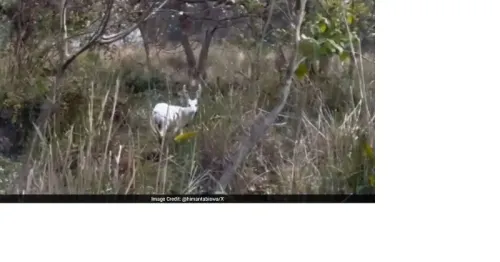
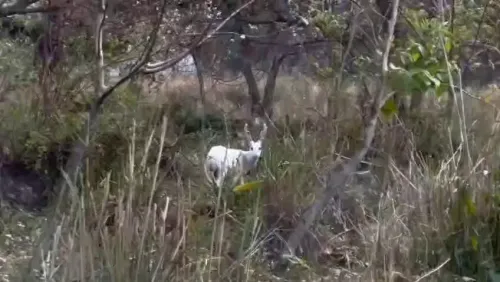
A Mishmi Takin herd was sighted near Bakuchaang , approximately 5 km below Tamzee , Sikkim , on the afternoon of 14 June 2026 .
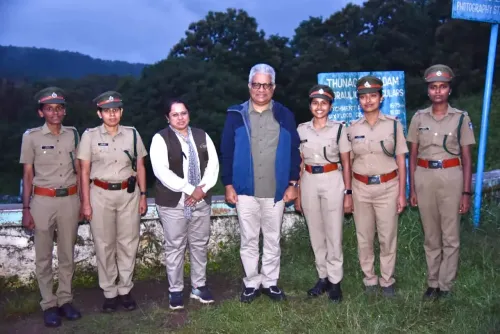
The sighting was made by personnel of the Tourism and Forest Department of Sikkim and filmed by Head Forest Guard Tsewang Nedup Bhutia of Phudung range .
The Mishmi Takin is listed under Schedule I of the Wildlife (Protection) Act, 1972 , giving it the highest legal protection in India.
Confirmed visual records of the species in Sikkim are described as uncommon, making this sighting significant for distribution and habitat data.
Union Environment Minister Bhupender Yadav shared the footage on 16 June 2026 , underlining the species' status as one of the least-studied large mammals of the Eastern Himalaya .
Union Environment Minister Bhupender Yadav on Tuesday, 16 June 2026, shared footage of a rare Mishmi Takin herd sighted in Sikkim, calling the visual record 'breathtaking' and underscoring its significance for understanding the species' distribution across the Eastern Himalaya.
Context
The herd was spotted on the afternoon of 14 June 2026 near Bakuchaang, approximately 5 km below Tamzee, by personnel of the Tourism and Forest Department of Sikkim. The sighting was recorded on video by Tsewang Nedup Bhutia, Head Forest Guard of the Phudung range.
Yadav described confirmed visual records of the Mishmi Takin in Sikkim as 'uncommon,' noting that 'each sighting strengthens our understanding of the species' distribution, habitat use, and conservation needs.'
Policy Backdrop
The Mishmi Takin — a large goat-antelope subspecies found in the higher reaches of the Eastern Himalaya — is listed under Schedule I of the Wildlife (Protection) Act, 1972, granting it the highest degree of legal protection in India.
Despite this status, the species remains one of the least-studied large mammals in the region. The Ministry of Environment, Forest and Climate Change (MoEFCC) has routinely used field records from state departments to highlight monitoring gaps and inform national conservation priorities, including reporting obligations under the Convention on Biological Diversity.
The Eastern Himalayas are recognised as a global biodiversity hotspot, spanning Sikkim and neighbouring states. Baseline ecological data for several endemic and data-deficient mammal species in the region remains sparse, making confirmed sightings of Schedule I species especially valuable to researchers and policymakers alike.
Stakeholders and Impact
The Sikkim Forest Department and joint tourism-forest patrol teams have been central to recent wildlife monitoring efforts in the state, which maintains one of India's highest forest-cover ratios. Field-level personnel such as forest guards play a critical role in generating the ground-truth data that feeds into national wildlife assessments.
Himalayan wildlife researchers stand to benefit directly from verified location records of the Takin, as each confirmed sighting adds a data point to the species' poorly mapped range. Conservation groups working in the Eastern Himalaya corridor have long called for more systematic survey effort for large mammals that fall outside mainstream tiger or elephant monitoring programmes.
What's Next
The video record from Bakuchaang is expected to feed into state-level biodiversity surveys and could be incorporated into future MoEFCC wildlife status reports. Researchers will look to cross-reference the sighting location with existing habitat maps to refine understanding of the Takin's range in Sikkim.
As the ministry continues to amplify field-level documentation of rare Himalayan fauna, the Bakuchaang footage may also strengthen the case for expanded survey coverage and dedicated monitoring protocols for the Mishmi Takin in India's northeastern states.
Point of View
Largely invisible in national wildlife discourse, gains policy salience each time a cabinet minister frames a sighting as scientifically significant rather than merely scenic. This approach serves a dual purpose: it rewards ground-level forest personnel and builds a public case for expanded survey budgets in the Eastern Himalaya. Over time, such amplification can shift institutional attention and funding toward chronically under-resourced biodiversity corridors.
NationPress
19 Sept 2026
Frequently Asked Questions
What is a Mishmi Takin and where is it found?
The Mishmi Takin is a large goat-antelope subspecies native to the Eastern Himalaya, found in high-altitude forests across parts of Arunachal Pradesh, Sikkim, and neighbouring countries. It is listed under Schedule I of the Wildlife (Protection) Act, 1972, giving it the highest legal protection in India.
Where exactly was the Takin herd spotted in Sikkim?
The herd was spotted near Bakuchaang, approximately 5 km below Tamzee in Sikkim, on the afternoon of 14 June 2026, by personnel of the Tourism and Forest Department of Sikkim.
Why is this Takin sighting considered significant?
Confirmed visual records of the Mishmi Takin in Sikkim are uncommon. Each verified sighting adds to the scientific understanding of the species' distribution, habitat use, and conservation needs in the Eastern Himalaya, where baseline data remains sparse.
Who recorded the Takin sighting video?
The video was recorded by Tsewang Nedup Bhutia, Head Forest Guard of the Phudung range, during a patrol by Tourism and Forest Department personnel in Sikkim.
What did Environment Minister Bhupender Yadav say about the sighting?
Minister Yadav described it as a 'rare and breathtaking sighting,' noting that such confirmed visual records are uncommon in Sikkim and that the Mishmi Takin remains one of the least-studied large mammals of the Eastern Himalaya.