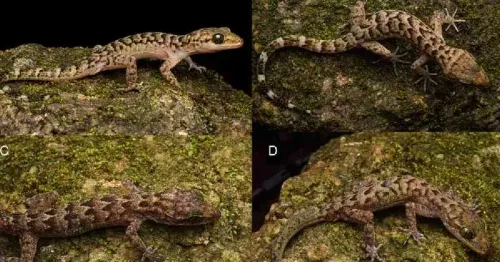
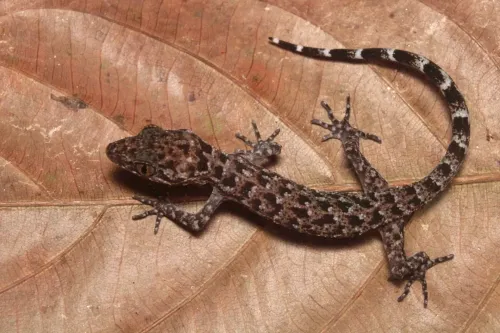
CM Himanta flags first Assam record of bent-toed gecko
Synopsis
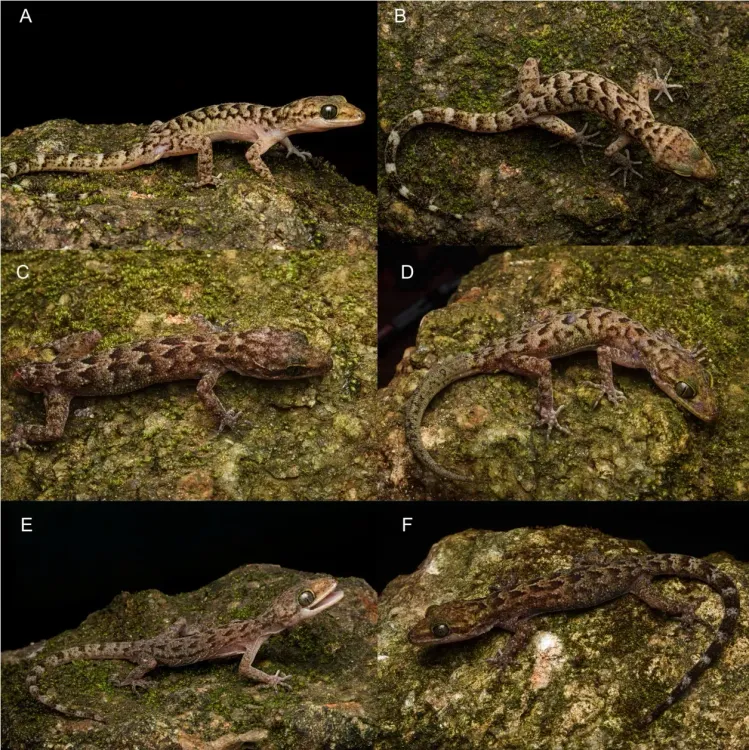
Assam Chief Minister Himanta Biswa Sarma announced the first confirmed record of the bent-toed gecko (Cyrtodactylus bapme) in Assam, documented at Urpad Beel in Goalpara district. The finding adds to the state's faunal checklist and reflects ongoing conservation and biodiversity documentation efforts across Assam's wetland ecosystems.
Key Takeaways
Assam CM Himanta Biswa Sarma announced the first confirmed record of the bent-toed gecko ( Cyrtodactylus bapme ) in Assam on 28 May 2026 .
The species was documented at Urpad Beel , a freshwater wetland in Goalpara district , Assam.
The finding extends the known geographic range of Cyrtodactylus bapme and adds a new entry to Assam's faunal checklist.
Assam falls within the Indo-Burma biodiversity hotspot and operates under the Biological Diversity Act, 2002 through its State Biodiversity Board.
The announcement fits a broader Northeast India pattern of state governments accelerating faunal documentation to support conservation and habitat-protection programmes.
Assam Chief Minister Himanta Biswa Sarma on Thursday, 28 May 2026, highlighted the first confirmed record of the bent-toed gecko (Cyrtodactylus bapme) in Assam, citing its documentation at Urpad Beel as evidence of the state's extraordinary biodiversity and the outcomes of its ongoing conservation efforts.
Context
The bent-toed gecko (Cyrtodactylus bapme) is a small reptile belonging to a genus widely distributed across South and Southeast Asia. Its first confirmed sighting in Assam, recorded at Urpad Beel — a freshwater wetland in Goalpara district — extends the known range of the species and adds a new entry to the state's faunal checklist. Chief Minister Sarma shared the finding on social media, calling it one of 'nature's new wonders from Assam.'
Urpad Beel is recognised among herpetologists and wetland researchers for supporting a diverse assemblage of aquatic and avian species. Its inclusion in biodiversity surveys reflects the broader scientific interest in Assam's wetland ecosystems as reservoirs of undocumented fauna.
Policy Backdrop
Assam falls within the Indo-Burma biodiversity hotspot, one of the world's most species-rich regions. The state operates under the framework of the Biological Diversity Act, 2002, which mandated the establishment of the Assam State Biodiversity Board to systematically document and protect the state's biological resources.
Periodic announcements of new species records fit a wider pattern across Northeast India, where state governments have accelerated faunal documentation programmes in wetlands and forests alongside habitat-protection initiatives. Such findings are frequently cited by administrations to signal the effectiveness of ecological management and to build the case for continued conservation investment.
Stakeholders and Impact
The confirmation of Cyrtodactylus bapme in Assam is of direct relevance to herpetologists, wetland researchers, and the Assam State Biodiversity Board, which maintains the official faunal checklist. Local communities living around Urpad Beel and dependent on its ecological health are also indirect stakeholders, as species-rich habitats often attract conservation funding and protective designations.
For the broader scientific community, each new range record for a Cyrtodactylus species contributes to understanding dispersal patterns and the ecological connectivity of wetland habitats across the Northeast. The finding underscores the argument that even well-studied wetlands continue to yield taxonomic surprises when surveyed rigorously.
What's Next
Herpetological surveys of other Assam beels are expected to continue, with results likely to feed into updates of the state's official faunal checklist. The Assam State Biodiversity Board will be watched for any formal documentation or gazette notification arising from this record.
Chief Minister Sarma's post signals that the state intends to keep biodiversity findings in public discourse — a forward-looking posture that could support future arguments for wetland protection, eco-tourism development, and research collaboration with national and international institutions.
Point of View
Such announcements carry political weight: they signal institutional capacity, attract research partnerships, and pre-empt criticism over development pressures on wetlands. The focus on Urpad Beel — a district-level wetland rather than a flagship reserve — is notable, suggesting the government wants to demonstrate that conservation outcomes are reaching beyond marquee protected areas. Over time, a consistent record of such findings could strengthen the state's hand in negotiating central funds for wetland protection and eco-sensitive zone designations.
NationPress
11 Oct 2026
Frequently Asked Questions
What is the bent-toed gecko Cyrtodactylus bapme?
Cyrtodactylus bapme is a small reptile belonging to the bent-toed gecko genus, widely distributed across South and Southeast Asia. Its first confirmed record in Assam was documented at Urpad Beel in Goalpara district.
Where is Urpad Beel located in Assam?
Urpad Beel is a freshwater wetland situated in Goalpara district in western Assam. It is recognised for supporting a range of aquatic and avian species and has become a site of interest for biodiversity surveys.
Why did Assam CM Himanta Biswa Sarma post about the gecko sighting?
Chief Minister Sarma highlighted the sighting to draw attention to Assam's biodiversity and to signal that the state's conservation efforts are yielding results in wetland habitats beyond major protected areas.
What is the Indo-Burma biodiversity hotspot?
The Indo-Burma biodiversity hotspot is one of the world's most species-rich regions, spanning parts of Northeast India, Myanmar, and adjacent countries. Assam lies within this hotspot, making its wetlands and forests particularly significant for global biodiversity.
What role does the Assam State Biodiversity Board play in species documentation?
The Assam State Biodiversity Board , established under the Biological Diversity Act, 2002 , is responsible for documenting and protecting the state's biological resources, including maintaining an official faunal checklist that is updated as new species records are confirmed.