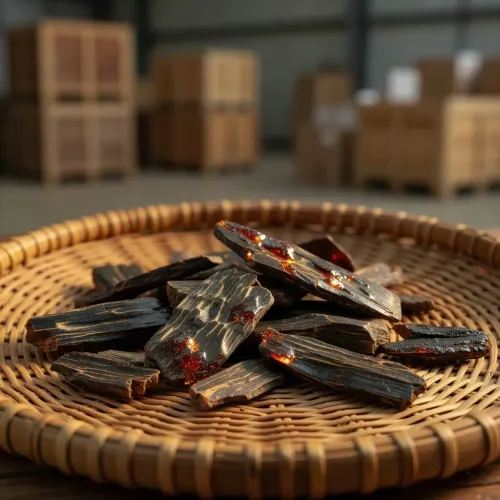
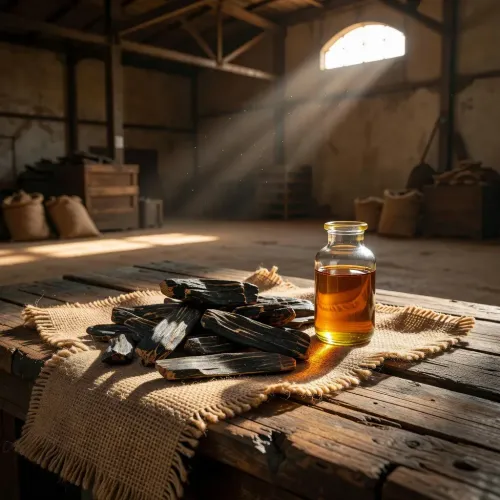
Assam Agarwood Chips Fly to Dubai in Northeast Export Push
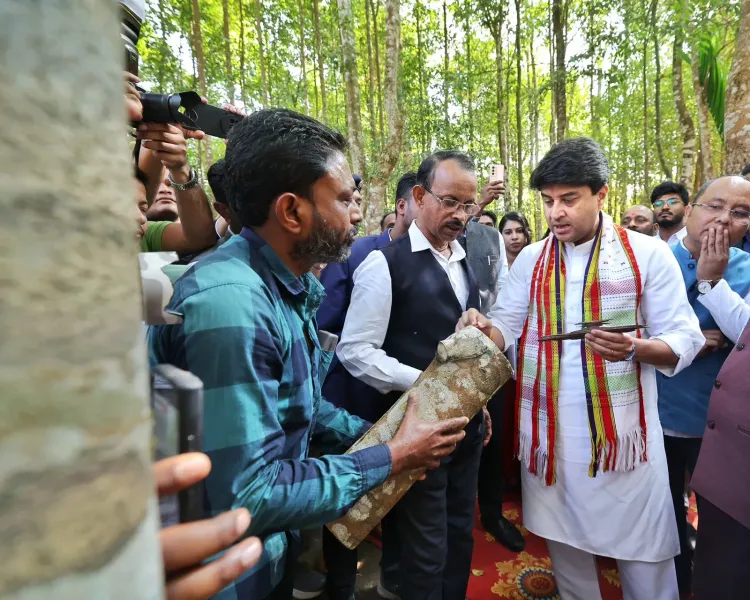
Synopsis
Assam has shipped 123 kg of agarwood chips to Dubai, the Chief Minister's Office announced on October 27, 2026. The milestone consignment of the prized 'Wood of the Gods' marks a concrete step in Northeast India's push to commercialise high-value forest products in global luxury markets.
Key Takeaways
123 kg of agarwood chips from Assam are headed to Dubai , as announced by the Chief Minister's Office of Assam on October 27, 2026 .
Agarwood, harvested from Aquilaria trees, is one of the world's most expensive natural raw materials, nicknamed the 'Wood of the Gods.' Dubai is a major global hub for oud and agarwood consumption and re-export, making it a strategically valuable first destination.
Wild Aquilaria is listed under CITES Appendix II ; compliant export documentation is mandatory and adds market credibility.
The shipment is part of a broader effort to commercialise Northeast India's high-value non-timber forest products in overseas premium markets.
A verified end-to-end supply chain — from cultivation to Gulf delivery — builds the regulatory track record needed for larger future consignments.
A fragrant piece of Assam just cleared customs for the Gulf. The Chief Minister's Office of Assam announced on Tuesday, October 27, 2026, that 123 kg of agarwood chips from the state are bound for Dubai — a milestone shipment that plants the Northeast's most storied forest treasure squarely on the global luxury trade map.
What makes agarwood Assam's 'Wood of the Gods'
Agarwood — harvested from Aquilaria trees native to Assam and the broader Northeast — is among the most expensive natural raw materials on earth, prized in perfumery, traditional medicine, and incense across the Middle East and East Asia. The resin forms only when the tree responds to infection or injury, which makes supply scarce and prices extraordinary. For centuries it has carried the informal title 'Wood of the Gods,' a nod to its near-mythical status in trade and ritual.
Assam sits at the heartland of global agarwood cultivation, with farmers and forest communities increasingly shifting toward cultivated plantations to meet demand without stripping natural forests. That shift is critical: wild Aquilaria is listed under CITES Appendix II, meaning international trade requires verified documentation and quota compliance — a regulatory layer that both protects the species and, when navigated correctly, adds credibility to Indian exports in high-scrutiny Gulf markets.
Dubai as the gateway for a high-value Northeast commodity
Dubai is no accidental destination. The UAE is one of the world's largest consumers of oud — the Arabic word for agarwood — used in perfumes, incense, and luxury lifestyle products. It also functions as a re-export hub, meaning Assam chips arriving in Dubai can reach buyers from Saudi Arabia to Japan in a single onward leg. Routing through Dubai gives Indian agarwood producers access to a curated, high-paying customer base that domestic markets alone cannot replicate.
The shipment fits into a broader federal and state effort to turn Northeast India's biodiversity into hard export revenue. The region's eight states hold an outsized share of India's high-value non-timber forest products — from large cardamom to bamboo silk — and successive trade-promotion drives have targeted premium overseas markets rather than volume commodity plays.
What this means for cultivators and the state's export ambitions
For Assam's agarwood farmers, a confirmed Dubai shipment is more than symbolic. It signals that the supply chain — cultivation, processing, CITES certification, and logistics — is functional end-to-end. Each cleared consignment builds the regulatory track record that unlocks larger future orders. The state government's visible ownership of this milestone, amplified through the Chief Minister's Office, also signals political will to keep that chain well-oiled.
Watch for follow-up moves: state-level processing incentives, expanded cultivation subsidies, and any bilateral trade facilitation with the UAE that could carve out a dedicated corridor for Northeast aromatic products. Assam's 'Wood of the Gods' has lifted off — the question now is how high it flies.
Point of View
Associating the Chief Minister's Office brand with the export validates a political investment in Northeast trade diversification. More broadly, it tests whether India can move high-value non-timber forest products from a heritage narrative into a repeatable, scalable export category — the kind of premium commodities play that delivers disproportionate income to forest-fringe communities relative to volume. If the Gulf corridor holds and CITES compliance remains clean, Assam has a template other Northeast states could replicate with their own signature biodiversity assets.
NationPress
28 Oct 2026
Frequently Asked Questions
What is agarwood and why is it so valuable?
Agarwood is a dark, resin-saturated heartwood that forms inside Aquilaria trees when they respond to infection or injury. Because the resin develops only under specific conditions, supply is inherently scarce. It is prized globally for its rich, complex fragrance — used in luxury perfumes, incense, and traditional medicine — making it one of the most expensive natural raw materials in the world, sometimes called the 'Wood of the Gods.'
Why is Assam significant for agarwood production?
Assam is one of the primary natural habitats of Aquilaria trees in India. The state has a long tradition of agarwood harvesting and is increasingly home to cultivated plantations designed to meet international demand sustainably, reducing pressure on wild populations listed under CITES.
Why was Dubai chosen as the destination for this agarwood shipment?
Dubai and the broader UAE are among the world's largest markets for oud — the Arabic term for agarwood — used extensively in perfumes and incense. Dubai also serves as a re-export hub, giving Indian exporters access to buyers across the Middle East and beyond through a single gateway with well-established luxury commodity trade infrastructure.
What is CITES and does it affect Assam's agarwood exports?
CITES (the Convention on International Trade in Endangered Species) lists wild Aquilaria under Appendix II, meaning any cross-border trade requires official permits and documentation proving the product was legally sourced. Indian exporters must comply with these requirements, which, once met, also signal quality and legitimacy to international buyers.
How does this shipment fit into India's Northeast trade strategy?
It forms part of a sustained push to commercialise Northeast India's unique biodiversity-based products — from agarwood to large cardamom — in high-value overseas markets. The federal and state governments have prioritised diversifying the region's trade basket beyond traditional commodities, and each successfully cleared export consignment strengthens the logistics and regulatory infrastructure for future, larger shipments.