Assam CM Office: GI-tagged lemons now reaching Dubai
Synopsis
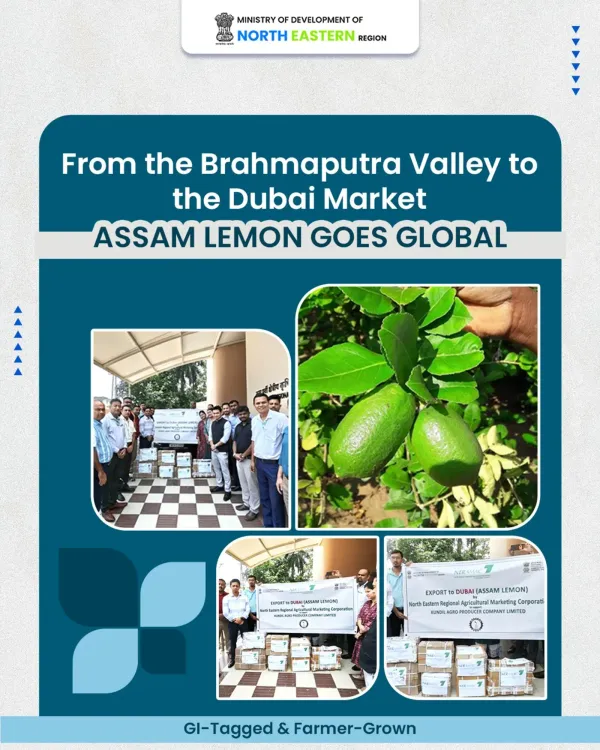
The Chief Minister's Office of Assam on June 7, 2026 announced that GI-tagged Assam lemons are reaching Dubai, highlighting growing global demand for Northeast India's certified produce. The development reflects India's Act East Policy push to open export channels for Northeastern farmers through Geographical Indication branding and Gulf trade facilitation.
Key Takeaways
The Chief Minister's Office of Assam confirmed on June 7, 2026 that GI-tagged Assam lemons are now being exported to Dubai .
Dubai serves as a major re-export hub in the UAE and a key gateway for Indian agricultural goods to Gulf and global markets.
India's Geographical Indications of Goods Act, 1999 provides the legal framework that enables GI-tagged produce to be differentiated and command premium pricing in export markets.
The Act East Policy (2014) has included dedicated components for agricultural export promotion from Northeastern states .
The export milestone is expected to benefit Assam's citrus growers through improved price realisation and could serve as a model for other GI-tagged Northeastern products.
Rollout of additional GI-linked export consignments and new logistics protocols with UAE authorities are being closely watched.
The Chief Minister's Office of Assam on Sunday, June 7, 2026, highlighted that GI-tagged Assam lemons are now reaching Dubai, calling it a sign of growing global recognition for Northeast India's quality agricultural produce and farmer-led enterprise.
Context
The post by the CMO Assam marks a notable export milestone for the state's citrus growers. Dubai, a major commercial and re-export hub in the UAE, has emerged as a key gateway for Indian agricultural goods to wider global markets, including the broader Gulf and West Asia region.
Assam's horticulture sector has a long-standing focus on citrus cultivation, and the arrival of its lemons in international markets under a Geographical Indication (GI) tag signals a shift from subsistence-level produce to premium, branded exports.
Policy Backdrop
India enacted the Geographical Indications of Goods (Registration and Protection) Act, 1999, to provide legal protection and global branding potential for region-specific products. A GI tag certifies that a product originates from a particular geography and possesses qualities or a reputation attributable to that origin.
The Act East Policy, upgraded in 2014, has included dedicated components for agricultural export promotion from Northeastern states. Central and state governments have since accelerated GI registrations for Northeastern produce to improve price realisation for farmers and open new export channels beyond traditional domestic markets.
Trade facilitation measures between India and Gulf countries have positioned the UAE as an expanding destination for Indian horticultural items, forming part of a wider push to diversify farm incomes through quality certification and improved logistics links.
Stakeholders and Impact
The primary beneficiaries of this development are Assam's citrus growers and Northeast agricultural exporters, who stand to gain improved price realisation through GI-backed branding in competitive international markets. A GI tag allows producers to command a premium over generic, unbranded produce from other regions.
For the broader Northeast India agricultural ecosystem, the Assam lemon's entry into Dubai serves as a proof-of-concept that the region's produce can meet international phytosanitary and quality standards. This can encourage investment in cold-chain logistics, packaging, and post-harvest infrastructure across the eight-state region.
What's Next
Observers will watch for the rollout of additional GI-linked export consignments from Assam and other Northeastern states, as well as any new logistics or phytosanitary protocols agreed with UAE authorities to sustain and scale this trade corridor.
If the Assam lemon export model proves commercially viable, it could serve as a template for other GI-tagged Northeastern products — from Assam tea to regional spices and handicrafts — seeking entry into Gulf and global markets. The broader ambition is to make farmer-led enterprise from the Northeast a recognised feature of India's agricultural export story.
Point of View
Particularly for the long-underserved Northeast. The UAE angle is strategically significant: Gulf markets offer high price realisation and large Indian diaspora demand, making them ideal first destinations for premium branded produce. If the Assam lemon corridor scales, it could strengthen the case for dedicated Northeast agricultural export infrastructure and accelerate GI registrations for the region's other distinctive crops.
NationPress
22 Oct 2026
Frequently Asked Questions
What is the GI tag for Assam lemons?
A Geographical Indication (GI) tag certifies that Assam lemons originate from a specific region in Assam and possess qualities tied to that geography. India's GI Act of 1999 governs such registrations, which allow producers to differentiate their product and command better prices in domestic and export markets.
Why are Assam lemons being exported to Dubai?
Dubai is a major commercial hub and gateway for Indian agricultural goods to Gulf and global markets. Trade facilitation measures between India and the UAE have positioned Dubai as an expanding destination for Indian horticultural produce, and the GI tag gives Assam lemons a premium branding advantage in competitive international markets.
What is the Act East Policy and how does it help Northeast India farmers?
The Act East Policy, upgraded in 2014, is India's strategic framework for deepening ties with Southeast Asia and beyond. It includes components for agricultural export promotion from Northeastern states, helping farmers access new markets through quality certification, logistics support, and trade facilitation agreements.
How does a GI tag benefit farmers in Assam?
A GI tag allows Assam farmers to market their produce under a legally protected regional brand, which typically commands a price premium over generic equivalents. It also opens doors to export markets that demand certified, traceable produce, improving overall income realisation for growers.
Which other Northeast India products have GI tags?
Several products from Northeast India carry GI tags, including Assam tea, Muga silk, and various regional handicrafts and spices. Governments have been accelerating GI registrations for Northeastern produce as part of efforts to improve farm incomes and expand export channels.