CM Himanta: Assam's semiconductor plant clears first clean room
Synopsis
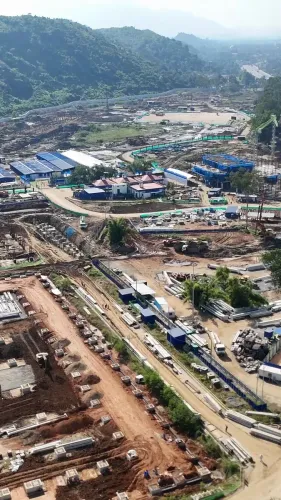
Assam's semiconductor facility has achieved a pivotal milestone as its first clean room becomes operational and pilot production begins, with Chief Minister Himanta Biswa Sarma announcing a target of 48 million chips — marking a landmark shift in the northeast's industrial identity.
Key Takeaways
Assam's semiconductor facility has its first clean room operational as of October 2026 .
Pilot production is already underway at the facility, confirming it has moved beyond the construction phase.
The planned output stands at 48 million chips , marking one of the most ambitious manufacturing targets in northeast India's history.
A functional clean room is the critical threshold that separates a semiconductor facility from genuine manufacturing capability.
The milestone aligns with India's broader national push to build domestic chip production capacity and reduce import dependence.
The development positions Assam as a new node in the emerging Indian semiconductor map, diversifying the state's traditionally agriculture- and energy-based economy.
A clean room is live, pilot production has begun, and 48 million chips are on the drawing board — Assam Chief Minister Himanta Biswa Sarma confirmed on Saturday, 3 October 2026 that the state's semiconductor facility has crossed its first major operational milestone, signalling that India's northeast is now a genuine player in the global chip race.
What a clean room milestone actually means
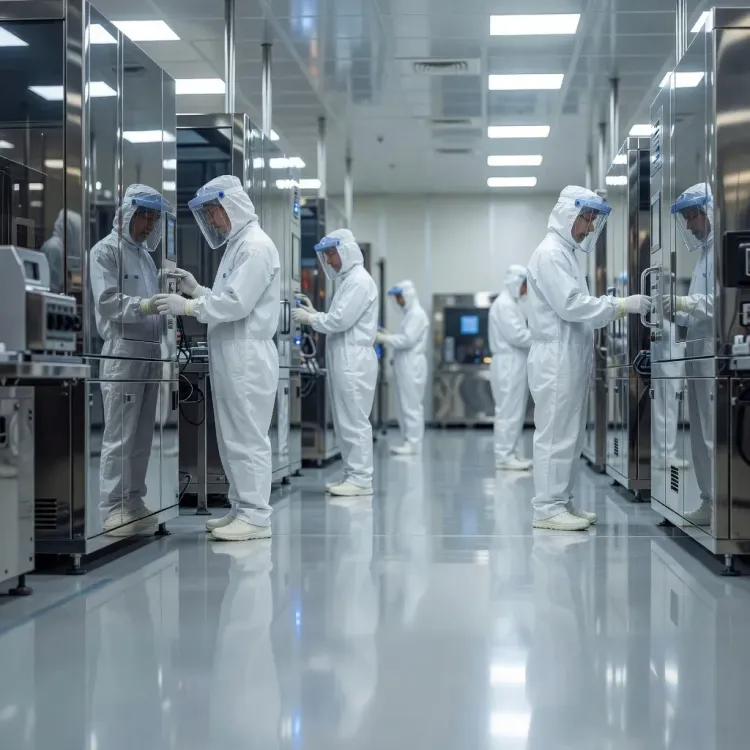
A clean room is the heartbeat of any semiconductor operation — a hyper-controlled environment where even a single dust particle can destroy a chip in production. Getting one operational is not a ribbon-cutting formality; it is the moment a facility graduates from construction to manufacturing reality. With Assam's clean room now certified and running, the plant has crossed the hardest-to-fake threshold in the semiconductor calendar.
Pilot production running alongside it means the facility is not merely testing equipment — it is producing chips, validating processes, and stress-testing the supply chain before full-scale output begins. These are the two proof-points investors and governments watch most closely.
48 million chips and what that number signals
The planned output of 48 million chips is the figure that frames the ambition here. Semiconductor manufacturing at scale demands enormous capital, precision logistics, and a trained workforce — all notoriously difficult to assemble outside established hubs in Taiwan, South Korea, and the United States. An output target of this magnitude from a facility in Assam would represent one of the most consequential industrial pivots in the region's modern economic history.
India's national semiconductor push — driven by centre-level incentives designed to reduce dependence on imported chips — has been gathering pace, and state-level execution is where ambitions are either realised or stall. Assam's clean room coming online is a data point that execution, at least at this stage, is on track.
Northeast India steps into the chip map
Assam has historically been anchored to agriculture, oil, and tea — industries with long roots but limited scope for the kind of high-value manufacturing that reshapes a state's economic identity. A functioning semiconductor facility changes that equation sharply, creating demand for engineers, technicians, and a support ecosystem that extends well beyond the factory floor.
For CM Sarma, who has consistently positioned Assam as a destination for serious industrial investment under his tenure, the clean room milestone is also a political proof point — that northeast India can host infrastructure once considered the exclusive preserve of coastal or western industrial corridors.
Forty-eight million chips will not be the final chapter. But the clean room is open, the pilot line is running, and that is how every semiconductor story that ever mattered began.
Point of View
Where central incentives are meant to unlock execution at the state level. CM Sarma has consistently leveraged high-visibility infrastructure announcements to signal Assam's transformation beyond its traditional economic base, and a functioning semiconductor pilot line is a credible, hard-to-dispute data point. The 48-million-chip target will now draw scrutiny on timelines, technology node, and end-market — the metrics that will separate a genuine industrial pivot from a headline. If Assam delivers at scale, it will pressure other states to accelerate their own semiconductor bids and cement the northeast's emerging reputation as a serious manufacturing frontier.
NationPress
3 Oct 2026
Frequently Asked Questions
What is the Assam semiconductor facility and where is it located?
The Assam semiconductor facility is a chip manufacturing plant in the state of Assam in northeast India. Chief Minister Himanta Biswa Sarma confirmed in October 2026 that its first clean room is now operational and pilot production has begun.
What is a clean room in semiconductor manufacturing?
A clean room is a hyper-controlled environment where air purity, temperature, and humidity are precisely managed to prevent contamination during chip fabrication. Its operationalisation marks the transition from construction to active manufacturing.
How many chips is Assam's semiconductor plant planned to produce?
The facility has a planned output of 48 million chips , a scale CM Sarma described as 'truly remarkable' in his announcement on 3 October 2026.
What does pilot production mean at Assam's chip facility?
Pilot production means the facility is actively manufacturing chips on a limited scale to test processes, equipment, and supply chains before ramping up to full commercial output.
How does Assam's semiconductor plant fit into India's chip strategy?
India has been pursuing domestic semiconductor manufacturing to reduce dependence on imported chips. Assam's clean room milestone represents state-level execution of that national ambition, positioning northeast India as a new node in the country's emerging chip production map.