CM Himanta Says Assam to Roll Out Semiconductor Chips in 2026

Synopsis
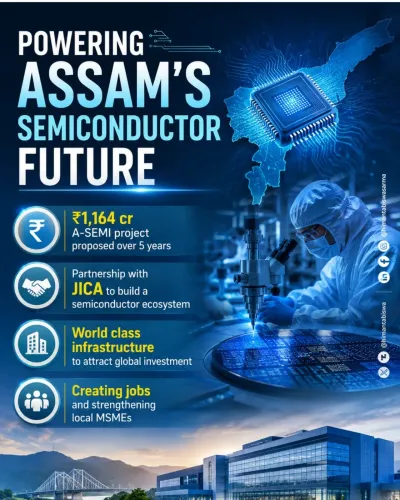
Assam Chief Minister Himanta Biswa Sarma announced on 21 June 2026 that semiconductor chips will begin rolling out from the state this year, with a claimed capacity of 48 million chips per day — a potential first for northeastern India under the national Semicon India programme.
Key Takeaways
CM Himanta Biswa Sarma announced that #MadeInAssam semiconductor chips will begin production in 2026 .
The claimed production target is 48 million chips per day .
The announcement aligns with the India Semiconductor Mission , backed by Rs 76,000 crore in central incentives approved in 2021 .
Most existing national semiconductor projects are in Gujarat , Karnataka , and Odisha ; an operational unit in Assam would be a first for the northeast.
Assam has offered state-level land, power, and fiscal incentives to attract electronics and chip-making investment.
Formal project approvals from the India Semiconductor Mission and ground-breaking details are yet to be publicly confirmed.
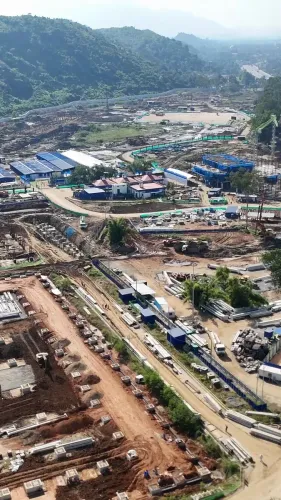
Assam Chief Minister Himanta Biswa Sarma announced on Sunday, 21 June 2026 that semiconductor chips manufactured in Assam will begin rolling out this year, positioning the northeastern state as a new node in India's expanding chip-making ecosystem. The Chief Minister claimed a production capacity of 48 million chips per day is on the horizon.
Context
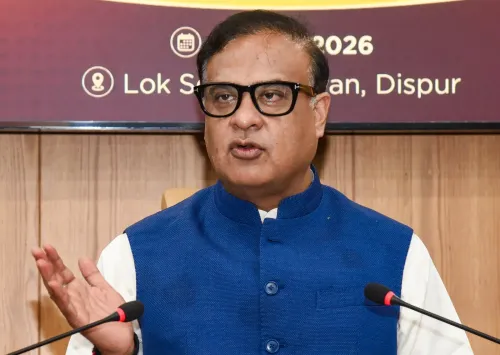
Posting on X, CM Sarma wrote that #MadeInAssam semiconductor chips will 'begin rolling out from Assam marking a new era in industrialisation and strengthening Bharat's growing semiconductor ecosystem.' The announcement frames Assam as an active participant in the national push for chip self-sufficiency, a goal the Government of India has pursued under the Atmanirbhar Bharat programme.
The figure of 48 million chips per day — if realised — would represent a significant industrial milestone for a state whose economy has historically been anchored in oil, tea, and agriculture. CM Sarma has repeatedly prioritised attracting high-tech investment to Assam through successive investment summits and state-level incentive packages.
Policy Backdrop
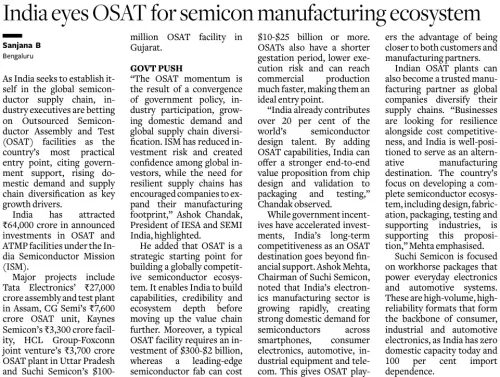
The announcement sits within the broader framework of the India Semiconductor Mission (ISM) and the Semicon India programme, approved by the Union Cabinet in 2021 with an outlay of Rs 76,000 crore in incentives to attract fabrication, assembly, testing, marking, and packaging units. The programme includes modified production-linked incentive schemes for semiconductors and IT hardware.
Until now, most approved semiconductor and display projects under the national programme have been concentrated in Gujarat, Karnataka, and Odisha. Northeastern states, including Assam, have simultaneously offered competitive land, power, and fiscal incentives to secure a share of the emerging supply chain. An operational chip facility in Assam would mark the first such unit in the northeast.
Stakeholders and Impact
The primary beneficiaries of a functional chip-manufacturing unit in Assam would be the state's workforce and the broader electronics manufacturing supply chain. Semiconductor assembly and testing facilities are typically labour-intensive at certain production stages, offering potential employment in a state that has long sought to retain skilled workers.
For the national ecosystem, additional production capacity in Assam would contribute to India's stated goal of reducing dependence on chip imports from Taiwan, South Korea, and China. Electronics manufacturers sourcing domestically would also benefit from shorter supply chains and reduced logistics costs for the northeastern market.
What's Next
The immediate focus will be on formal project approvals or ground-breaking announcements from the India Semiconductor Mission that corroborate the 2026 production timeline. Progress on any memoranda of understanding signed by the Assam government with chip firms will be closely watched by investors and industry observers.
If the production targets are met, Assam could emerge as a template for other northeastern states seeking to integrate into the national semiconductor value chain — a development that would significantly reshape the industrial geography of the region.
Point of View
Inviting scrutiny against the backdrop of national projects that are still in early stages. For Sarma, who has staked much of his industrial legacy on transforming Assam's economic identity, a credible semiconductor milestone before the next electoral cycle would carry significant political weight. The announcement also reinforces the NEDA bloc's broader argument that the northeast deserves a larger share of India's manufacturing renaissance.
NationPress
20 Sept 2026
Frequently Asked Questions
What did Assam CM Himanta Biswa Sarma announce about semiconductors?
CM Himanta Biswa Sarma announced on 21 June 2026 that 'Made in Assam' semiconductor chips will begin rolling out from the state in 2026, with a stated target of 48 million chips per day.
What is the India Semiconductor Mission?
The India Semiconductor Mission is a central government initiative launched in 2021 under the Semicon India programme, offering Rs 76,000 crore in incentives to attract semiconductor fabrication, assembly, testing, and packaging units to India.
Which states have semiconductor projects in India?
Most approved semiconductor and display projects under the national programme are currently located in Gujarat, Karnataka, and Odisha. Assam's announced facility would be the first such unit in northeastern India.
How many chips per day will Assam produce?
CM Sarma's post on X claims a target of 48 million chips per day from the upcoming Assam facility, though this figure has not yet been independently confirmed through official project documents.
Why is Assam investing in semiconductor manufacturing?
Assam has been seeking to diversify its economy beyond oil, tea, and agriculture. The state government has offered land, power, and fiscal incentives to attract high-tech manufacturing investment as part of a broader industrialisation push.