CM Himanta Announces ₹1,164 Cr Semiconductor Push in Assam

Synopsis
Assam Chief Minister Himanta Biswa Sarma has announced the ₹1,164 crore A-Semi semiconductor project under the Assam Budget 2026, to be developed over five years. The move aims to build a chip ecosystem in the Northeast, aligning with India's broader Semicon India programme and Atmanirbhar Bharat goals.
Key Takeaways
CM Himanta Biswa Sarma announced the A-Semi project on 10 July 2026 as part of Assam Budget 2026 .
The project carries an outlay of ₹1,164 crore and is to be executed over five years .
It aims to build a semiconductor ecosystem in Assam , a first for the Northeastern region at this scale.
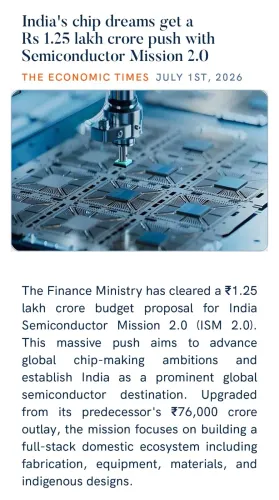
The initiative aligns with the central government's Semicon India programme , which has a national outlay of ₹76,000 crore .
Key next steps include central approvals, budget passage, and potential tie-ups with global chip firms under the India Semiconductor Mission .
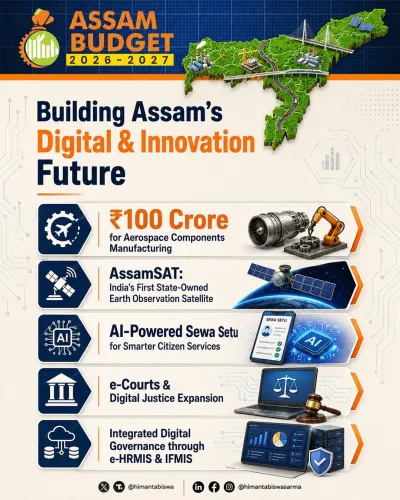
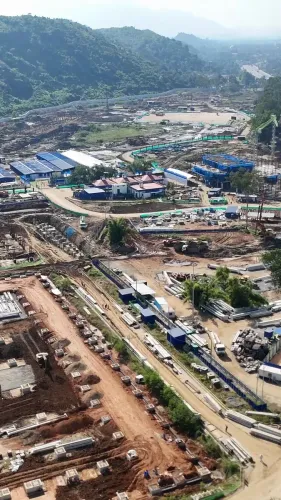
Assam Chief Minister Himanta Biswa Sarma on Friday, 10 July 2026, announced a ₹1,164 crore semiconductor project for the state, signalling a significant push to position Assam as a node in India's emerging chip ecosystem. The initiative, dubbed the A-Semi project, is to be executed over the next five years and was disclosed as part of the Assam Budget 2026 announcements.
Context
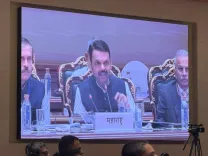
Posting on X, CM Sarma wrote: 'We are taking giant strides towards creating a robust semiconductor ecosystem in Assam. A ₹1,164cr A-Semi project will be taken up over the next 5 years to give strength to our vision.' The announcement frames the investment explicitly as a budget-backed commitment rather than a policy aspiration, anchoring it to a defined fiscal envelope and timeline.
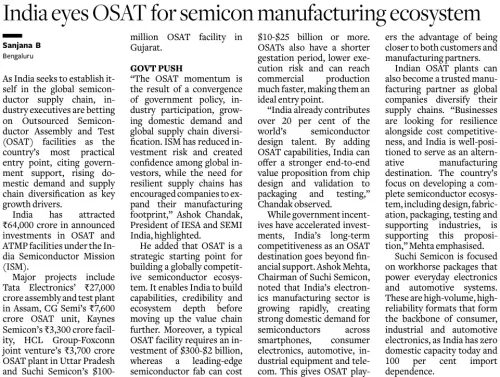
Semiconductors — the chips that power everything from smartphones to defence electronics — have become a strategic priority for India as it seeks to reduce dependence on imports, primarily from East Asia. Assam's entry into this space marks a notable geographic expansion of India's chip ambitions beyond established industrial corridors.
Policy Backdrop
The A-Semi project sits within the broader architecture of the Semicon India programme, approved by the Government of India in 2021 with an outlay of ₹76,000 crore to incentivise semiconductor fabrication, assembly, and design units across the country. The central scheme, administered through the India Semiconductor Mission, has sought to attract both domestic and global chip firms by offering production-linked incentives and capital support.
Northeastern states, including Assam, have been actively encouraged under the Atmanirbhar Bharat framework to host high-technology projects as part of a strategy for balanced regional development. CM Sarma, who also serves as convenor of the North-East Democratic Alliance (NEDA), has consistently positioned the region as investment-ready, and the A-Semi announcement extends that pitch into deep-tech manufacturing.
Stakeholders and Impact
The primary beneficiaries of the ₹1,164 crore outlay, if executed on schedule, would be Assam's industrial workforce and the electronics manufacturing supply chain in the Northeast. Semiconductor assembly and packaging units typically generate both direct skilled employment and ancillary demand for logistics, chemicals, and precision engineering services.
For electronics manufacturers currently sourcing chips through lengthy import chains, a regional production or packaging hub in Assam could meaningfully reduce lead times and costs. The project's success will, however, depend substantially on securing technology partners — a factor that central approvals and global chip firm tie-ups under the India Semiconductor Mission will determine.
What's Next
Attention will now turn to the formal budget passage in the Assam Legislative Assembly and subsequent project tenders or memoranda of understanding with industry partners. Clearances from the central government under the Semicon India programme's incentive windows will be a key milestone to watch. Any announced partnerships with global chip firms would significantly de-risk the project and accelerate its timeline, making such tie-ups the most consequential near-term development to monitor.
Point of View
Not merely executive aspiration. It also reinforces Sarma's broader strategy of using Northeast India's connectivity improvements and investment climate reforms as a pitch to deep-tech industries. The critical test will be whether the state can attract credible technology partners, since semiconductor projects without established chip-firm anchors have historically struggled to move from announcement to production.
NationPress
9 Oct 2026
Frequently Asked Questions
What is the A-Semi project in Assam?
The A-Semi project is a ₹1,164 crore semiconductor initiative announced by Assam Chief Minister Himanta Biswa Sarma under the Assam Budget 2026 , planned to be developed over five years to build a chip ecosystem in the state.
Why is Assam investing in semiconductors?
Assam is investing in semiconductors to diversify its industrial base, create skilled employment, and align with India's national Semicon India programme , which aims to reduce the country's dependence on imported chips.
What is the India Semiconductor Mission?
The India Semiconductor Mission is a central government body administering the Semicon India programme , launched in 2021 with a ₹76,000 crore outlay to incentivise chip fabrication, assembly, and design units across India.
How does the Assam semiconductor project fit into Atmanirbhar Bharat?
The A-Semi project aligns with Atmanirbhar Bharat by encouraging high-technology manufacturing in the Northeast , reducing import dependence on semiconductors and promoting balanced regional industrial development.
What are the next steps for the Assam semiconductor project?
Key next steps include passage of the Assam Budget 2026 in the state assembly, central government approvals under the Semicon India incentive framework, and potential partnerships with global chip firms to anchor the project.