Assam CM Office: 1 Crore Saplings Drive Aug 10–14, Fruit Tree Mission 2027
Synopsis
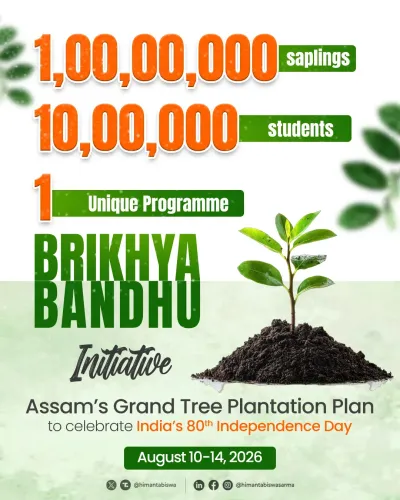
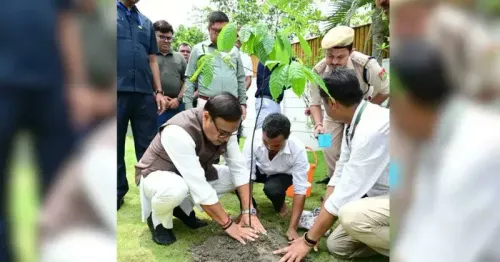
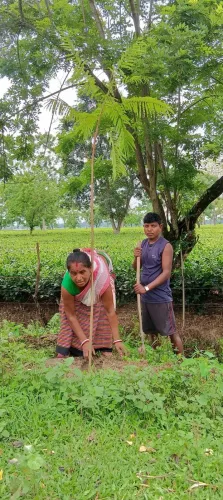
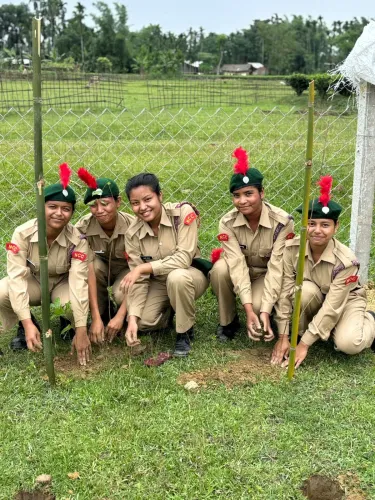
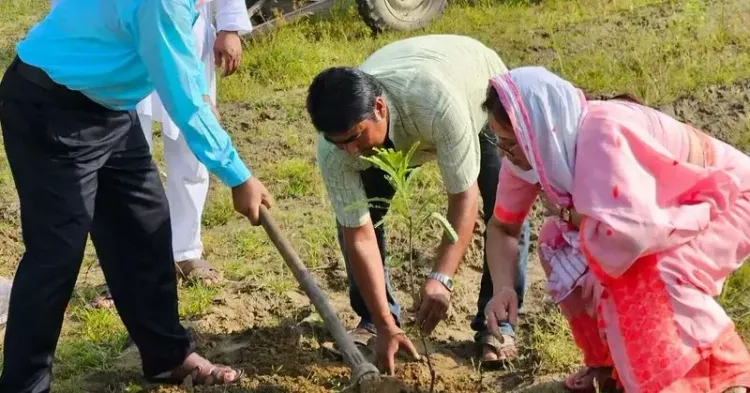
The Chief Minister's Office of Assam has announced a mass drive to plant one crore saplings across the state between 10 and 14 August 2026, with a dedicated Fruit Tree Mission set to launch in 2027, combining ecological restoration with agroforestry-based livelihood goals.
Key Takeaways
The Chief Minister's Office of Assam announced a target of planting one crore saplings in a five-day window from 10 to 14 August 2026 .
A separate Fruit Tree Mission is planned for launch in 2027 , extending the state's green drive into agroforestry.
The campaign coincides with India's Independence Day week, lending it a high-visibility national context.
The initiative aligns with India's Paris Agreement pledge to create an additional carbon sink of 2.5–3 billion tonnes of CO₂ equivalent by 2030 .
Key beneficiaries include local farmers, rural communities , and the horticulture sector across Assam.
Survival monitoring of saplings and integration with central schemes such as the National Mission for Sustainable Agriculture will be critical to the programme's long-term success.
The Chief Minister's Office of Assam announced on Saturday, 4 July 2026 that the state will undertake a mass sapling plantation drive targeting one crore saplings between 10 and 14 August 2026, alongside plans for a dedicated Fruit Tree Mission to be launched in 2027.
Context
The announcement, shared from the official handle of the Chief Minister's Office, sets a firm five-day window coinciding with India's Independence Day week for the plantation campaign. The drive reflects Assam Chief Minister Himanta Biswa Sarma's administration's intent to combine ecological restoration with a forward-looking agroforestry agenda. The pairing of a short-term mass-plantation event with a structured, longer-horizon Fruit Tree Mission from 2027 signals a two-phase approach to greening the state.
Policy Backdrop
Assam's drive fits within India's broader climate commitments under the Paris Agreement, under which the country has pledged to create an additional carbon sink of 2.5 to 3 billion tonnes of CO₂ equivalent through increased forest and tree cover by 2030. The National Mission for a Green India, launched in 2014 by the Ministry of Environment, Forest and Climate Change, provides a central policy framework that guides and co-funds state-level afforestation programmes. Several Indian states have run comparable week-long mass sapling campaigns in recent years, but the explicit linkage here to a future Fruit Tree Mission distinguishes Assam's approach by weaving livelihood considerations into an environmental mandate.
Agroforestry — integrating fruit and timber trees with agricultural land — has gained traction across India as a way to boost farmer incomes while simultaneously expanding green cover. By anchoring the 2027 Fruit Tree Mission to the momentum of this August drive, the state government appears to be building a pipeline from awareness and mobilisation to sustained economic benefit for rural communities.
Stakeholders and Impact
Local farmers and rural communities across Assam stand to be the primary beneficiaries of both phases. The immediate plantation drive will engage village-level bodies, school groups, and civil society in a time-bound, high-visibility exercise. The 2027 Fruit Tree Mission, once operational, is expected to benefit the horticulture sector by expanding orchard coverage, potentially increasing household incomes in a state where agriculture supports a large share of the workforce.
Assam's geography — marked by the Brahmaputra floodplains, biodiversity-rich hills, and expansive tea estates — makes afforestation both ecologically urgent and logistically complex. Flood-prone districts in particular stand to gain from improved riparian tree cover, which can reduce soil erosion and moderate the impact of annual inundations.
What's Next
Attention will now turn to the rollout details of the 10–14 August campaign: which districts will be prioritised, which species of saplings will be planted, and what survival-monitoring mechanisms will be put in place to ensure the drive translates into lasting green cover rather than a single-day spectacle. For the longer term, the architecture of the Fruit Tree Mission from 2027 — including whether it will seek integration with central schemes such as the National Mission for Sustainable Agriculture — will determine its scale and impact. Any convergence with central funding streams could significantly amplify the programme's reach across Assam's roughly 126 lakh farm households.
Point of View
Easy media coverage, and a patriotic frame. What makes this announcement marginally more substantive than routine plantation drives is the explicit commitment to a Fruit Tree Mission from 2027, which suggests the administration is thinking beyond the photo-opportunity and towards measurable agroforestry outcomes. If the 2027 mission is properly designed with survival audits, species diversity, and farmer-ownership models, it could become a meaningful contribution to both Assam's climate resilience and its rural economy. The real test, as with most mass plantation exercises in India, will be post-planting accountability — how many of those one crore saplings survive past their first monsoon.
NationPress
4 Jul 2026
Frequently Asked Questions
When will Assam plant one crore saplings?
Assam has announced a mass sapling plantation drive scheduled between 10 and 14 August 2026 , a five-day window that coincides with India's Independence Day week.
What is the Assam Fruit Tree Mission 2027?
The Fruit Tree Mission is a state-level agroforestry programme announced by the Chief Minister's Office of Assam , planned for launch in 2027 , aimed at expanding orchard and fruit-tree coverage to benefit farmers and the horticulture sector.
Who announced Assam's one crore sapling plantation drive?
The announcement was made by the Chief Minister's Office of Assam , the official handle of the state government, on 4 July 2026 .
How does Assam's plantation drive connect to India's climate goals?
The drive aligns with India's Paris Agreement commitments, under which the country has pledged to create an additional carbon sink of 2.5 to 3 billion tonnes of CO₂ equivalent through increased forest and tree cover by 2030 , supported by the National Mission for a Green India .
Who benefits from Assam's sapling drive and Fruit Tree Mission?
The primary beneficiaries are local farmers, rural communities , and the broader horticulture sector in Assam, with ecological benefits including improved flood resilience and soil conservation in the state's flood-prone districts.