Assam CMO announces drone postal service for remote regions
Synopsis
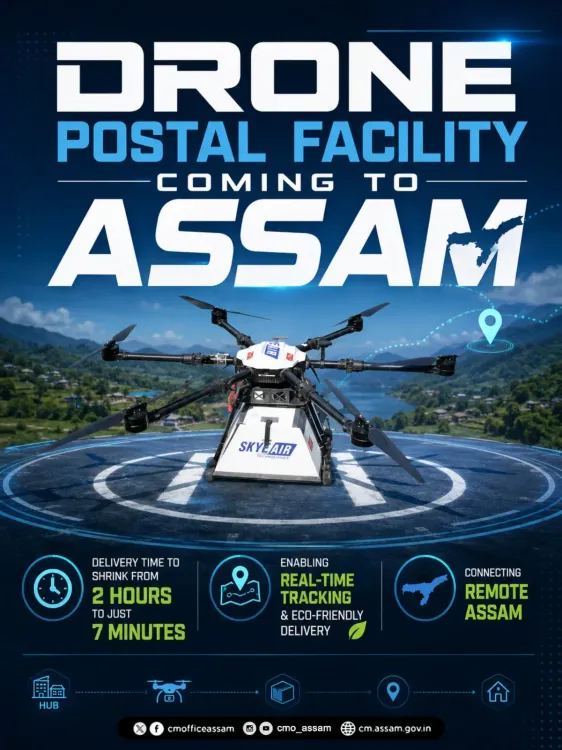
The Chief Minister's Office of Assam has announced drone-powered postal services aimed at connecting remote regions of the state, promising to reduce delivery times from hours to minutes with real-time tracking and eco-friendly electric UAVs, aligning with India's national drone policy framework.
Key Takeaways
The Chief Minister's Office of Assam announced drone-powered postal services on 22 June 2026 .
The initiative targets remote and riverine regions of Assam where conventional delivery is severely hampered by terrain and seasonal flooding.
The service promises to reduce delivery times from hours to minutes using real-time tracking and eco-friendly operations.
The move aligns with the Drone Rules, 2021 , India's national regulatory framework for commercial UAV operations.
India Post , the national postal operator, is the likely institutional partner for ground-level implementation.
Specific pilot districts, timelines, and vendor partnerships have not yet been announced.
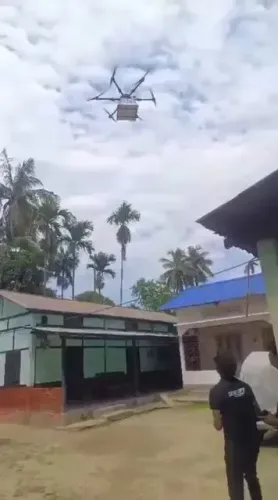
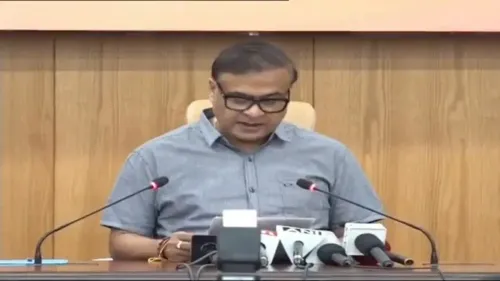
The Chief Minister's Office of Assam announced on Monday, 22 June 2026 that drone-powered postal services will be launched to connect remote regions of the state, promising to cut delivery times dramatically. The initiative marks a significant step in leveraging unmanned aerial technology for public service delivery in one of India's most geographically challenging states.
The official post stated: 'A new era of logistics is taking flight in Assam. Drone-powered postal services will connect remote regions faster than ever, reducing delivery times from hours to minutes. With real-time tracking and eco-friendly operations.'
Context
Assam presents one of the most demanding last-mile delivery challenges in India. Its terrain — a mix of floodplains, river islands (chars), and forested hill districts — routinely isolates communities from timely postal, medical, and administrative services. Conventional road and boat-based delivery can stretch from several hours to multiple days depending on weather and seasonal flooding.
The announcement by the Chief Minister's Office positions drone logistics as a direct answer to this geographic reality. The stated goals of real-time tracking and eco-friendly operations suggest the initiative envisions electric unmanned aerial vehicles (UAVs) operating on defined corridors between postal hubs and remote delivery points.
Policy Backdrop
The move fits squarely within a national regulatory and policy framework that has been building for several years. The Drone Rules, 2021, notified by the Ministry of Civil Aviation, liberalised commercial drone operations in India and opened the door for public-sector entities to integrate UAVs into service delivery. The rules significantly reduced licensing burdens and expanded permissible use cases, including logistics.
India Post, the national postal operator under the Ministry of Communications, has been identified at the central level as a key institution for extending drone-based delivery to underserved areas. Assam's announcement aligns the state's ambitions with this broader national push, potentially making India Post the operational backbone for the drone network in the state.
Chief Minister Himanta Biswa Sarma, who has led the state since 2021, has consistently foregrounded technology adoption as a pillar of governance modernisation in Assam. Drone logistics represents the latest expression of that approach applied to physical infrastructure.
Stakeholders and Impact
The primary beneficiaries would be communities in remote and riverine districts of Assam — populations that currently experience delayed access to parcels, documents, medicines, and government correspondence. Faster postal connectivity can have downstream effects on access to banking services, welfare scheme documents, and e-commerce delivery.
From an environmental standpoint, electric UAVs produce significantly lower emissions than motorcycle or boat-based delivery, which is consistent with the 'eco-friendly operations' framing in the announcement. Small and medium postal contractors currently serving difficult routes could, however, face displacement and would need to be accounted for in any transition plan.
What's Next
The announcement does not specify districts for a pilot rollout, vendor partnerships, or an operational timeline. Watchers of the initiative will look for formal project agreements between the state government and India Post or private drone operators, regulatory clearances from the Directorate General of Civil Aviation (DGCA), and the identification of initial corridors for trial flights.
If the programme moves from announcement to operational pilot, Assam could emerge as a model for other northeastern states grappling with similar terrain-driven connectivity deficits — and potentially influence how drone logistics is scaled nationally for public service delivery.
Point of View
The office is pitching drone logistics not merely as an infrastructure upgrade but as a modernisation narrative ahead of potential electoral cycles. The Northeast's terrain has long been cited as a justification for central resource allocation, and a successful drone postal pilot could strengthen Assam's case for disproportionate technology investment from the Union government. The critical test, however, will be whether the announcement translates into operational corridors — a gap that has historically separated policy intent from delivery in the region's infrastructure story.
NationPress
21 Sept 2026
Frequently Asked Questions
What is the Assam drone postal service announced by the CMO?
The Chief Minister's Office of Assam announced on 22 June 2026 that drone-powered postal services will be launched to connect remote regions of the state, aiming to cut delivery times from hours to minutes with real-time tracking and eco-friendly UAVs.
Which areas in Assam will benefit from drone postal delivery?
The announcement targets remote and geographically difficult regions of Assam, including riverine and forested areas where conventional road or boat-based delivery is slow or unreliable, particularly during floods.
Is India Post involved in Assam's drone delivery plan?
India Post, the national postal operator under the Ministry of Communications, is the most likely institutional partner for the initiative, given its existing last-mile delivery mandate and the national push for drone integration in postal services.
What are the Drone Rules 2021 and how do they relate to this?
The Drone Rules 2021 were notified by India's Ministry of Civil Aviation to liberalise commercial drone operations. They provide the regulatory foundation that makes initiatives like Assam's drone postal service legally and operationally feasible.
When will Assam's drone postal service begin operations?
No specific launch date, pilot district, or operational timeline has been announced yet. The next steps to watch are formal project agreements, DGCA clearances, and identification of initial drone corridors.