Assam completes 22 lakh PMAY-G pucca houses: CM Office
Synopsis
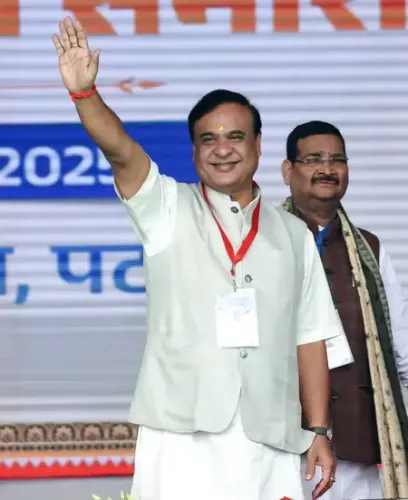
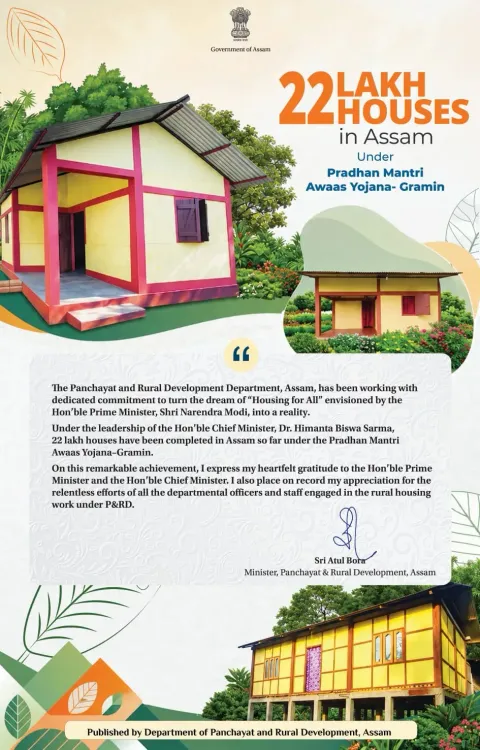
Assam has completed construction of 22 lakh pucca houses under PMAY-G, the Chief Minister's Office announced on 22 June 2026, citing PM Modi's vision and CM Himanta Biswa Sarma's leadership as drivers of the rural welfare milestone.
Key Takeaways
22 lakh pucca houses have been completed in Assam under Pradhan Mantri Awas Yojana–Gramin , according to the state's CMO.
The announcement was made on 22 June 2026 by the Chief Minister's Office of Assam .
PMAY-G was launched in 2016 , replacing the Indira Awas Yojana that had been in operation since 1985.
Assam is a priority state under PMAY-G due to high kutcha dwelling prevalence and flood-prone terrain challenges.
CM Himanta Biswa Sarma and PM Narendra Modi were credited with driving the implementation of the scheme in the state.
Next steps include convergence with water, electricity, and road connectivity schemes for completed housing units.
The Chief Minister's Office of Assam announced on Monday, 22 June 2026 that the state has successfully completed construction of 22 lakh pucca houses under the Pradhan Mantri Awas Yojana–Gramin (PMAY-G), marking what it described as a landmark achievement in rural welfare.
Context
The CMO's post credited the milestone to the vision of Prime Minister Narendra Modi and the leadership of Chief Minister Dr. Himanta Biswa Sarma, stating the initiative has 'brought enhanced security, dignity and improved living standards to lakhs of families across the State.' Cabinet minister Atul Bora, who is associated with rural development portfolios in the Assam government, was also tagged in the announcement. The completion of 22 lakh units represents a significant scale of rural infrastructure delivery in one of India's northeastern states.Policy Backdrop
PMAY-G was launched by the Government of India in 2016, replacing the earlier Indira Awas Yojana that had operated since 1985. The scheme provides financial assistance to eligible rural households for construction of pucca houses, with the original target of housing saturation set for 2022 and subsequently extended through additional phases. Assam, like other northeastern states, was identified as a priority geography under the programme due to a historically high proportion of kutcha dwellings and logistical challenges posed by flood-prone terrain and difficult topography. The scheme is also designed to integrate with allied programmes such as Swachh Bharat Mission and Pradhan Mantri Ujjwala Yojana to deliver composite improvements in rural living conditions.Stakeholders and Impact
The primary beneficiaries are rural households across Assam who previously lived in kutcha or semi-pucca structures vulnerable to floods, monsoon damage, and structural collapse. A pucca house provides not only physical shelter but also collateral value, enabling families to access credit and other welfare entitlements. Northeastern states receive a proportionally larger focus under PMAY-G given their infrastructure deficits and the higher cost of construction materials in remote areas. The announcement signals that the state administration views the 22 lakh figure as a saturation-level achievement, though independent verification of the precise count remains subject to central government audit processes.What's Next
Attention will now turn to whether Assam pursues integration of completed housing units with pending infrastructure linkages — including road connectivity, electricity, and drinking water — under convergent rural development schemes. The Government of India has periodically revised PMAY-G unit costs and eligibility norms; any new phase or revised target announced at the centre will determine Assam's next housing obligations. State-level saturation drives and geo-tagging verification of completed units are expected to form the basis of future progress reports to the Ministry of Rural Development.Point of View
Particularly in a state where rural constituencies are electorally decisive. By tagging both PM Modi and CM Himanta Biswa Sarma, the CMO post reinforces a dual-credit political architecture that links central scheme funding with state-level execution. The specific mention of 'dignity' and 'security' as outcomes — rather than just numbers — reflects a deliberate framing shift in how the ruling establishment communicates welfare programmes. Whether independent audits corroborate the 22 lakh figure will determine how durable this milestone claim proves to be in public discourse.
NationPress
22 Jun 2026
Frequently Asked Questions
What is Pradhan Mantri Awas Yojana Gramin?
Pradhan Mantri Awas Yojana–Gramin (PMAY-G) is a central government scheme launched in 2016 to provide financial assistance to eligible rural households for constructing pucca houses, replacing the older Indira Awas Yojana.
How many houses has Assam completed under PMAY-G?
The Chief Minister's Office of Assam announced on 22 June 2026 that the state has completed construction of 22 lakh pucca houses under PMAY-G.
Who is responsible for PMAY-G implementation in Assam?
Chief Minister Dr. Himanta Biswa Sarma leads state-level implementation, with cabinet minister Atul Bora associated with rural development portfolios. The scheme is funded and monitored by the central Ministry of Rural Development.
Why is Assam a priority state under PMAY-G?
Assam has a historically high proportion of kutcha dwellings and faces logistical challenges due to flood-prone terrain and remote geography, making it a priority focus under the rural housing programme.
What comes after pucca house construction under PMAY-G?
Completed housing units are expected to be integrated with allied schemes providing drinking water, electricity, sanitation, and road connectivity to deliver comprehensive improvements in rural living standards.