CM Assam: State IMR Falls from 41 to 29 Since 2018
Synopsis
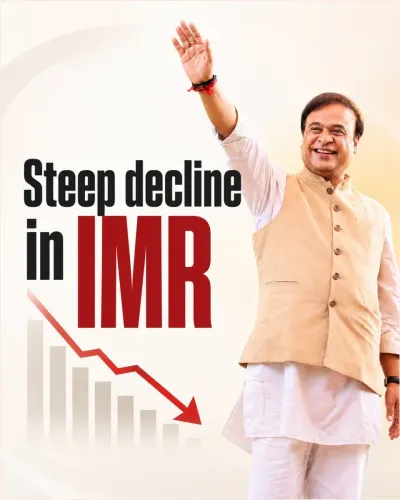
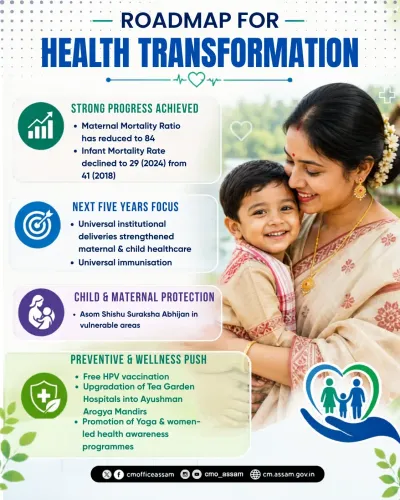
Assam's Infant Mortality Rate has fallen from 41 in 2018 to 29 in 2024, the Chief Minister's Office announced on 30 May 2026. The 12-point drop reflects six years of expanded maternal care, institutional deliveries, and nutrition programmes under the National Health Mission and allied central schemes.
Key Takeaways
Assam's Infant Mortality Rate fell from 41 per 1,000 live births in 2018 to 29 per 1,000 live births in 2024 .
The decline of 12 points represents an approximately 29 per cent reduction over six years.
The National Health Mission , Janani Suraksha Yojana , and POSHAN Abhiyaan are among the key central schemes credited with driving the improvement.
Assam has historically recorded IMR above the national average due to terrain, dispersed populations, and limited healthcare access.
Independent verification is expected from the next Sample Registration System bulletin by the Registrar General of India.
Frontline health workers — ASHAs, ANMs, and anganwadi staff — are the primary operational force behind the gains on the ground.
The Chief Minister's Office of Assam announced on Saturday, 30 May 2026 that the state's Infant Mortality Rate (IMR) has declined from 41 per 1,000 live births in 2018 to 29 per 1,000 live births in 2024, citing steady progress in maternal and child healthcare.
Context
The announcement frames the drop as evidence of a 'healthier Assam in the making.' An IMR decline of 12 points over six years represents a roughly 29 per cent reduction, a pace that outstrips the historical average for the state. Assam has traditionally recorded IMR figures above the national average, a gap attributed to its challenging terrain, dispersed rural populations, and historically limited access to institutional healthcare.
Policy Backdrop
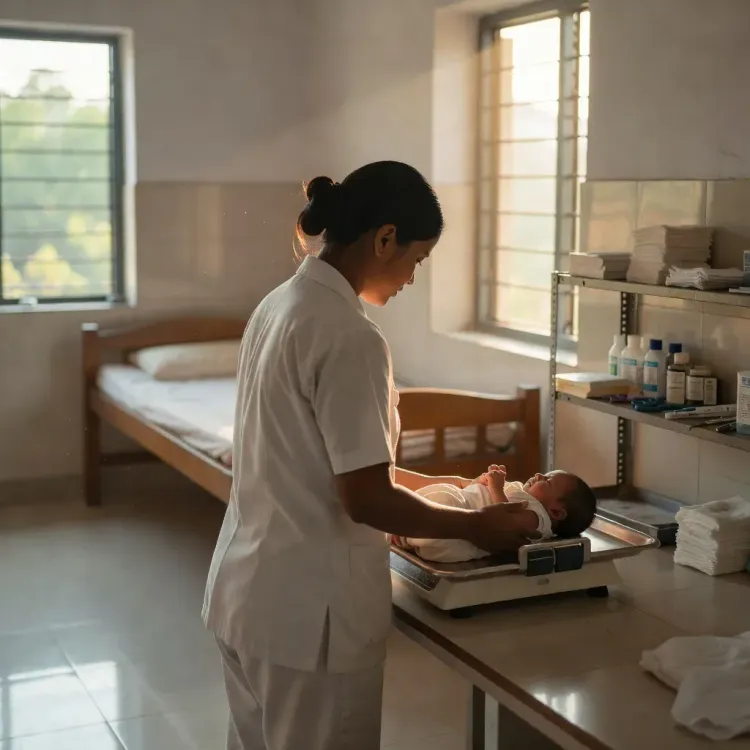
The improvement sits against a long arc of central and state health interventions. The National Health Mission (NHM), which absorbed the earlier National Rural Health Mission launched in 2005, has been the primary vehicle for expanding facility-based newborn care, immunisation coverage, and skilled birth attendance across northeastern states. The Janani Suraksha Yojana, also introduced in 2005, incentivised institutional deliveries through direct cash transfers to mothers, directly targeting the neonatal period when infant deaths are most concentrated.
More recently, the POSHAN Abhiyaan, launched in 2018, brought a convergence approach to malnutrition — one of the leading indirect causes of infant mortality — by coordinating anganwadi services, health departments, and community outreach. Chief Minister Himanta Biswa Sarma, who has helmed Assam's health and governance agenda since 2021, has repeatedly positioned maternal and child health as a flagship priority of his administration.
Stakeholders and Impact
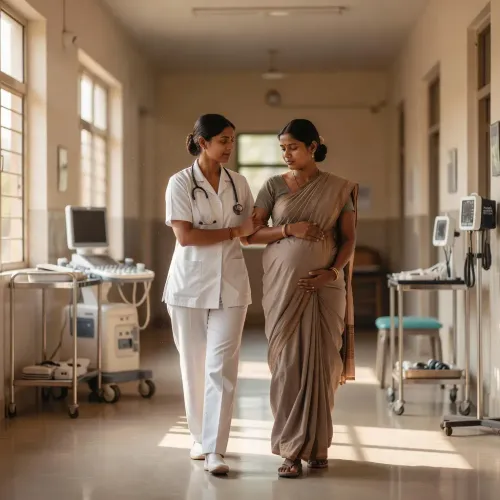
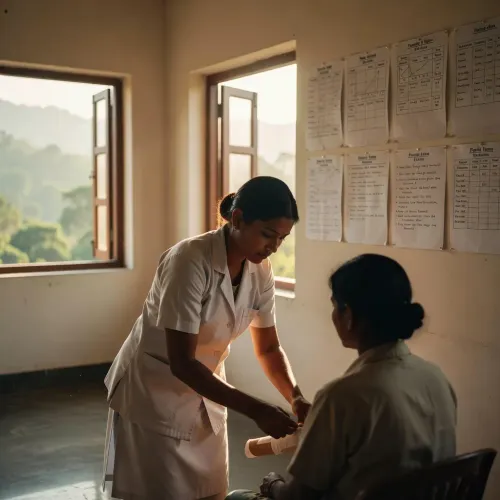
The most direct beneficiaries of a falling IMR are mothers and infants in Assam, particularly in rural and tribal belts where access to primary health centres has historically been uneven. Frontline health workers — ASHAs, auxiliary nurse midwives, and anganwadi workers — are the operational backbone behind these gains, conducting home visits, facilitating referrals, and administering routine immunisations.
A lower IMR also carries broader demographic and economic significance. It signals improvements in sanitation, nutrition, and antenatal care that tend to correlate with better child development outcomes over the long term. For Assam, closing the gap with better-performing southern states remains an ongoing ambition, and each successive data point is watched closely by public health planners and the central government alike.
What's Next
The figures cited by the Chief Minister's Office are drawn from state-level tracking; the next bulletin from the Sample Registration System (SRS) of the Registrar General of India will provide independently compiled estimates that allow national and inter-state comparison. Analysts will also watch for the next round of the National Family Health Survey (NFHS), which captures a wider basket of maternal and child health indicators. Any supplementary state health budget announcements or new district-level programme expansions would indicate whether the current momentum is set to accelerate.
Point of View
Positioning measurable health outcomes as a governance dividend ahead of any future electoral or policy cycle. A 12-point IMR decline in six years is a credible directional improvement for a state that has long lagged southern peers, though independent SRS confirmation will be the true test of the claim. The framing also aligns Assam's record with the broader national narrative of NHM-led progress in laggard states, allowing the state government to take credit while benefiting from central scheme infrastructure. Sustained gains will depend on whether district-level health spending and frontline worker capacity continue to expand beyond the headline numbers.
NationPress
14 Oct 2026
Frequently Asked Questions
What is Assam's current Infant Mortality Rate in 2024?
According to the Chief Minister's Office of Assam, the state's Infant Mortality Rate stood at 29 per 1,000 live births in 2024 , down from 41 in 2018.
Why was Assam's infant mortality rate so high historically?
Assam's IMR was historically above the national average due to its difficult terrain, geographically dispersed rural populations, and limited access to institutional healthcare and skilled birth attendants.
What government schemes helped reduce infant mortality in Assam?
Key schemes include the National Health Mission , the Janani Suraksha Yojana — which incentivises institutional deliveries — and the POSHAN Abhiyaan , which targets malnutrition linked to infant deaths.
How is India's Infant Mortality Rate measured officially?
The Sample Registration System (SRS) of the Registrar General of India publishes annual state-wise IMR estimates, which serve as the standard official benchmark for tracking progress.
Who is the Chief Minister of Assam responsible for health policy?
Himanta Biswa Sarma has been Chief Minister of Assam since 2021 and has consistently highlighted maternal and child health as a priority of his administration.