CM Himanta: Assam IMR drops from 49 to 29 in a decade
Synopsis
Assam Chief Minister Himanta Biswa Sarma has announced that the state's Infant Mortality Rate has dropped from 49 to 29 per thousand live births over the past decade, attributing the improvement to stronger mother-and-child healthcare facilities, better services, and welfare schemes, while acknowledging that more work remains.
Key Takeaways
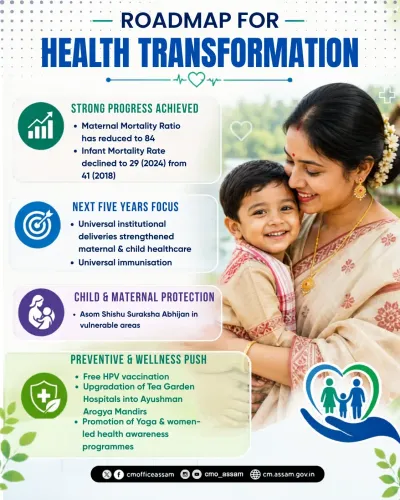
Assam's Infant Mortality Rate has fallen from 49 to 29 per thousand live births over the past decade, according to Chief Minister Himanta Biswa Sarma .
The improvement is attributed to stronger mother-and-child healthcare facilities , improved services, and state welfare schemes.
Central programmes including the National Health Mission (launched 2005) and POSHAN Abhiyaan (launched 2018) form the policy backbone supporting these gains.
Northeastern states including Assam have historically started from above-national-average IMR baselines, making the reported decline a significant regional milestone.
Independent verification will come from the next Sample Registration System bulletin or National Family Health Survey round.
The Chief Minister acknowledged 'much more to achieve,' pointing to continued government focus on child and maternal health outcomes.
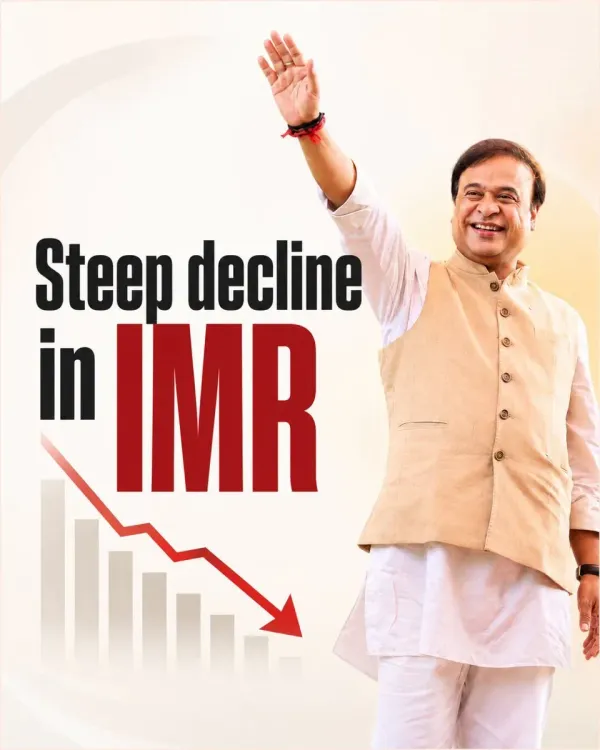
Assam Chief Minister Himanta Biswa Sarma on Saturday, 6 June 2026, highlighted a significant decline in the state's Infant Mortality Rate, citing a fall from 49 to 29 per thousand live births over the past decade, crediting stronger mother-and-child healthcare facilities, improved services, and welfare schemes.
Context
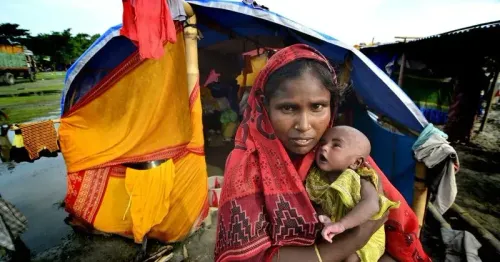
Assam has historically recorded infant mortality rates above the national average, a challenge rooted in its dispersed rural population, difficult terrain, and historically under-resourced public health infrastructure. The Chief Minister's post acknowledges that 'too many families faced the heartbreak of losing a child in infancy' a decade ago, framing the progress as a human story before a statistical one.
An IMR of 29 per thousand live births, if sustained, would represent a substantial convergence toward national targets set under the Sustainable Development Goals, which call for ending preventable newborn and child deaths globally by 2030.
Policy Backdrop
The improvement sits within a layered policy architecture. The National Rural Health Mission, launched in 2005 and later subsumed into the broader National Health Mission, was specifically designed to expand access to maternal and child healthcare in high-burden states, with Assam among its priority targets.
The POSHAN Abhiyaan, launched in 2018, added a nutrition-focused lens to child survival efforts, addressing malnutrition as a driver of infant deaths. State-level schemes under Chief Minister Himanta Biswa Sarma's administration since 2021 have complemented these central programmes with targeted local interventions, though the specific schemes referenced in the post were not individually named.
India's broader trajectory shows northeastern states starting from elevated IMR baselines and recording gradual progress as health infrastructure investments mature — Assam's reported decline fits this wider pattern of regional convergence.
Stakeholders and Impact
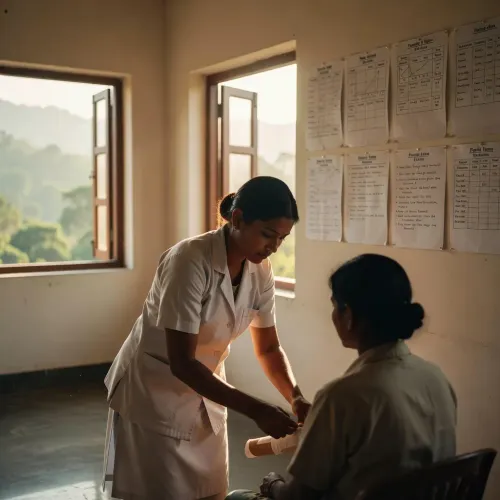
The primary beneficiaries of this trend are mothers and infants in Assam, particularly in rural and semi-urban areas where access to institutional delivery and neonatal care was historically limited. Accredited Social Health Activists (ASHAs) and frontline rural health workers have been central to last-mile delivery of maternal and child health services across the state.
A falling IMR also has downstream implications: healthier infants translate into lower child mortality, reduced household economic burden from medical emergencies, and improved human development indicators that affect Assam's long-term growth prospects. Policymakers and public health advocates will watch whether the gains are evenly distributed across districts, particularly in remote areas along the Brahmaputra floodplains and hill districts.
What's Next
Independent verification of the IMR figures will come when the next round of the Sample Registration System bulletin or the National Family Health Survey is published, providing state-wise data that can be cross-referenced with the government's claims. Health budget allocations in the upcoming Assam state budget will signal whether the administration plans to deepen investment in the infrastructure credited for these gains.
Chief Minister Sarma himself noted 'much more to achieve,' signalling that the government does not regard the current IMR as a final destination. Sustaining and accelerating the decline will require continued focus on institutional delivery rates, neonatal intensive care capacity, and nutrition programmes — particularly as Assam works toward the SDG benchmark of an IMR below 12 per thousand live births by 2030.
Point of View
If borne out by independent surveys, would mark one of the more substantive public health achievements in Assam's recent history, lending credibility to the government's broader welfare narrative. It also positions Assam within the national story of convergence toward SDG health targets, associating state-level delivery with centrally-sponsored missions. The caveat 'much more to achieve' is a studied hedge — claiming credit while managing expectations and sustaining policy momentum.
NationPress
22 Oct 2026
Frequently Asked Questions
What is Assam's current Infant Mortality Rate in 2026?
Chief Minister Himanta Biswa Sarma has stated that Assam's Infant Mortality Rate has fallen to 29 per thousand live births, down from 49 a decade ago, attributing the decline to improved mother-and-child healthcare facilities and welfare schemes.
Why was Assam's infant mortality rate so high?
Assam historically recorded above-national-average infant mortality due to its dispersed rural population, difficult terrain, and under-resourced public health infrastructure, particularly in remote districts along the Brahmaputra floodplains and hill regions.
What government schemes helped reduce infant mortality in Assam?
Central programmes including the National Health Mission and POSHAN Abhiyaan, alongside state-level welfare schemes under the current administration, have been credited with improving maternal and child healthcare access across Assam.
How does Assam's IMR compare to the national average?
While Assam has historically reported IMR figures above the national average, the reported decline from 49 to 29 per thousand live births indicates significant convergence, though independent verification from the next Sample Registration System bulletin is awaited.
What is India's SDG target for infant mortality?
India's Sustainable Development Goal target calls for ending preventable newborn and child deaths by 2030, with a benchmark IMR of below 12 per thousand live births — a figure that Assam, at a reported 29, still has considerable ground to cover.