Assam CMO launches 'Pokkhi' to document state bird diversity
Synopsis
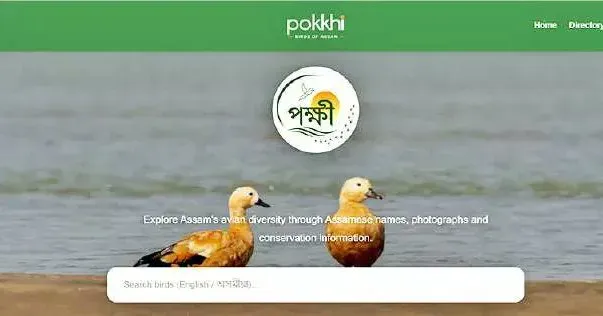
The Chief Minister's Office of Assam has launched 'Pokkhi', a bilingual initiative documenting the state's bird diversity in both Assamese and English. The move aligns with India's Biological Diversity Act and supports eco-tourism, citizen science, and conservation efforts across one of South Asia's richest avian habitats.
Key Takeaways
'Pokkhi' — Assamese for 'bird' — is a new initiative launched by the Chief Minister's Office of Assam to document the state's avian diversity.
The resource pairs Assamese and English names, making it accessible to both local communities and the scientific community.
Assam's Kaziranga National Park , a UNESCO World Heritage Site, records over 500 bird species , underlining the state's ornithological significance.
The initiative aligns with India's Biological Diversity Act, 2002 , which mandates state-level biodiversity documentation.
Key beneficiaries include ornithologists, eco-tourism operators, and citizen-science volunteers across Northeast India .
Possible integration with the National Biodiversity Authority portal could give the project national scientific visibility.
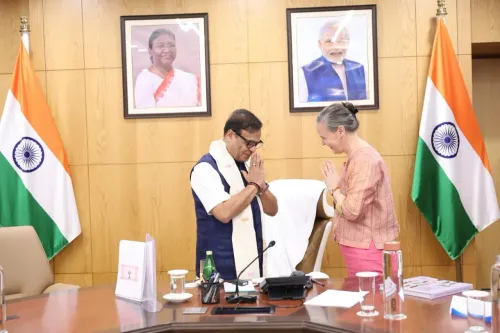
The Chief Minister's Office of Assam announced on Monday, 7 July 2026 the launch of 'Pokkhi', a dedicated initiative to document the state's rich bird diversity using both Assamese and English names, marking a significant step toward bilingual biodiversity documentation in Northeast India.
Context
Assam sits at the confluence of the Eastern Himalayan and Indo-Burma biodiversity hotspots, making it one of India's most ornithologically significant states. The Brahmaputra valley's wetlands, grasslands, and forests support a remarkable variety of resident and migratory species, with sites such as Kaziranga National Park — a UNESCO World Heritage Site — alone recording over 500 bird species.
Despite this abundance, a comprehensive, publicly accessible bilingual record of Assam's avifauna has long been absent. 'Pokkhi' — meaning 'bird' in Assamese — is positioned to fill that gap by pairing scientific English nomenclature with Assamese names, making the resource accessible to local communities and researchers alike.
Policy Backdrop
India's Biological Diversity Act, 2002, mandates that states document local biodiversity through their biodiversity boards and people's biodiversity registers. 'Pokkhi' aligns with this legal framework while going a step further by incorporating regional-language documentation — a model that has gained traction across Northeast India in recent years.
Under Chief Minister Himanta Biswa Sarma, who has led Assam since May 2021, the state administration has promoted several conservation and documentation initiatives. Bilingual biodiversity inventories of this kind also support eco-tourism planning and habitat protection policies under national biodiversity and climate frameworks.
Stakeholders and Impact
Ornithologists and field researchers stand to benefit from a standardised Assamese-English reference, reducing ambiguity in species identification across communities that use vernacular names. Eco-tourism operators in districts bordering Kaziranga, Manas, and the Dibru-Saikhowa wetlands could use the resource to enrich guided experiences and attract specialist birding tourists.
Local communities and citizen-science volunteers are also key stakeholders: a bilingual format lowers the barrier for non-English speakers to contribute species observations, potentially expanding the geographic coverage of future monitoring programmes run by the Assam Forest Department.
What's Next
Observers will watch whether 'Pokkhi' is integrated with the National Biodiversity Authority portal, which would give the documentation national visibility and scientific weight. Any follow-up citizen-science monitoring programmes or school-level awareness drives announced by the state government would indicate the depth of institutional commitment behind the launch.
If the initiative expands to other taxonomic groups — reptiles, amphibians, or flora — it could serve as a template for a broader Assam biodiversity atlas, reinforcing the state's position as a leader in regional conservation documentation within India's Northeast.
Point of View
The Sarma administration signals an intent to make conservation data culturally resonant — a strategy that can strengthen grassroots support for habitat protection. The timing also fits a broader national push to populate biodiversity registers ahead of international reporting obligations under the Kunming-Montreal Global Biodiversity Framework. Whether 'Pokkhi' translates into a sustained citizen-science infrastructure or remains a one-time publication will be the real measure of its policy impact.
NationPress
5 Oct 2026
Frequently Asked Questions
What is 'Pokkhi' launched by the Assam government?
'Pokkhi' is a new initiative launched by the Chief Minister's Office of Assam to document the state's bird diversity using both Assamese and English names, creating a bilingual reference for researchers, communities, and eco-tourism operators.
What does 'Pokkhi' mean in Assamese?
'Pokkhi' means 'bird' in Assamese. The name reflects the initiative's focus on cataloguing Assam's avifauna in the regional language alongside English scientific names.
How many bird species are found in Assam?
Assam is one of India's most bird-rich states. Kaziranga National Park alone records over 500 bird species, and the broader state — spanning Brahmaputra valley wetlands, forests, and hill ranges — supports a far larger total count.
Why is bilingual bird documentation important for Assam?
A bilingual Assamese-English record reduces the barrier for non-English-speaking communities to identify and report species, supports eco-tourism guides, and helps align local knowledge with scientific databases required under India's Biological Diversity Act, 2002.
Who is the Chief Minister of Assam in 2026?
Himanta Biswa Sarma has served as Chief Minister of Assam since May 2021 and has promoted multiple conservation and documentation initiatives during his tenure.