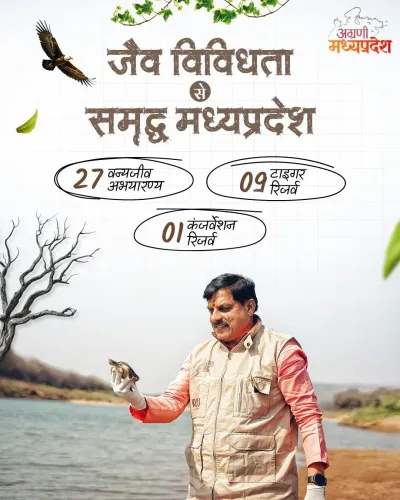
MP CMO Highlights Aquatic Biodiversity Conservation Push

Synopsis
The Chief Minister's Office of Madhya Pradesh has highlighted the state's push to conserve aquatic biodiversity, drawing attention to the rich freshwater ecosystems of rivers like the Narmada and the policy frameworks supporting their protection under the Biological Diversity Act, 2002.
Key Takeaways
The Chief Minister's Office of Madhya Pradesh posted on 23 May 2026 emphasising the conservation of aquatic biodiversity in the state.
Madhya Pradesh hosts major river systems including the Narmada , which supports diverse fish, turtle, and invertebrate species.
The Madhya Pradesh State Biodiversity Board , constituted under the Biological Diversity Act, 2002 , is the key statutory body overseeing aquatic conservation.
State environmental planning links aquatic biodiversity protection to pollution abatement, habitat restoration, and national river-rejuvenation programmes.
Fishing communities and riverine researchers are the primary stakeholders whose livelihoods depend on the health of these ecosystems.
Possible updated aquatic species action plans or new budget allocations for river habitat projects may follow in the next state fiscal cycle.
The Chief Minister's Office of Madhya Pradesh on Saturday, 23 May 2026, drew public attention to the state's ongoing efforts to conserve aquatic biodiversity, underscoring the government's commitment to protecting the rich riverine and freshwater ecosystems that define the region's natural heritage.
Context
The post, shared by the Chief Minister's Office of Madhya Pradesh, highlights the theme of jaleey jeev vividhata ka sanrakshan ('conservation of aquatic biodiversity') — a subject that sits at the intersection of environmental policy, community livelihoods, and river governance. Madhya Pradesh is home to several major river systems, most notably the Narmada, which originates in the state and supports a wide range of fish, turtle, and invertebrate species. The health of these waterways is considered a barometer of the state's broader ecological wellbeing.
Policy Backdrop
Aquatic biodiversity conservation in Madhya Pradesh is anchored in the framework of the Biological Diversity Act, 2002, which mandated the creation of State Biodiversity Boards across the country. The Madhya Pradesh State Biodiversity Board, constituted under this legislation, is the principal statutory body responsible for documenting and regulating access to the state's aquatic genetic resources, as well as promoting their conservation. The state's environmental planning has progressively integrated river-basin management, aligning with national river-rejuvenation programmes and India's commitments under the Convention on Biological Diversity.
Pollution abatement and habitat restoration have been recurring components of state action plans, reflecting a recognition that aquatic species cannot be protected without addressing the broader health of river corridors. Fishing communities and riverine researchers are among the primary stakeholders whose livelihoods and work are directly shaped by the condition of these ecosystems.
Stakeholders and Impact
The communities most directly affected by aquatic biodiversity initiatives are the fishing communities dependent on rivers such as the Narmada, Chambal, and Betwa for their daily sustenance and income. Declining fish populations and habitat degradation have long been concerns for these groups, making conservation efforts both an ecological and a socio-economic imperative. Riverine researchers and ecologists also stand to benefit from strengthened institutional focus, as greater policy attention typically translates into improved data collection, species monitoring, and habitat-restoration funding.
For the broader public, healthy aquatic ecosystems underpin water security, agricultural irrigation, and cultural practices tied to the state's rivers — dimensions that extend the relevance of biodiversity conservation well beyond specialist environmental circles.
What's Next
Observers will watch for concrete follow-through in the form of updated aquatic species action plans, budget allocations for river habitat projects, or new inter-departmental coordination mechanisms in the coming state fiscal cycle. The government's signalling on this front may also be read alongside national-level river-rejuvenation timelines, offering an indication of how Madhya Pradesh intends to position itself as a leader in freshwater conservation among India's landlocked states. Any formal scheme announcement or legislative development would mark a significant step from policy intent to on-ground action.
Point of View
Not merely a regulatory obligation. This fits a broader national pattern in which state governments use social media to frame ecological commitments ahead of potential scheme launches or budget announcements, building narrative momentum with voters and civil society alike. The emphasis on riverine ecosystems is particularly significant given the Narmada's cultural and economic centrality to Madhya Pradesh, making biodiversity messaging simultaneously an environmental and a political statement. Whether this translates into measurable policy action — new funding lines, species action plans, or inter-agency coordination — will determine whether the signal carries substantive weight.
NationPress
7 Oct 2026
Frequently Asked Questions
What is aquatic biodiversity conservation in Madhya Pradesh about?
Aquatic biodiversity conservation in Madhya Pradesh refers to government and institutional efforts to protect the diverse fish, turtle, and invertebrate species found in the state's rivers, lakes, and freshwater bodies, particularly major rivers like the Narmada, Chambal, and Betwa.
Which body oversees aquatic biodiversity in Madhya Pradesh?
The Madhya Pradesh State Biodiversity Board, constituted under the Biological Diversity Act, 2002, is the principal statutory body responsible for documenting aquatic genetic resources and promoting their conservation in the state.
Why is the Narmada river important for biodiversity in Madhya Pradesh?
The Narmada river originates in Madhya Pradesh and supports a wide range of aquatic species including fish, turtles, and invertebrates, making it a critical freshwater ecosystem whose health reflects the broader ecological wellbeing of the state.
How does the Biological Diversity Act 2002 help protect rivers in India?
The Biological Diversity Act, 2002 established State Biodiversity Boards across India, including in Madhya Pradesh, to regulate access to biological resources, document biodiversity, and promote conservation of aquatic and terrestrial ecosystems in line with India's commitments under the Convention on Biological Diversity.
Who are the main stakeholders in Madhya Pradesh aquatic biodiversity conservation?
Fishing communities dependent on rivers for their livelihoods and riverine researchers and ecologists are the primary stakeholders, though the broader public also benefits through water security, agricultural irrigation, and the cultural significance of the state's rivers.