CM Mohan Yadav calls statewide water conservation drive on May 25
Synopsis
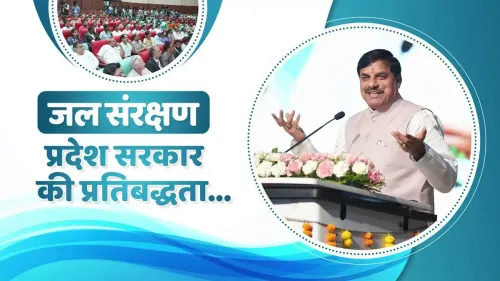
Madhya Pradesh Chief Minister Dr. Mohan Yadav has announced a collective statewide water conservation drive on 25 May 2026. The pre-monsoon initiative aligns with the national Jal Shakti Abhiyan and aims to mobilise communities across the state to restore water bodies and strengthen groundwater recharge structures ahead of the monsoon season.
Key Takeaways
Mohan Yadav announced on 23 May 2026 that a statewide water conservation drive will be held on 25 May 2026 .
The drive will span the entire state of Madhya Pradesh and is designed as a collective, community-led effort.
The initiative aligns with the Jal Shakti Abhiyan , the national water conservation campaign launched in 2019 .
Farmers and rural households are the primary beneficiaries, with improved groundwater availability the key goal.
Typical activities in such drives include desilting water bodies, building check-dams, and afforestation to boost water retention.
District-level participation data and physical outcomes will be key indicators of the drive's success.
Madhya Pradesh Chief Minister Dr. Mohan Yadav on Saturday, 23 May 2026 announced a statewide collective water conservation drive to be held across the state on 25 May 2026, calling for mass community participation ahead of the monsoon season.
Context
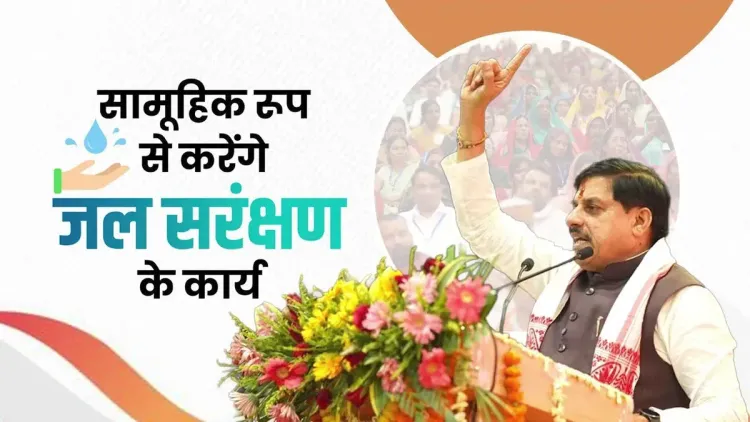
In his post on X, CM Mohan Yadav stated: '25 मई, 2026 को हम पूरे प्रदेश में सामूहिक रूप से जल संरक्षण के कार्य करेंगे' — 'On 25 May 2026, we will collectively carry out water conservation works across the entire state.' The announcement signals a coordinated, single-day mobilisation of citizens and government machinery in Madhya Pradesh for water-related activities.
The drive is timed immediately before the onset of the southwest monsoon, a window that state administrations have traditionally used to prepare water bodies, recharge structures and check-dams to capture the season's first rains.
Policy Backdrop
The initiative aligns with the Jal Shakti Abhiyan, the nationwide water conservation campaign launched by the Government of India in 2019 under the Jal Shakti Ministry, which mandates state governments to organise community-led drives for rainwater harvesting and groundwater recharge.
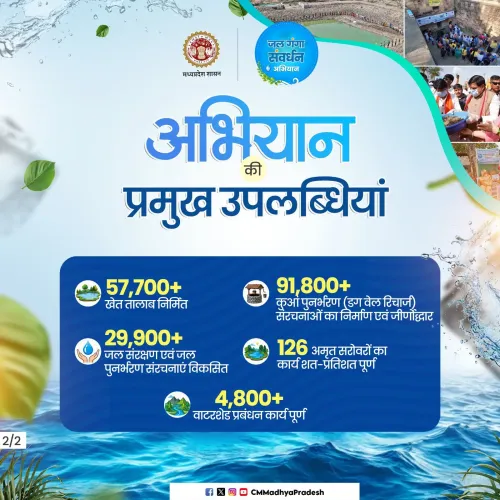
Madhya Pradesh, a predominantly agrarian state whose farm economy depends heavily on monsoon rains and groundwater, has participated in annual pre-monsoon conservation drives in several prior years. These efforts have typically centred on desilting traditional water bodies, constructing small check-dams, and promoting afforestation to improve soil-water retention.
Groundwater depletion and increasing rainfall variability driven by climate patterns have made such institutionalised mass drives a recurring feature of state-level water governance across India.
Stakeholders and Impact
Farmers and rural households across Madhya Pradesh stand to benefit most directly from improved water availability, particularly in districts that face acute stress during the pre-monsoon dry period. A statewide, single-day mobilisation can accelerate the preparation of recharge pits and storage structures before the rains arrive.
Community participation is central to the model: local volunteers, gram panchayats, and district administrations are typically co-opted to maximise geographic coverage. The collective format also serves an awareness function, embedding water-saving habits at the household level.
What's Next
The outcomes of the 25 May 2026 drive — including district-level participation figures and the number of water structures created or restored — will indicate the scale and effectiveness of the mobilisation. Any subsequent state budget reallocation toward water infrastructure would signal how firmly the government intends to institutionalise such drives beyond one-time events.
With the monsoon approaching, the drive's success could also influence how Madhya Pradesh positions itself in future central government assessments under the Jal Shakti Abhiyan framework.
Point of View
Blending community mobilisation with central scheme compliance. For CM Mohan Yadav, a statewide single-day drive offers both an administrative signal — that water security is a priority — and a political one, demonstrating grassroots reach ahead of any performance assessments under the Jal Shakti framework. Madhya Pradesh's agrarian dependence on groundwater makes such optics substantive: even modest improvements in recharge structures can have measurable impact on kharif sowing conditions. The key test will be whether the 25 May event translates into sustained infrastructure investment or remains a one-day mobilisation exercise.
NationPress
7 Oct 2026
Frequently Asked Questions
What is the Madhya Pradesh water conservation drive on 25 May 2026?
It is a statewide collective water conservation initiative announced by Chief Minister Dr. Mohan Yadav, in which citizens and government agencies across Madhya Pradesh will carry out activities such as desilting water bodies and strengthening groundwater recharge structures on 25 May 2026.
Why is CM Mohan Yadav organising a water conservation drive?
The drive aims to address groundwater depletion and prepare water storage infrastructure before the monsoon arrives, aligning with the national Jal Shakti Abhiyan framework that encourages state-level community conservation efforts.
What is the Jal Shakti Abhiyan?
The Jal Shakti Abhiyan is a nationwide water conservation campaign launched by the Government of India in 2019, implemented through state administrations to promote rainwater harvesting, groundwater recharge, and community participation in water management.
Who will benefit from the Madhya Pradesh water conservation drive?
Farmers and rural households across Madhya Pradesh are the primary beneficiaries, as improved water availability and recharge infrastructure directly support agriculture and domestic water supply in the state.
How does Madhya Pradesh participate in national water conservation schemes?
Madhya Pradesh aligns its state-level drives with the Jal Shakti Abhiyan, organising annual pre-monsoon activities through district administrations and gram panchayats to build check-dams, desilt tanks, and promote afforestation.