MP CM Office: Water conservation drive underway across state
Synopsis
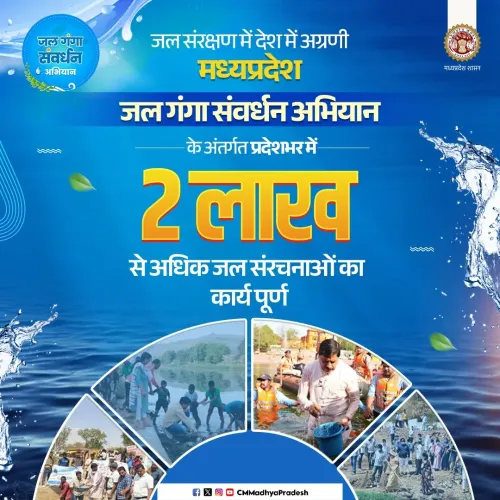
The Chief Minister's Office of Madhya Pradesh announced on 31 May 2026 that water conservation and augmentation work continues under an ongoing campaign. The drive aligns with the national Jal Shakti Abhiyan and aims to improve groundwater recharge and water availability for farmers and rural households ahead of the monsoon.
Key Takeaways
The Chief Minister's Office of Madhya Pradesh confirmed on 31 May 2026 that water conservation and augmentation work is actively ongoing under a state campaign.
The campaign aligns with the national Jal Shakti Abhiyan , launched in 2019 , which covers 256 water-stressed districts across India including blocks in Madhya Pradesh.
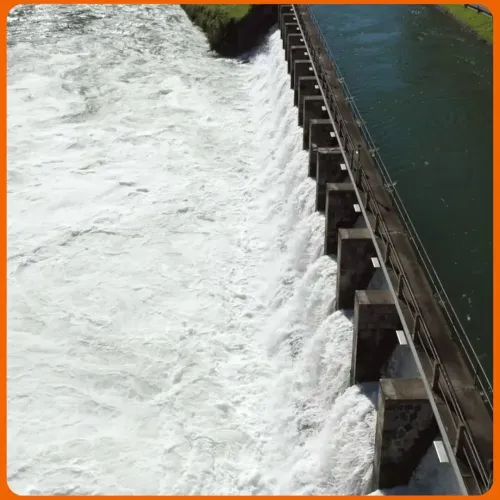
Key activities under such drives include construction and renovation of check dams, percolation tanks , and traditional water bodies.
Primary beneficiaries are farmers and rural households who depend on groundwater and surface water for irrigation and drinking water.
The pre-monsoon window is the critical period for completing structural water-conservation interventions to maximise kharif season outcomes.
State budget allocations for 2026-27 under water conservation heads will indicate the scale of continued commitment.
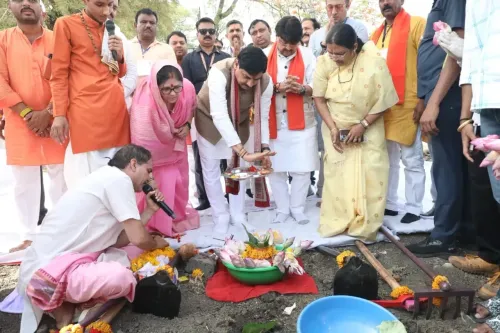
The Chief Minister's Office of Madhya Pradesh confirmed on Sunday, 31 May 2026 that water conservation and augmentation work under an ongoing campaign continues across the state, signalling sustained government focus on addressing water stress ahead of the monsoon season.
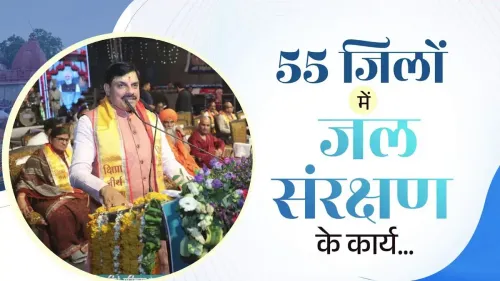
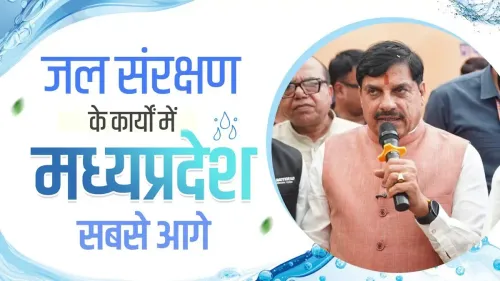
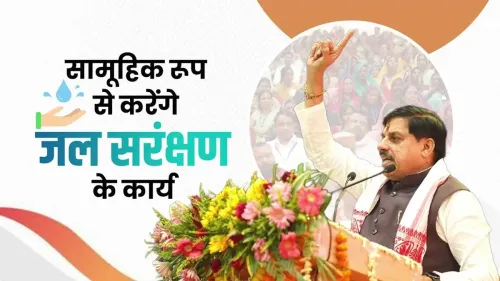
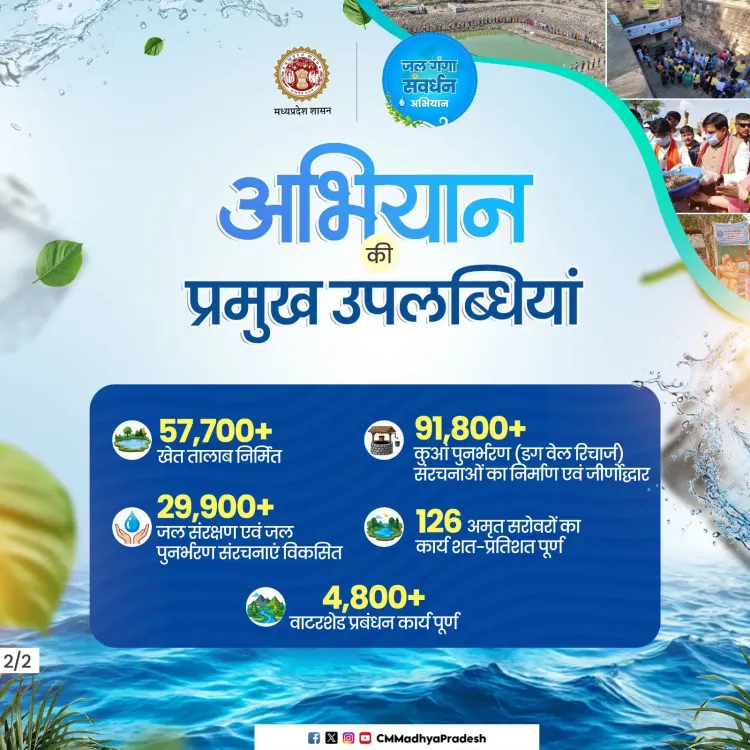
The post, shared in Hindi, stated: 'अभियान के अंतर्गत मध्यप्रदेश में जल संरक्षण व संवर्धन के कार्य जारी' ['Water conservation and augmentation work continues in Madhya Pradesh under the campaign'], indicating active field operations rather than a new announcement.
Context
Madhya Pradesh is a large, predominantly rain-fed agricultural state in central India with a long history of water stress in several districts. The state has historically relied on traditional water bodies — tanks, check dams, and percolation pits — alongside modern watershed management infrastructure to meet rural and agricultural water demand.
Water conservation drives in the state typically intensify in the weeks before the monsoon, when pre-positioning of structures and community mobilisation can maximise rainwater harvesting once rains arrive.
Policy Backdrop
The campaign referenced in the post aligns with the broader national Jal Shakti Abhiyan, a water conservation initiative launched by the Ministry of Jal Shakti in 2019 covering 256 water-stressed districts across India, including several blocks in Madhya Pradesh. The abhiyan focuses on rainwater harvesting, groundwater recharge, and watershed management.
Since the mid-2010s, the Government of India and state governments have run successive water-conservation drives combining central scheme funding with state-level campaigns to counter groundwater depletion and the growing unpredictability of monsoon rainfall. Madhya Pradesh has participated through construction and renovation of percolation tanks, traditional water bodies, and community-level mobilisation programmes.
Stakeholders and Impact
The primary beneficiaries of these conservation efforts are farmers and rural households, who depend on groundwater and surface water for both irrigation and drinking water. Recharging aquifers and restoring traditional water bodies directly affects crop yields and reduces the distance rural communities — particularly women — must travel to fetch water during dry spells.
Continued state-level activity under the campaign also signals to district administrations and local bodies that targets remain active, sustaining pressure on field-level implementation before the onset of the 2026 monsoon.
What's Next
Observers will watch for district-level progress reports from the Public Health Engineering Department and water conservation heads in the Madhya Pradesh state budget for 2026-27 to gauge the scale and pace of on-ground work. The period between now and the monsoon's arrival is typically the most critical window for completing structural interventions such as check dam repairs and tank desilting.
If the campaign maintains momentum through the pre-monsoon weeks, the state could significantly improve its groundwater recharge outcomes for the year — a result that would have direct consequences for the kharif sowing season.
Point of View
The timing is also strategically sound: it reinforces accountability on water targets when results will soon be visible. The post connects Madhya Pradesh to the national Jal Shakti narrative, allowing the state to claim alignment with a high-visibility central priority.
NationPress
15 Oct 2026
Frequently Asked Questions
What is the water conservation campaign in Madhya Pradesh about?
The campaign involves ongoing water conservation and augmentation work across Madhya Pradesh, including construction and renovation of check dams, percolation tanks, and traditional water bodies to improve groundwater recharge and surface water availability ahead of the monsoon.
What is Jal Shakti Abhiyan and does it cover Madhya Pradesh?
Jal Shakti Abhiyan is a national water conservation campaign launched by the Ministry of Jal Shakti in 2019 covering 256 water-stressed districts across India. Several blocks in Madhya Pradesh are included under the abhiyan.
Who benefits from water conservation work in Madhya Pradesh?
Farmers and rural households are the primary beneficiaries, as improved groundwater recharge and restored water bodies support irrigation for kharif crops and reduce water scarcity for drinking purposes in rural areas.
When is the best time for water conservation work in Madhya Pradesh?
The pre-monsoon period — typically May and June — is the most critical window for completing structural interventions like check dam repairs and tank desilting, so that arriving rains can be captured and stored effectively.
How can I track progress of water conservation in Madhya Pradesh?
Progress updates are typically released by the Public Health Engineering Department of Madhya Pradesh, and budget allocations under water conservation heads in the state budget offer a measure of the government's financial commitment to these efforts.