Assam MBBS fee hike 'modest' vs ₹40 lakh private cost, says Health Minister
Synopsis
Assam's income-linked MBBS fee revision — ranging from ₹5,000 to ₹1 lakh a year depending on family earnings — is being pitched as an equity measure, not a burden. Health Minister Ashok Singhal's comparison with ₹40 lakh private college costs reframes the debate, but the ₹1 lakh slab for middle-income families may still draw scrutiny.
Key Takeaways
Assam Health Minister Ashok Singhal defended the state's MBBS fee hike on 24 October , calling it 'very small' compared to private colleges.
Private medical colleges charge around ₹40 lakh for MBBS, the minister said at a press conference in Guwahati .
Revised fees are income-linked: ₹1 lakh/year for families earning above ₹9 lakh , ₹50,000/year for ₹4–9 lakh bracket, and ₹5,000/year for below ₹4 lakh .
Assam recorded 33–34 kidney transplants last year, each costing ₹2.5–3 lakh , covered under central and state health schemes.
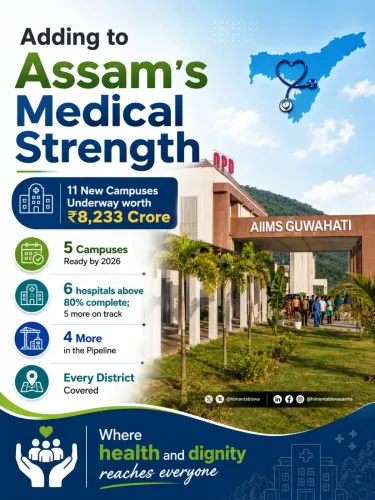
More than 30 new dialysis centres were opened across Assam in the past three months .
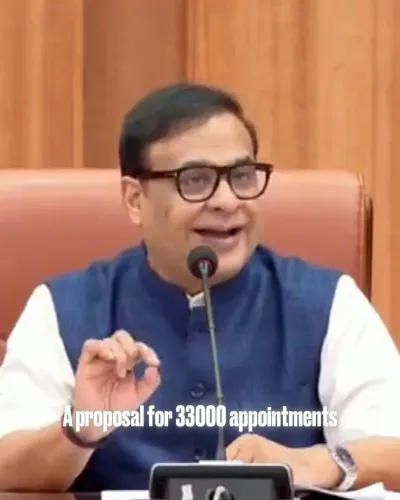
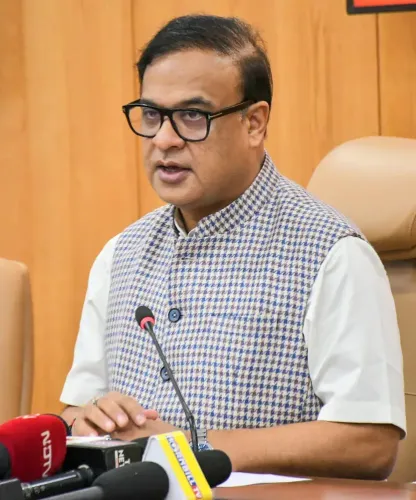
Assam Health Minister Ashok Singhal on Saturday, 24 October defended the state government's revised MBBS fee structure in Guwahati, asserting that the increase was negligible when set against the ₹40 lakh that students typically pay at private medical colleges. The minister's remarks came at a press conference and sought to reframe the fee revision as a pro-equity measure rather than a burden on students.
The New Fee Structure
Under the revised arrangement, MBBS students from families with an annual income above ₹9 lakh will pay ₹1 lakh per year. Those from households earning between ₹4 lakh and ₹9 lakh annually will be charged ₹50,000 per year, while students from families with an income below ₹4 lakh will pay just ₹5,000 annually. The income-linked model is designed to shield economically weaker students from a disproportionate financial burden.
What the Minister Said
'Yes, the fees have been increased. Why? Because it was a decision of the government. In private institutes, people are paying ₹40 lakh for it. We have made a very small increase,' Singhal said at the press conference. The minister argued that tying fee slabs to family income was the government's way of ensuring that medical education in state-run institutions remained accessible to all income groups.
Kidney Care and Dialysis Expansion
Singhal also highlighted parallel efforts to make specialised treatment affordable. He said Assam recorded approximately 33 to 34 kidney transplants last year, with each procedure costing between ₹2.5 lakh and ₹3 lakh. According to the minister, these costs were covered through the Pradhan Mantri Arogya Nidhi and Mukhya Mantri Arogya Nidhi schemes. He added that more than 30 new dialysis centres had been opened across the state in the past three months, significantly expanding treatment access for patients requiring regular dialysis.
Wider Context
The fee revision comes amid sustained public debate over the affordability of medical education across India, with private college costs having risen sharply over the past decade. In Assam specifically, the dual challenge of expanding medical infrastructure and producing enough trained doctors for a growing healthcare system has added urgency to policy decisions on MBBS access. Critics, however, are likely to question whether even the revised government fees — particularly the ₹1 lakh per year slab — remain within reach for middle-income families already stretched by other education and living costs.
What Comes Next
The revised fee structure is expected to remain a subject of public and political discussion in Assam, particularly as the academic year progresses and students begin enrolling under the new slabs. The government's ability to maintain the income-verification mechanism transparently will be key to whether the stated equity goals are realised in practice.
Point of View
But the devil is in the verification. Without a robust, auditable mechanism to confirm family income declarations, the lowest slab — ₹5,000 a year — risks being gamed by those it was not designed for, while genuinely poor students face bureaucratic hurdles to prove eligibility. The minister's ₹40 lakh comparison is rhetorically effective but sidesteps the real benchmark: what did students pay in state colleges before this revision, and by how much has that risen? That delta — not the gap with private colleges — is what determines whether this is truly 'modest.'
NationPress
24 Oct 2026
Frequently Asked Questions
What is the new MBBS fee structure in Assam?
Under the revised structure, MBBS students from families earning above ₹9 lakh annually pay ₹1 lakh per year, those in the ₹4–9 lakh bracket pay ₹50,000, and students from families earning below ₹4 lakh pay ₹5,000 per year. The income-linked model is intended to protect economically weaker students.
Why did the Assam government increase MBBS fees?
Health Minister Ashok Singhal said the fee revision was a government decision aimed at rationalising costs while keeping state college fees far below the ₹40 lakh charged by private medical institutions. The minister framed the hike as modest and equitable given the income-based differentiation.
How does Assam's revised MBBS fee compare to private colleges?
According to Minister Singhal, private medical colleges charge around ₹40 lakh for an MBBS course. The highest slab under the new state structure is ₹1 lakh per year — significantly lower than private alternatives.
What healthcare schemes cover kidney transplant costs in Assam?
According to the minister, kidney transplant costs — ranging from ₹2.5 lakh to ₹3 lakh per procedure — are covered through the Pradhan Mantri Arogya Nidhi and Mukhya Mantri Arogya Nidhi schemes. Assam conducted 33 to 34 such transplants last year.
How many new dialysis centres has Assam opened recently?
Assam opened more than 30 new dialysis centres across the state in the three months preceding the minister's announcement, expanding access to regular dialysis treatment for patients with kidney ailments.