Assam Budget 2026: FRU in Every Constituency, New Health Posts
Synopsis
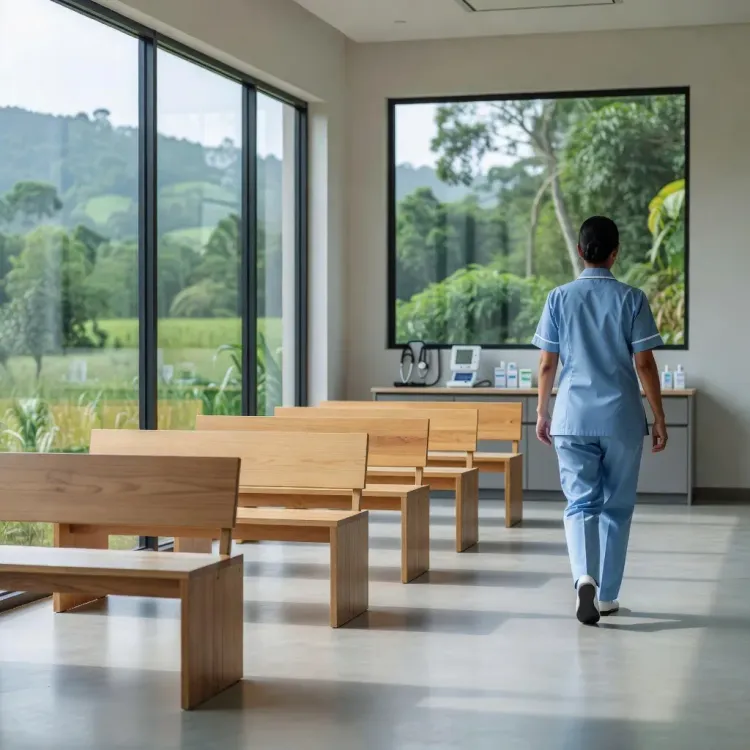
The Chief Minister's Office of Assam announced in the Assam Budget 2026 that every Assembly constituency will get at least one 50-bedded First Referral Unit, alongside new posts for MBBS doctors, AYUSH doctors, nurses, pharmacists, lab technicians, radiographers and ANMs to address chronic health-worker shortages.
Key Takeaways
Every Assembly constituency in Assam will have at least one 50-bedded First Referral Unit (FRU) under the Assam Budget 2026 proposal.
The government will strengthen existing facilities and build new ones to meet the constituency-level FRU target.
New healthcare posts are proposed across MBBS doctors, AYUSH doctors, dental surgeons, nurses, pharmacists, laboratory technicians, radiographers, and ANMs .
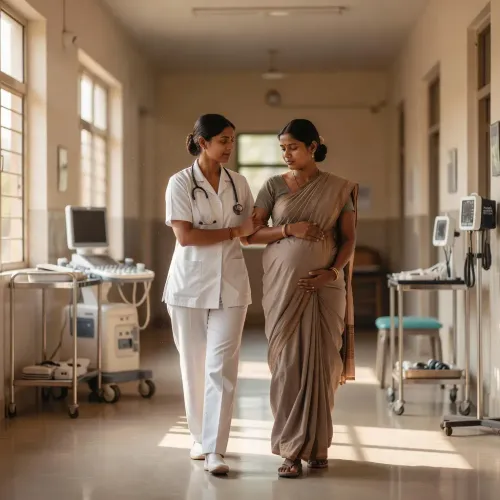
FRUs under the National Health Mission provide 24x7 emergency obstetric, newborn and basic specialist care at sub-district level.
Assam has over 31 million residents , many in rural and tea-garden areas with historically limited secondary healthcare access.
The constituency-wise guarantee creates a measurable public benchmark across Assam's 126 Assembly constituencies .
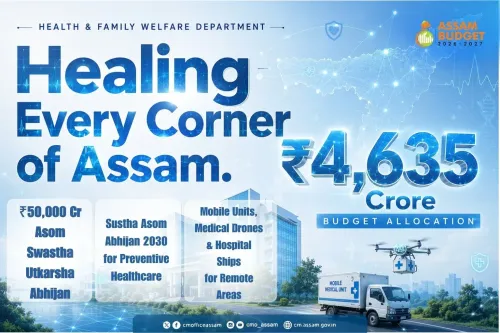
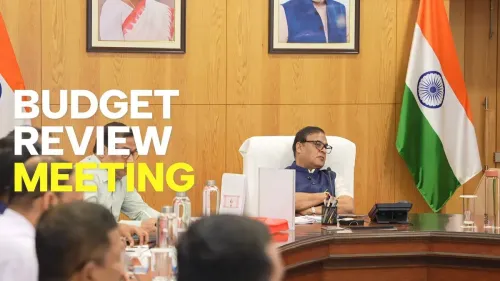
The Chief Minister's Office of Assam announced key healthcare highlights from the Assam Budget 2026 on Friday, 10 July 2026, pledging that every Assembly constituency in the state will have at least one 50-bedded First Referral Unit (FRU), backed by the creation of new healthcare posts across disciplines.
Context
The announcement, shared under the hashtag #AssamBudget2026, commits the state government to ensuring that no Assembly constituency is left without a functional 50-bedded FRU. The government proposes to achieve this by strengthening existing facilities and, where necessary, establishing entirely new units. The move directly targets the long-standing gap in secondary healthcare access across Assam's rural and semi-urban constituencies.
Policy Backdrop
The First Referral Unit is a standard facility under India's National Health Mission (NHM), mandated since the launch of the National Rural Health Mission in 2005 to provide round-the-clock emergency obstetric, newborn, and basic specialist care at the sub-district level. Assam, a northeastern state with over 31 million residents, has historically struggled to operationalise FRUs at scale, particularly in tea-garden belts and remote riverine areas where maternal and infant mortality rates have remained elevated. The 2026 budget proposal follows a pattern seen across smaller and northeastern states of using annual allocations to close FRU coverage gaps under NHM norms.
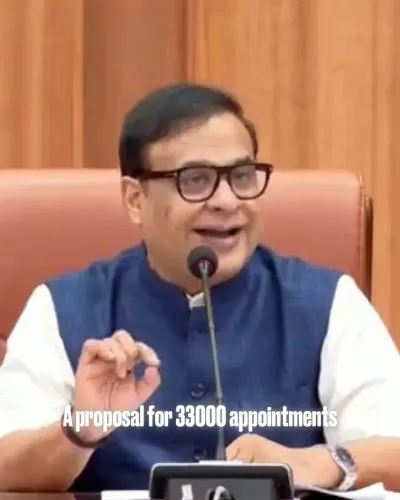
Alongside infrastructure, the government has proposed creating new healthcare posts spanning MBBS doctors, AYUSH doctors, dental surgeons, nurses, pharmacists, laboratory technicians, radiographers, and Auxiliary Nurse Midwives (ANMs). This multi-cadre approach directly addresses the human-resource shortfall that has historically rendered many existing facilities non-functional despite physical infrastructure being in place.
Stakeholders and Impact
The primary beneficiaries of the proposal are Assam's rural and semi-urban populations, who currently depend on distant district hospitals for referral care. Women of reproductive age stand to gain the most, given that FRUs are specifically designed to handle obstetric emergencies and newborn complications. Healthcare workers — including the newly proposed cadres — represent a significant secondary stakeholder group, as the recruitment drive would generate substantial public-sector employment in the health sector.
The constituency-level guarantee is politically significant as well: with 126 Assembly constituencies in Assam, the pledge effectively sets a measurable, constituency-wise benchmark against which the government's delivery can be tracked by legislators and citizens alike.
What's Next
Attention will now shift to the rollout of 2026-27 budget allocations for the new and upgraded FRUs, along with formal recruitment notifications for the proposed healthcare posts. State health society monitoring reports and NHM progress updates will be the key instruments for tracking whether facilities are operationalised and staffed within the fiscal year. The success of this pledge will likely set the tone for healthcare governance debates in the run-up to the next Assam Assembly election cycle.
Point of View
Ward-by-ward commitment that opposition benches and civil society can hold the ruling dispensation to account on. The simultaneous push for new cadre posts across MBBS, AYUSH, dental, nursing and paramedical streams signals an awareness that brick-and-mortar FRUs have historically failed to deliver because of chronic staffing vacuums. Set against the backdrop of NHM's two-decade struggle to operationalise FRUs in the Northeast, this budget signals a shift from infrastructure-first to a twin-track infrastructure-plus-human-resource approach. Whether allocations and recruitment timelines are actually enforced will determine if this becomes a landmark health intervention or another aspirational budget line.
NationPress
8 Oct 2026
Frequently Asked Questions
What is a First Referral Unit (FRU) in India?
A First Referral Unit (FRU) is a healthcare facility under India's National Health Mission that provides round-the-clock emergency obstetric care, newborn care, and basic specialist services at the sub-district level. It is meant to be the first point of referral for patients who cannot be managed at primary health centres.
How many Assembly constituencies does Assam have?
Assam has 126 Assembly constituencies . The Assam Budget 2026 proposes that each of these constituencies will have at least one 50-bedded FRU, setting a measurable constituency-level health infrastructure target.
What new healthcare posts has the Assam Budget 2026 proposed?
The Assam Budget 2026 proposes creating new posts for MBBS doctors, AYUSH doctors, dental surgeons, nurses, pharmacists, laboratory technicians, radiographers, and Auxiliary Nurse Midwives (ANMs) to strengthen health institutions across the state.
Why is Assam focusing on FRUs in the 2026 budget?
Assam has historically faced limited secondary healthcare access, especially in rural, tea-garden, and riverine areas. Strengthening FRUs addresses elevated maternal and infant mortality rates by ensuring emergency obstetric and newborn care is available closer to where people live.
When was the Assam Budget 2026 announced?
The healthcare highlights of the Assam Budget 2026 were shared by the Chief Minister's Office of Assam on 10 July 2026 .