Assam-Meghalaya allow cultivation in disputed Lapangap, defer border demarcation

Synopsis
Assam and Meghalaya have chosen livelihood over line-drawing in Lapangap. Villagers from both sides will continue paddy and plantation cultivation in designated zones, while the harder question of permanent border demarcation moves to a state-level committee — a pragmatic de-escalation eight months after a fatal clash in the same area.
Key Takeaways
Assam and Meghalaya agreed on 2 June to allow cultivation in designated parts of the disputed Lapangap region.
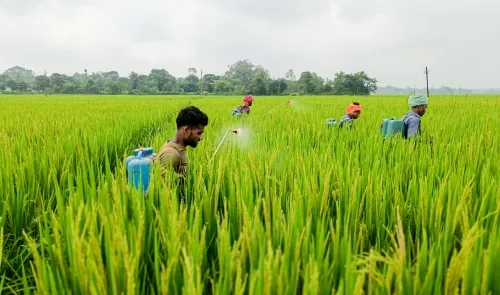
Lapangap villagers will continue paddy cultivation in foothills; Tahpat residents may grow banana, pineapple, and ginger on slopes.
Permanent border demarcation has been deferred to a state-level committee.
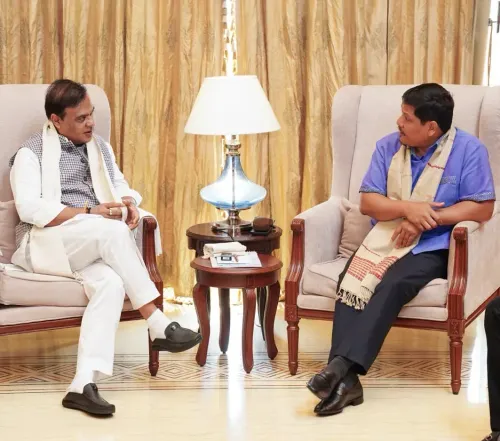
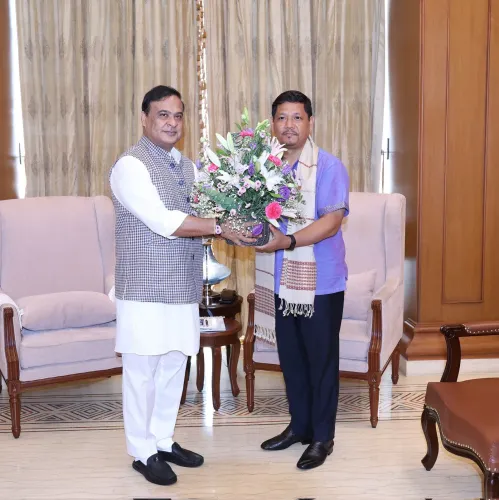
The pact follows talks between CMs Himanta Biswa Sarma and Conrad K.
A Karbi villager died in clashes at Lapangap in October last year ; an earlier 18 May meeting had ended without consensus.
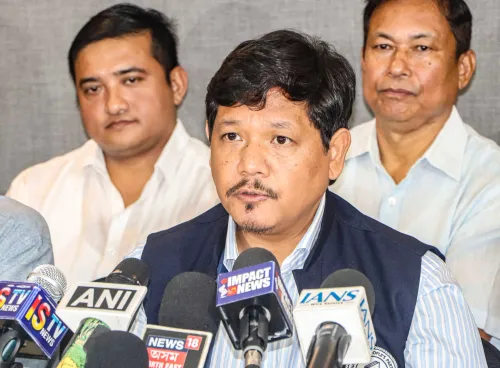
The governments of Assam and Meghalaya on Tuesday, 2 June, agreed to permit local residents to continue cultivation in designated parts of the disputed Lapangap region, while referring the question of permanent border demarcation to a state-level committee for further deliberation, officials said. The understanding was reached at a high-level meeting held at the Assam Police Camp in Lapangap, attended by senior political leaders, administrators, police officers, and local body representatives from both states.
Key Developments
Under the arrangement, villagers from Lapangap will continue paddy cultivation in the foothill areas, while residents of Tahpat will be permitted to grow seasonal crops — including banana, pineapple, and ginger — on the hilltops and slopes of the contested zone.
According to a joint statement issued after the meeting, both governments agreed that the final boundary demarcation in the area of difference would be examined by the appropriate state-level committee before any conclusive decision is taken. The two sides also reaffirmed their commitment to maintaining peace and harmony in the sensitive border region and to avoiding any activity that could disturb law and order.
Background to the Dispute
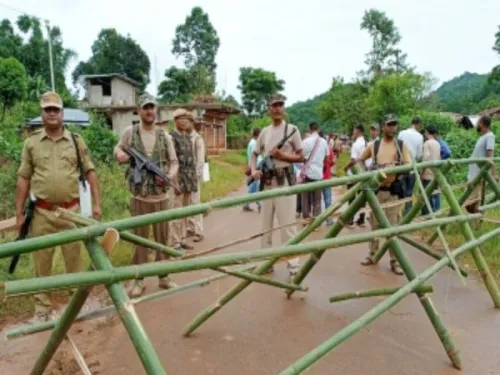
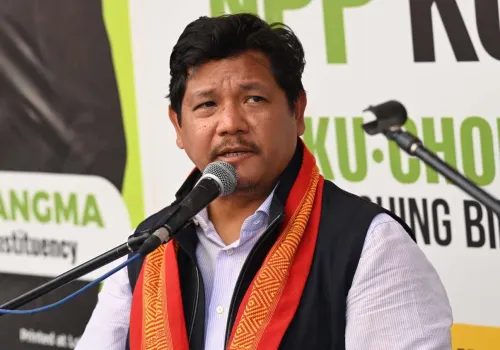
The development follows recent talks between Meghalaya Chief Minister Conrad K. Sangma and Assam Chief Minister Himanta Biswa Sarma on resolving long-pending inter-state border disputes through dialogue and mutual understanding. Lapangap has remained a flashpoint along the Assam-Meghalaya boundary, particularly after a Karbi villager died during clashes between residents of the two states in October last year.
Notably, an earlier round of consultations of village representatives convened by the West Jaintia Hills district administration on 18 May failed to reach a consensus, with disagreements centring on plantation activities in the disputed pocket.
Who Attended the Meeting
The Meghalaya delegation included Deputy Chief Minister Sniawbhalang Dhar, Principal Secretary Frederick R. Kharkongor, Commissioner and Secretary Cyril V. Diengdoh, Jaintia Hills Autonomous District Council Chief Executive Member Thombor Shiwat, West Jaintia Hills Deputy Commissioner Abhinav Singh, and Superintendent of Police Jagpal Singh Dhanoa.
Representing Assam were Karbi Anglong Autonomous Council Chief Executive Member and MLA Tuliram Ronghang, MP Amarsing Tisso, Additional Chief Secretary Ajay Kumar Tiwari, and legislators Surjya Rongphar, Lunsing Teron, Habbey Teron, and Niso Terangpi, among others.
Why It Matters
The Assam-Meghalaya border, drawn at the time of Meghalaya's creation in 1972, has long been contested across multiple sectors. The Lapangap understanding is the latest in a series of confidence-building measures that prioritise livelihood continuity over hard demarcation — a pragmatic template both Chief Ministers have publicly endorsed.
What's Next
The state-level committee will now revisit the boundary question in the area of difference, with both governments signalling that any final call will follow due deliberation. The latest understanding is being viewed as a meaningful step in lowering tensions in Lapangap while protecting the livelihood interests of residents along the inter-state divide.
Point of View
Protect the cultivator. Both states have learnt — at human cost, including last October's death — that hardening lines on contested foothills invites violence faster than it brings closure. The real question is whether the state-level committee actually delivers a demarcation framework, or whether 'deferral' becomes the permanent status quo, as it has across several other sectors of this 1972-vintage dispute.
NationPress
19 Sept 2026
Frequently Asked Questions
What did Assam and Meghalaya agree on regarding the Lapangap dispute?
The two states agreed on 2 June to allow local residents to continue cultivation in designated parts of the disputed Lapangap region. Lapangap villagers will continue paddy cultivation in the foothills, while Tahpat residents may grow banana, pineapple, and ginger on hilltops and slopes.
Why is Lapangap a sensitive area on the Assam-Meghalaya border?
Lapangap has been a flashpoint along the Assam-Meghalaya boundary for years, with overlapping claims by communities on both sides. Tensions escalated after a Karbi villager died during clashes between residents of the two states in October last year.
What happens next on the boundary demarcation?
The issue of permanent boundary demarcation in the area of difference has been deferred to the appropriate state-level committee for further examination. Both governments said any final decision will be taken only after that review.
Who attended the high-level meeting at Lapangap?
The meeting was held at the Assam Police Camp in Lapangap and included senior leaders, officials, and police officers from both states. Meghalaya was represented by Deputy CM Sniawbhalang Dhar and senior officers; Assam was represented by Karbi Anglong Autonomous Council CEM Tuliram Ronghang, MP Amarsing Tisso, Additional Chief Secretary Ajay Kumar Tiwari, and several legislators.
How does this fit into the broader Assam-Meghalaya border talks?
The understanding follows ongoing dialogue between Meghalaya CM Conrad K. Sangma and Assam CM Himanta Biswa Sarma to resolve long-pending boundary disputes through negotiation. It mirrors the confidence-building, livelihood-first approach both leaders have adopted in earlier sectors.