Assam Ministers, MLAs Monitor Floods, Lead Relief on Ground
Synopsis
The Chief Minister's Office of Assam announced on 23 July 2026 that ministers and MLAs are personally leading flood relief and rescue efforts on the ground. The move reflects the state's hands-on political response to the annual Brahmaputra monsoon flooding that affects millions across Assam's plains.
Key Takeaways
The Chief Minister's Office of Assam announced on 23 July 2026 that ministers and MLAs are actively monitoring the flood situation across the state.
Elected representatives are personally leading relief distribution and rescue operations on the ground, according to the official post.
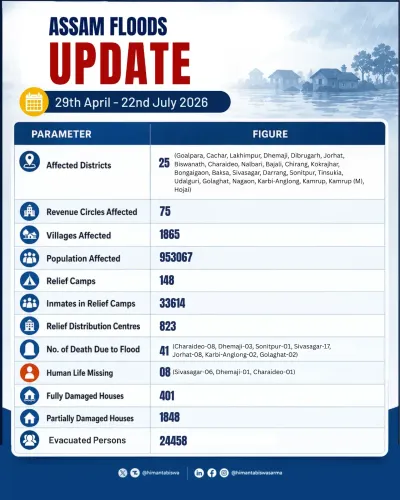
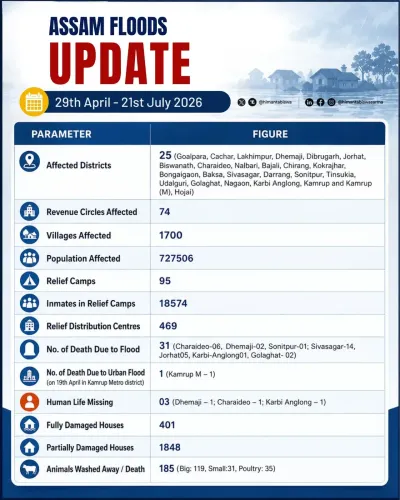
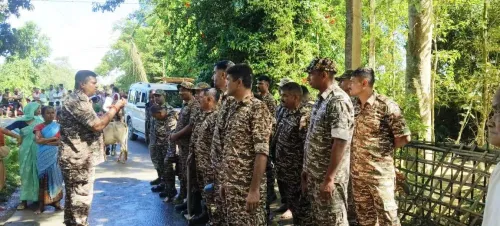
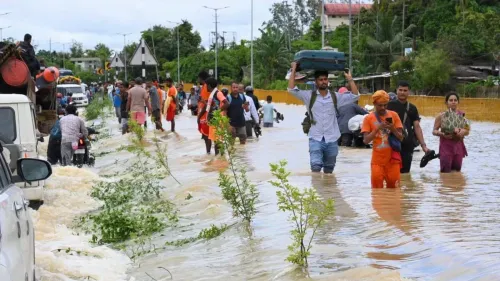
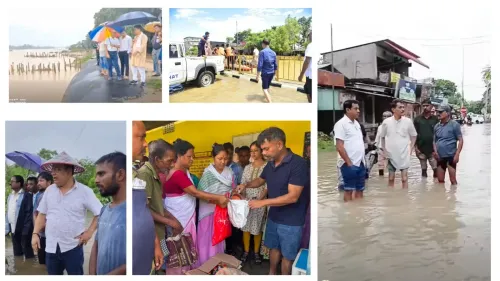
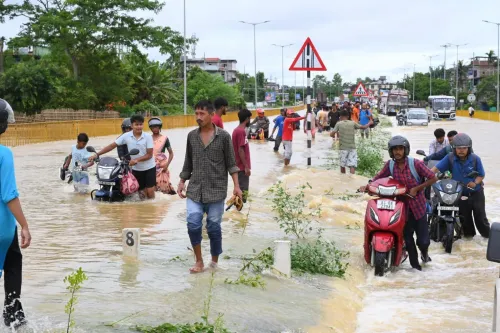
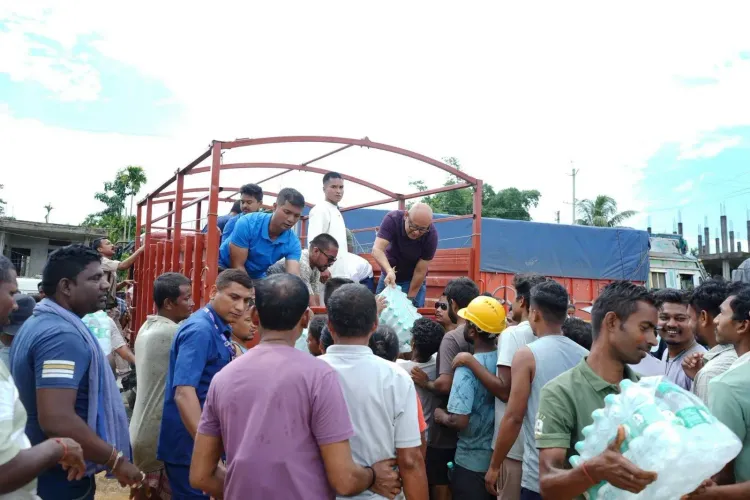
The announcement was accompanied by four images depicting on-ground relief and rescue activity.
Assam faces annual flooding from the Brahmaputra River and its tributaries during the June–September monsoon season.
The Brahmaputra Board (est.
1980 ) and the central Flood Management Programme provide the long-term institutional and funding framework for flood control in the region.
Updated flood damage assessments and potential central assistance packages are expected to follow in the coming weeks.
The Chief Minister's Office of Assam announced on Thursday, 23 July 2026 that elected representatives across the state are personally overseeing flood response, with ministers and MLAs actively directing relief distribution and rescue operations in affected areas.
Context
The CMO's post stated that 'Hon'ble Ministers and MLAs are actively monitoring the flood situation across Assam, leading relief distribution and rescue efforts on the ground.' The announcement signals a hands-on approach by the state's political leadership during what is typically the most intense phase of the annual monsoon season. Accompanying the post were four images depicting ground-level relief and rescue activities.
Assam endures predictable annual flooding driven by the swelling of the Brahmaputra River and its tributaries during the June–September monsoon window. The scale and regularity of these floods make them one of the most persistent humanitarian challenges facing the state administration each year.
Policy Backdrop
The Brahmaputra Board, constituted in 1980, was tasked with preparing comprehensive flood-control and erosion-management plans for the Brahmaputra valley, laying the institutional foundation for flood governance in the region. The central Flood Management Programme, operational since the Eleventh Five-Year Plan period, has channelled funding into embankment construction and drainage improvement works across Assam.
Successive state governments have combined immediate rescue operations with longer-term embankment and dredging projects, routinely supplemented by deployments of the National Disaster Response Force (NDRF). The Government of Assam under Chief Minister Himanta Biswa Sarma, who has held office since 2021, has continued this dual-track approach of visible political leadership alongside technical flood-management infrastructure.
Stakeholders and Impact
The most immediate stakeholders are flood-affected residents spread across Assam's low-lying plains, who depend on timely relief — food, medicine, and evacuation support — in the days following inundation. District administrations serve as the operational backbone, coordinating between elected representatives, NDRF teams, and local civil society to reach marooned communities.
Direct on-ground monitoring by ministers and MLAs follows an established pattern in Indian disaster response, where elected representatives assume visible roles in affected constituencies to both accelerate resource deployment and signal governmental accountability. The presence of images in the original post underscores the state's effort to demonstrate active, visible engagement rather than administrative-only response.
What's Next
Attention will now turn to the release of updated flood damage assessments, which typically inform requests for supplementary central assistance packages. Any significant escalation in the flood situation could prompt a formal appeal to the National Disaster Management Authority for additional NDRF battalions or financial relief from the National Disaster Response Fund.
Longer-term, the next session of the Assam Legislative Assembly may see renewed debate on river-management proposals, including dredging and embankment reinforcement, as part of the state's effort to move beyond reactive relief toward structural flood mitigation across the Brahmaputra basin.
Point of View
Which can shape public perception of administrative competence ahead of future electoral cycles. For Chief Minister Himanta Biswa Sarma, maintaining a credible flood-response record is particularly significant given Assam's near-annual inundation crisis and the political costs of perceived inaction. The broader question — whether short-term relief visibility translates into long-term structural investment in Brahmaputra flood management — remains the defining test for the state's governance ambitions.
NationPress
23 Jul 2026
Frequently Asked Questions
Why is Assam flooded every year?
Assam floods annually because the Brahmaputra River and its tributaries overflow during the June–September monsoon season, inundating the state's low-lying plains. The river's high silt load and the region's flat topography amplify the scale of flooding each year.
What is the Assam government doing about the 2026 floods?
According to the Chief Minister's Office of Assam , ministers and MLAs are personally monitoring the flood situation and leading relief distribution and rescue efforts on the ground as of 23 July 2026 .
Who is the Chief Minister of Assam handling the flood response?
Himanta Biswa Sarma has been the Chief Minister of Assam since 2021 and is responsible for coordinating the state's disaster response, including annual flood management operations.
What is the NDRF's role in Assam floods?
The National Disaster Response Force (NDRF) is routinely deployed to Assam during monsoon flooding to assist with rescue, evacuation, and relief operations alongside state government teams.
What long-term measures exist to control Brahmaputra flooding?
The Brahmaputra Board , set up in 1980 , prepares flood-control and erosion-management plans for the valley. The central Flood Management Programme , active since the Eleventh Five-Year Plan, funds embankment construction and drainage works in Assam.