Assam CM Office: ₹22,000-Cr Brahmaputra Tunnel Plan

Synopsis
The Assam Chief Minister's Office has announced the proposed Gohpur–Numaligarh twin-tube tunnel beneath the Brahmaputra river, a ₹22,000-crore combined road and rail project linking Sonitpur and Golaghat districts, pending central approvals and environmental clearances.
Key Takeaways
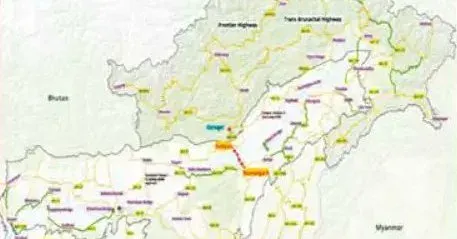
The Gohpur–Numaligarh twin-tube tunnel is proposed to run beneath the Brahmaputra river , linking Sonitpur and Golaghat districts.
The project carries a projected cost of ₹22,000 crore , making it one of Assam's most capital-intensive infrastructure proposals.
The twin-tube design accommodates both road and rail traffic in separate bores.
The announcement follows the precedent set by the Bogibeel Bridge (inaugurated 2018 ), India's longest rail-cum-road bridge over the Brahmaputra.
Key milestones still pending include central government approval , detailed project report finalisation, and environmental clearances .
The project aims to eliminate long detours and ferry dependence for north-south travel across the Brahmaputra.
A river that has divided Assam for centuries may soon be conquered from below. The Chief Minister's Office of Assam announced on Tuesday, 29 September 2026 that the proposed Gohpur–Numaligarh twin-tube tunnel — a combined road and rail corridor running beneath the Brahmaputra — is being positioned as a transformative leap in the state's connectivity infrastructure, with a projected outlay of ₹22,000 crore.
What the Twin-Tube Tunnel Actually Does
The project links Gohpur in Sonitpur district on the northern bank of the Brahmaputra with Numaligarh in Golaghat district on the southern bank — two points that today demand long detours or unreliable ferry crossings. A twin-tube design means one bore for road traffic and one for rail, effectively doubling the connectivity dividend of a single civil works investment. The CMO described it as cutting 'travel time dramatically,' a claim that tracks with how earlier Brahmaputra crossings reshaped daily movement patterns in the region.
The Bogibeel Blueprint — and Why This Goes Further
Assam has been here before, in the best possible sense. The Bogibeel Bridge, inaugurated in 2018, was India's longest rail-cum-road bridge and addressed a similar north-south connectivity gap across the Brahmaputra. It became a reference point for what integrated infrastructure can do in the Northeast — slashing journey times that once stretched across hours. The Gohpur–Numaligarh tunnel follows that logic but moves underground, a technically more complex and costlier proposition that signals growing ambition in the region's infrastructure planning.
₹22,000 Crore and the Clearances Still to Come
At ₹22,000 crore, this would rank among the most capital-intensive single infrastructure projects in Assam's history. But the figure, while cited by the CMO, sits ahead of the formal project milestones that will determine its trajectory: central government approval, finalisation of the detailed project report, and environmental clearances — all of which are pending. Tunnelling beneath a river of the Brahmaputra's scale and seismic sensitivity is an engineering undertaking that will demand rigorous scrutiny at each stage. The announcement marks intent; the clock on execution starts when those approvals land.
For the residents of Assam — particularly inter-district travellers who navigate the Brahmaputra's seasonal unpredictability — the stakes are concrete and daily. A fixed, all-weather, dual-mode crossing beneath the river would not just shorten journeys; it would make them reliable in a way that floods and ferry schedules never have.
Point of View
High-impact infrastructure — a strategy that gained visible momentum with the Bogibeel Bridge and has since expanded to tunnels, expressways, and rail upgrades. Announcing a ₹22,000-crore project ahead of formal approvals is a familiar political signalling move, but the underlying infrastructure logic is sound: the Brahmaputra remains one of the most significant barriers to economic cohesion in the region. The real test will be how quickly the project clears environmental and engineering scrutiny, given the river's seismic sensitivity and seasonal volatility — factors that have historically stretched Northeast project timelines well beyond initial projections.
NationPress
29 Sept 2026
Frequently Asked Questions
What is the Gohpur–Numaligarh twin-tube tunnel?
It is a proposed combined road and rail tunnel beneath the Brahmaputra river, linking Gohpur in Sonitpur district with Numaligarh in Golaghat district in Assam, at an estimated cost of ₹22,000 crore.
How much will the Brahmaputra tunnel under Assam cost?
The projected cost of the Gohpur–Numaligarh twin-tube tunnel is ₹22,000 crore, as cited by the Chief Minister's Office of Assam.
What is the current status of the Gohpur–Numaligarh tunnel project?
As of the announcement on 29 September 2026, the project is at the proposal stage, with central government approval, detailed project report finalisation, and environmental clearances still pending.
How is this tunnel different from the Bogibeel Bridge?
The Bogibeel Bridge, inaugurated in 2018, is a surface rail-cum-road bridge over the Brahmaputra. The Gohpur–Numaligarh project is an underground twin-tube tunnel, a more complex engineering undertaking connecting a different pair of districts.
Which districts does the Gohpur–Numaligarh tunnel connect?
The tunnel will connect Gohpur in Sonitpur district on the northern bank of the Brahmaputra with Numaligarh in Golaghat district on the southern bank.