Assam Pu'er Tea Cake Fetches ₹12,000/kg at Guwahati Auction

Synopsis
A Pu'er Tea Cake by Gauripur Tea Industry, Golaghat, fetched ₹12,000 per kg at the Guwahati Tea Auction Centre — a landmark moment in Assam's decade-long drive to move beyond bulk commodity tea and capture premium global markets.
Key Takeaways
A Pu'er Tea Cake from Gauripur Tea Industry , Golaghat , sold for ₹12,000 per kg at the Guwahati Tea Auction Centre .
The price is an order-of-magnitude premium over typical Assam bulk CTC or orthodox grades, which trade in the ₹150–₹400 per kg range.
Pu'er is a compressed, fermented tea format traditionally associated with China's Yunnan province, now being produced in Assam.
Assam state tea policy since 2017–18 has actively promoted specialty and value-added products to improve grower realisations.
CM Himanta Biswa Sarma highlighted the sale as a 'significant moment' for Assam's evolving tea industry.
The auction result sets a public price benchmark that could encourage other Assam processors to invest in specialty formats.
A compressed tea cake from the hills of Golaghat just rewrote what Assam tea can be worth. A Pu'er Tea Cake produced by Gauripur Tea Industry sold for ₹12,000 per kilogram at the Guwahati Tea Auction Centre — a striking signal that Assam's centuries-old tea belt is quietly engineering a premium future for itself.
What made this lot stand out
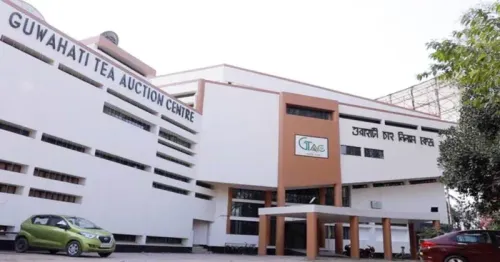
Pu'er — a style of compressed, fermented tea long associated with China's Yunnan province — is not a product buyers typically expect from Assam. That is precisely the point. Gauripur Tea Industry, operating out of Golaghat district in upper Assam, adopted the labour-intensive pressing and ageing process and brought it to market through the Guwahati Tea Auction Centre, the state's primary made-tea trading platform run under the Tea Board of India framework.
The ₹12,000-per-kg realisation is a dramatic contrast to the commodity-level prices that bulk CTC and orthodox grades routinely fetch. In volume segments, Assam teas frequently trade in the ₹150–₹400 per kg range, making this lot an order-of-magnitude outlier.
Assam's decade-long push away from the commodity trap
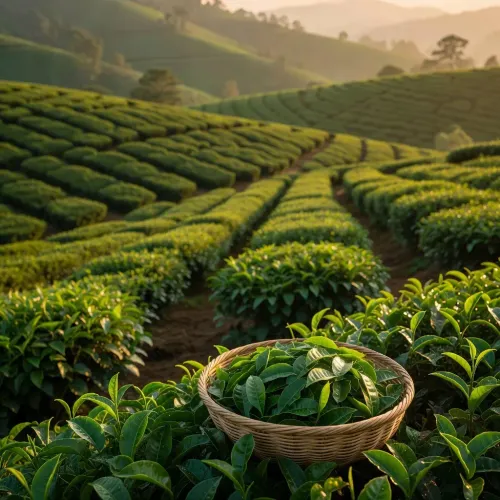
Assam supplies more than half of India's total tea output, yet its growers have long been squeezed by low bulk prices and thin margins. State policy documents dating to 2017–18 flagged exactly this vulnerability and pushed a strategic pivot: geographic indication branding, organic certification, and novel processing styles designed to reach buyers willing to pay for story and craft, not just volume.
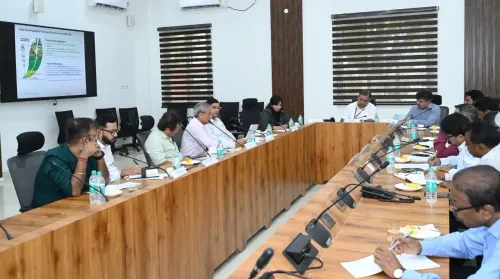
Assam Chief Minister Himanta Biswa Sarma, who has championed value-addition in the sector since taking office in May 2021, flagged the Gauripur sale on X, calling it 'a significant moment for Assam's evolving tea industry.' The phrase 'evolving' carries weight here — it acknowledges that the transformation is underway but unfinished.
Compressed cake formats like Pu'er open an entirely different category of collector and connoisseur buyers — buyers who age tea the way others age wine, and who are prepared to pay accordingly.
Why Golaghat, and what comes next
Golaghat is home to a dense cluster of tea estates and processing units, giving producers there both the raw-material depth and the processing infrastructure to experiment. A single high-value transaction at auction does not by itself transform an industry, but it does create a benchmark — a publicly visible price signal that other processors in the district and across Assam can now point to when pitching investors or buyers.
The real test will come in subsequent Guwahati auction rounds: whether specialty and compressed-format lots begin appearing with regularity, and whether state budget allocations in 2027 include dedicated processing incentives to make such experiments commercially viable at scale. For now, one cake from Golaghat has done something few commodity products manage — it made the market look up.
Point of View
A five-figure per-kg realisation at its own auction platform marks a structural shift in bargaining power. CM Sarma's decision to amplify the moment on social media is itself a policy signal: the government wants the tea sector to see this as a replicable model, not a one-off curiosity. Whether subsidised processing infrastructure follows in the next budget cycle will determine whether the cake from Golaghat becomes a template or a footnote.
NationPress
26 Sept 2026
Frequently Asked Questions
What is a Pu'er Tea Cake and why is it expensive?
A Pu'er Tea Cake is compressed, fermented tea pressed into a disc shape. It commands high prices because the craft-intensive processing and ageing potential attract collectors and connoisseur buyers willing to pay far above commodity rates.
Which company made the record-price Assam Pu'er tea?
Gauripur Tea Industry, based in Golaghat district, Assam, produced the Pu'er Tea Cake that sold for ₹12,000 per kg at the Guwahati Tea Auction Centre.
Where is the Guwahati Tea Auction Centre and how does it work?
The Guwahati Tea Auction Centre is Assam's primary platform for selling made tea, operating under the Tea Board of India framework. Producers bring lots to auction where licensed buyers bid competitively.
What is the usual price of Assam tea at auction?
Bulk Assam CTC and orthodox grades commonly trade in the ₹150–₹400 per kg range, making the ₹12,000-per-kg Pu'er realisation a dramatic outlier.
What is the Assam government's policy on tea value addition?
Since 2017–18, Assam's tea policy has pushed producers toward specialty formats, geographic indication branding, and organic certification to move away from commodity pricing and improve grower realisations.