CM Assam Congratulates Dr. Bibhab Talukdar on Linnean Fellowship
Synopsis
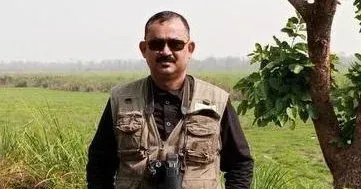
The Chief Minister's Office of Assam has congratulated Dr. Bibhab Kumar Talukdar, Secretary General of Aaranyak, on his election as a Fellow of the Linnean Society of London — the world's oldest active biological society — calling it a proud honour for the state.
Key Takeaways
The Chief Minister's Office of Assam publicly congratulated Dr.
Bibhab Kumar Talukdar on 7 July 2026 .
Talukdar has been elected a Fellow of the Linnean Society of London , founded in 1788 .
He serves as Secretary General of Aaranyak , a leading biodiversity NGO based in Guwahati .
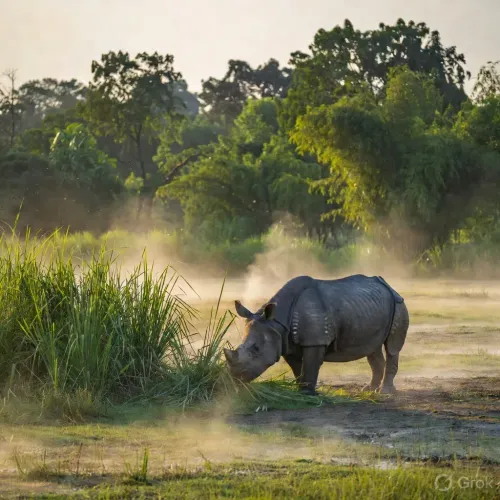
His research focuses on the greater one-horned rhinoceros and threatened species across Northeast India .
Assam is home to two UNESCO World Heritage Sites — Kaziranga and Manas — underlining its global conservation significance.
The recognition is part of a wider pattern of international honours for scientists working in India's northeastern biodiversity corridor.
The Chief Minister's Office of Assam on Tuesday, 7 July 2026 congratulated conservation biologist Dr. Bibhab Kumar Talukdar on his election as a Fellow of the Linnean Society of London, calling it 'a proud honour for Assam.'
Context
Dr. Talukdar, who serves as Secretary General of Aaranyak — a Guwahati-headquartered biodiversity conservation organisation — has spent decades in field research and protection initiatives focused on the greater one-horned rhinoceros and other threatened species across Northeast India. His election to one of the world's most prestigious biological societies marks a significant milestone for conservation science practised in the region.
Policy Backdrop
The Linnean Society of London, founded in 1788 and named after Swedish naturalist Carl Linnaeus, is the world's oldest active biological society. Fellowship is awarded for distinguished contributions to taxonomy, natural history, and biodiversity science, placing Dr. Talukdar in a lineage of globally recognised naturalists and field biologists.
Aaranyak, established in the 1980s, has built a multi-decade record of research, anti-poaching support, and community-based conservation programmes across Assam and neighbouring states. The organisation's work feeds directly into global assessments of species health in one of Asia's most biodiverse corridors.
Stakeholders and Impact
Assam is home to Kaziranga National Park and Manas National Park, both UNESCO World Heritage Sites, and sustains significant wild populations of rhinoceros, tiger, and elephant. Recognition of a senior Assam-based scientist at this international level reinforces the state's standing as a centre of credible, field-led conservation expertise.
For biodiversity NGOs and conservation researchers across Northeast India, the fellowship signals that sustained, data-driven field work in the region is being acknowledged by the global scientific community — an outcome that can strengthen funding pipelines and institutional partnerships for organisations like Aaranyak.
What's Next
The election of a Northeast Indian researcher to a historic London-based scientific body is part of a broader pattern of growing international recognition for scientists working in India's high-biodiversity northeastern states. Observers will watch for further formal linkages between Assam's conservation institutions and overseas natural-history bodies, as well as any new collaborative programmes that may follow from Dr. Talukdar's expanded international network.
Point of View
Field-intensive conservation that Aaranyak has championed for four decades. For the broader Northeast India science ecosystem, such recognition can shift funding dynamics and attract collaborative research partnerships that state-level bodies alone cannot secure. The post also signals that the current administration views biodiversity science as a soft-power asset worth celebrating alongside infrastructure and economic milestones.
NationPress
5 Oct 2026
Frequently Asked Questions
Who is Dr. Bibhab Kumar Talukdar?
Dr. Bibhab Kumar Talukdar is an Assam-based conservation biologist and the Secretary General of Aaranyak, a Guwahati-headquartered biodiversity NGO known for its work on the greater one-horned rhinoceros and threatened species across Northeast India.
What is the Linnean Society of London?
The Linnean Society of London, founded in 1788, is the world's oldest active biological society. It is named after Swedish naturalist Carl Linnaeus and elects fellows for distinguished contributions to taxonomy, natural history, and biodiversity science.
What is Aaranyak and what does it do?
Aaranyak is a biodiversity conservation NGO established in the 1980s and headquartered in Guwahati, Assam. It conducts field research, supports anti-poaching operations, and runs community conservation programmes across Assam and neighbouring northeastern states.
Why is this fellowship significant for Assam?
The fellowship places an Assam-based scientist among globally recognised naturalists, reinforcing the state's standing as a hub of credible field-led conservation expertise, particularly given its two UNESCO World Heritage Sites — Kaziranga and Manas.
What did the Chief Minister's Office of Assam say about the honour?
The Chief Minister's Office of Assam called Dr. Talukdar's election as a Linnean Fellow 'a proud honour for Assam' in a post on X dated 7 July 2026.